

Bondi Beach Under the Lens: State Influence, Media Spin, and the Manufacture of Fear

Freddie Ponton
21st Century Wire
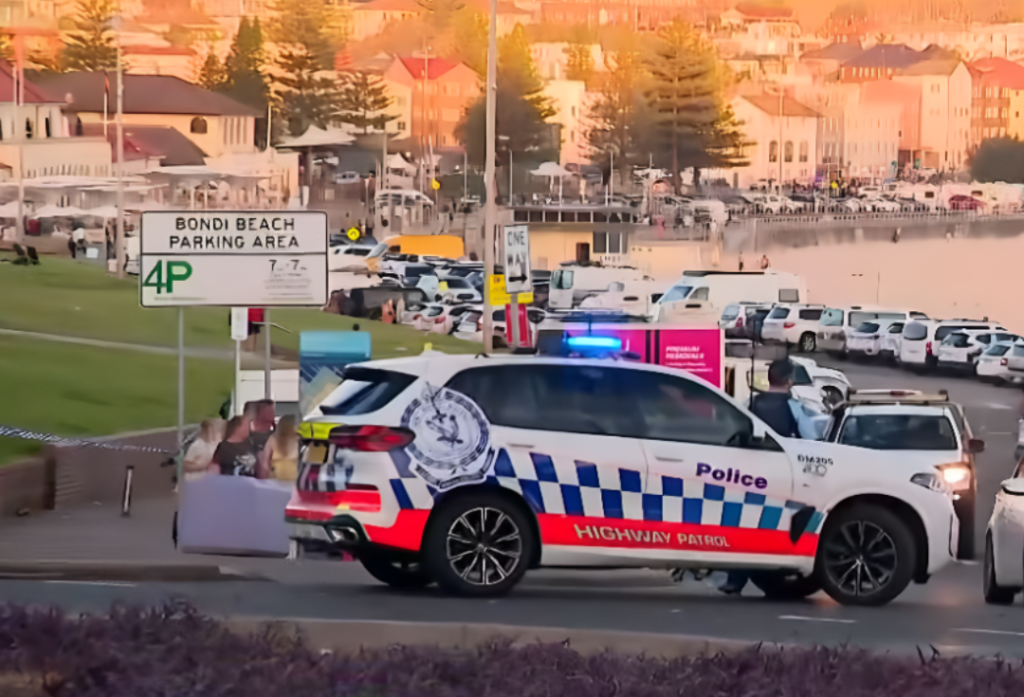
On a December evening in 2025, a Hanukkah celebration on Sydney’s Bondi Beach turned into a scene of horror. Fifteen people were killed, dozens injured, and a community’s sense of safety was shattered. In the hours that followed, the story seemed clear: a terrorist attack, antisemitic in motive, connected to global jihadist networks. But beneath the headlines, inconsistencies, misidentifications, and contradictions emerged, from the nationality of the attackers to their supposed training in the Philippines. Early reporting misrepresented key facts, political figures made unverified claims, and social media amplified confusion faster than any investigation could catch up. Even AI systems absorbed and repeated the errors, creating a monoculture of misinformation.
This article asks the questions the headlines do not: Was the Bondi attack simply an act of violence, or has it been shaped into a narrative serving broader geopolitical interests? Why were false attributions and misreported identities allowed to dominate the story? How do patterns of fabricated terror plots and the strategic use of antisemitism intersect with intelligence, media, and politics, from Sydney to Manila, from Washington to Tel Aviv?
As the investigation unfolds, the evidence challenges the simplistic story presented to the public, raising urgent questions about accountability, narrative control, and the very nature of truth in the age of global media.
The Killing and the Collapse of Accurate Reporting
On December 14, 2025, Sajid Akram, 50, and his son Naveed, 24, opened fire at a Bondi Beach Hanukkah celebration. Shock quickly gave way to explanation. Within hours, Australia’s federal police commissioner Krissy Barrett and much of the media converged on a single frame: an antisemitic terrorist attack with alleged links to ISIS. Central to this narrative was the claim that the attackers had recently travelled to Davao City, Mindanao, in the southern Philippines for extremist training.
The speed with which this conclusion was reached was striking. So, too, were the errors that followed. The shooters were widely reported as Pakistani nationals; they were later confirmed to be Indian. Details about their family backgrounds were incorrectly reported, including false claims about parentage and nationality. On social media, a Pakistani man entirely unrelated to the attack was wrongly labelled as one of the shooters, his name and image circulating widely before corrections or retraction were made. Pakistan’s Information Minister later denounced the misidentification as part of a coordinated online disinformation campaign, highlighting how vulnerable global information flows are to distortion.
The most prominent mischaracterisation came from Israeli Prime Minister Benjamin Netanyahu, who publicly claimed that Ahmad al Ahmed, a Syrian Muslim credited with helping subdue one of the attackers, was Jewish, and explicitly linked the Bondi shooting to Australia’s decision to recognise a Palestinian state.
Both claims were false. Neither was corrected with the same visibility as the original assertion. According to the Jewish Telegraph Agency, Netanyahu corrected his initial statement on Sunday when he declared.
“It turns out that the person who charged at the terrorist was a brave Muslim, and I salute him for stopping one of the terrorists from killing innocent Jews”
These inaccuracies did not remain confined to social media or political speech. Reporting later noted that artificial intelligence systems like Grok trained on media coverage repeated many of these false claims as fact, demonstrating how early errors are not simply corrected over time, but absorbed, automated, and reproduced within emerging information systems. The Guardian
By the time verified facts began to emerge, the narrative frame had already hardened.
Mindanao, Surveillance, and the Implausibility of the Official Story
The claim by the Australian public broadcaster (ABC), citing intelligence sources suggesting that the Bondi attackers received terrorist training in Mindanao, became the linchpin of the official story, and the element most consistently contradicted by evidence.
VIDEO: Bondi Beach attack: Palace slams claims Philippines is ISIS training ground (Source: Inquirer | Youtube)
.
Palace Press Officer Claire Castro stated publicly that the Government of the Philippines found no indication that the men had trained with or contacted militant groups. Hotel staff from the GV Hotel in Davao City, where the pair stayed for nearly a month, described them as withdrawn and inactive, rarely leaving their rooms. There were no reported meetings, no known handlers, and no corroboration of extremist activity. Philippine President Ferdinand Marcos Jr. categorically rejected claims that the country served as an ISIS training ground for the attackers, calling the allegation baseless and damaging. The rejection was emphatic and repeated. The media outlet The Australian released a video on X of the room the two men stayed in, at the GV Hotel in Davao.
The father and son gunmen who killed 15 people at Bondi Beach on Sunday stayed at a $24 a night hotel in the Philippines’ city of Davao for 27 days, barely leaving their room and living off takeaway fried chicken and other junk food, a local hotel worker has told The Australian.… pic.twitter.com/rhsL88kgu5
— The Australian (@australian) December 18, 2025
Yet in Australian coverage, these denials were treated as secondary. Unverified claims crossed borders easily; official refutations did not. This imbalance becomes more significant when placed within the region’s security architecture. Mindanao is not an intelligence backwater. It is one of the most heavily monitored regions in Southeast Asia, long framed, often inaccurately, as a counterterrorism frontier. That framing has justified deep military integration between the Philippines and the United States under the Enhanced Defence Cooperation Agreement (EDCA).
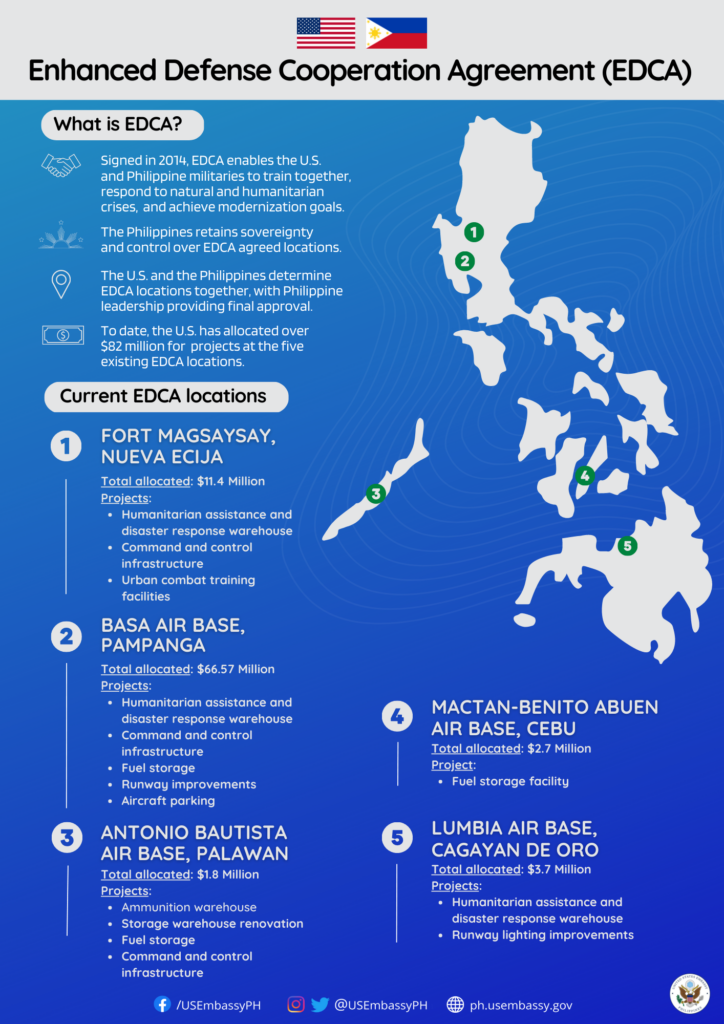
IMAGE: Enhanced Defense Cooperation Agreement between the Armed Forces of the Philippines (AFP) and the United States (Source: US Embassy in the Philippines)
Under EDCA, the United States has expanded its military footprint dramatically, allocating roughly $82 million for infrastructure upgrades at existing sites and approving new locations in “strategic areas.” Public briefings consistently emphasise intelligence sharing, interoperability, and surveillance.
The Akram’s stayed in Davao City, within reach of Lumbia Airfield, an Air Base in Cagayan de Oro, in northern Mindanao, and a Philippine Air Force installation housing the 15th Strike Wing, the country’s primary attack unit. The base is designed for humanitarian response, but also for rapid‑response and counterinsurgency operations and includes a resupply and warehouse facility for US forces in the Philippines.
Documentary and open‑source accounts detail decades of cooperation between Israeli Intelligence (MOSSAD) and elements of the Armed Forces of the Philippines, particularly in intelligence and internal security disciplines, further complicating the simplified extremist training narrative.
How many of you are aware of the strong connections between the Philippine Military and the Mossad?
While mainstream media continues to promote the idea that the Philippines serves as a fertile training ground for ISIS, they will likely omit this narrative as it may be too… pic.twitter.com/pLBmT6pz3F— Freddie Ponton (@freddie_ponton) December 18, 2025
Against this backdrop, the idea that foreign nationals could conduct or receive extremist training undetected strains credibility. The simpler explanation is that the Philippines’ stay was mischaracterised, then repeatedly amplified across media channels.
Fabricated Terror and the Weaponisation of Antisemitism
Australia does not need to speculate to understand how terror narratives can be constructed.
In March 2025, Reuters reported that Australian Federal Police concluded a widely publicised plot to attack a Sydney synagogue, involving a caravan filled with explosives and antisemitic material, was entirely fabricated. According to the report, the scheme was orchestrated by organised crime figures, some operating offshore.
The explosives were real but deliberately incomplete, lacking a detonator. The aim was not mass murder, but the appearance of imminent terror, enabling participants to later provide “tip‑offs” to authorities in exchange for leniency or leverage. None of those involved held antisemitic beliefs or extremist affiliations. Antisemitism was not the motive. It was the instrument.
Police reportedly recognised the plot as false almost immediately. The public narrative did not. Media coverage framed the episode as evidence of escalating antisemitic terror, fear spread through communities, and political rhetoric hardened. Corrections arrived quietly, if at all.
The lesson was clear: terror aesthetics are cheap to manufacture, and antisemitism is a reliable accelerant.
Historically speaking, it is not unreasonable to suggest a possible foreign government tie with organised crime, as it wouldn’t be the first time. For instance, Israel PM Benjamin Netanyahu confirmed in June 2025, without security cabinet approval, that he was arming a group of known organised criminals operating in Gaza, and with ties to ISIS.
When viewed in this context, the rapid ideological framing of the Bondi shooting, despite unresolved contradictions, appears less like clarity than pattern repetition. Pro‑Israel media outlets, including The Telegraph (soon to be owned by Dovid Efune), were quick to promote Israel’s unfounded accusations that Iran was behind the Bondi Beach shooting, and this without presenting evidence, reflecting a clear strategic attribution drift. Reports also circulated that Israeli intelligence (Mossad) was consulted in the Bondi investigation, illustrating how intelligence actors often insert themselves in investigations to shape public narratives around terror events even as individual motives remain opaque.
This pattern shows how manufactured or exploited threats can serve both geopolitical objectives and media cycles, sometimes overshadowing the truth of the violence itself.
Geopolitics: Australia, Philippines, Israel, and the Strategic Utility of Narrative
Australia’s recognition of a Palestinian state in 2025 marked a significant departure from previous policy and drew sharp criticism from the Israeli government. In the aftermath, Israeli officials repeatedly framed antisemitic incidents abroad as consequences of insufficient political support for Israel, collapsing distinctions between state policy, domestic dissent, and communal safety.
Within this context, visible antisemitic threats inside Australia serve multiple functions:
- They reinforce the narrative that criticism of Israel emboldens antisemitism.
- They apply moral and political pressure on governments to recalibrate foreign policy.
- They narrow public debate, focusing attention on communal risk rather than strategic calculation.
In response to the attack, the Australian government announced sweeping hate speech reforms aimed at combating antisemitism and other forms of hatred. Prime Minister Anthony Albanese unveiled legislation that would increase penalties for hate speech, criminalise serious vilification, and allow authorities to cancel or deny visas to individuals who spread extremist content, and an anti-Semitism package policy driven directly by the Bondi attack.
At the same time, official action has been taken to ground the narrative in fact: New South Wales Police have charged the surviving suspect with 59 offences, including 15 counts of murder, attempted murder, and terrorism, with court proceedings set for 2026.
The structural alignment of media amplification, intelligence consultation, and political interest enables attribution drift, early claims of Iranian or Hezbollah responsibility, and other geopolitical interpretations to gain traction without verification.
The Philippines’ unwavering support for Israel places it on a controversial moral and geopolitical footing. In October 2023, when the United Nations General Assembly overwhelmingly called for a humanitarian truce in Gaza following devastating Israeli bombardment, the Philippines abstained, endorsing Israel’s “right to self-defence” while remaining silent on the mass civilian casualties. This stance continues a decades-long pattern: since formally recognising Israel in 1957, Manila has consistently shielded Israel from international criticism, overlooking human rights abuses and the plight of Palestinians. By aligning uncritically with Israeli policy, the Philippines not only risks undermining its own credibility on the global stage but also reinforces patterns of state-backed narratives that shape public perception around conflicts, including the framing of incidents like the Bondi Beach attack. When it comes to Palestine or Israel, many critics fear that the “Philippines is on the wrong side of history.”
In September 2018, President Rodrigo Duterte made a historic visit to Israel, becoming the first sitting Philippine head of state to do so. The trip strengthened bilateral ties through agreements on labour, trade, and security, while highlighting the Philippines’ historical support for Jewish refugees.

IMAGE: From a news report documenting PM Netanyahu’s first meeting with the Philippines President Duterte in 2018 (Source: IsraeliPM)
Beyond diplomacy, segments of the Filipino evangelical community, sympathetic to Israel due to theological and cultural reasons, have helped cultivate a domestic environment supportive of closer ties. This blend of strategic, cultural, and religious alignment underscores Israel’s growing influence in the Philippines and frames the relationship within broader ideological and geopolitical narratives.
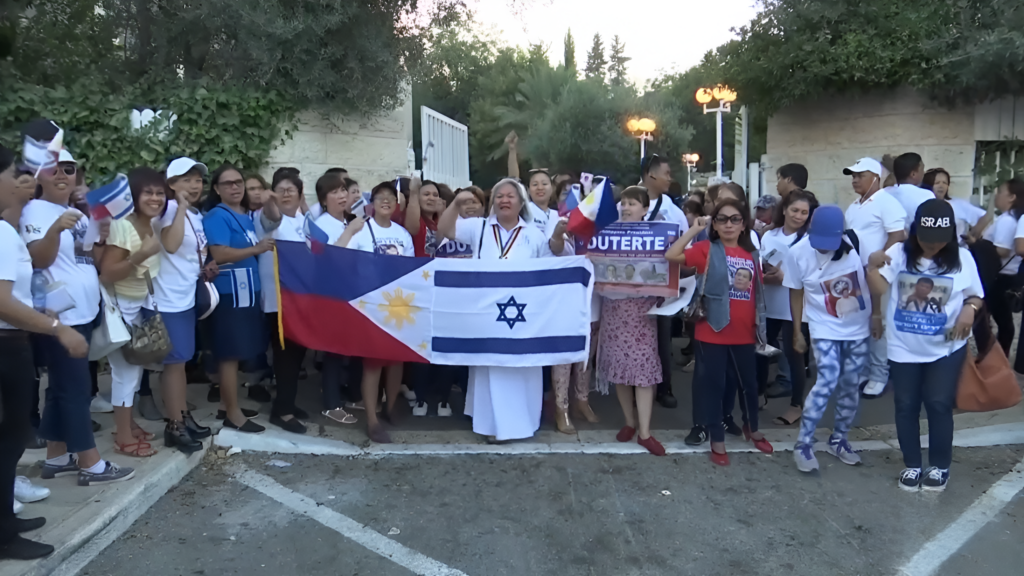
IMAGE: From a documentary on the Philippines President Duterte’s first visit to Israel in 2018 showing local communities in Philipines supporting Duterte’s visit to the Hebrew state (Source: France 24)
Reading Between the Headlines: Human Impact and Critical Reflection
The human toll of the Bondi Beach shooting is immense. In funerals across Sydney, mourners have eulogised rabbis and victims killed in the attack, describing them as community pillars, compassionate caregivers, and beloved neighbours. Hundreds gathered to honour lives cut short, while leaders urged unity and courage in the face of hate. Reuters
Australian Jews have spoken openly of anger, fear, and despair in the aftermath, some hiding religious symbols, others navigating daily life with heightened anxiety. According to a recent ABC report, many community members describe the attack as the culmination of years of rising antisemitism, with graffiti, threats, and online vitriol preceding the tragedy.
Generative AI has further distorted the post‑attack environment, with deepfake images of victims and fabricated video footage circulating online. AI‑generated misinformation included fake visuals misrepresenting injuries and false attributions, underscoring how modern technology can blur the boundary between reality and deception in moments of crisis.
In this reality, the emotional and social wounds run deep. Yet the strategic framing of the event, through political messaging, media repetition, and attribution patterns, often diverts attention from the lived experiences of survivors and communities struggling with loss.
What emerges is the sense of a communication spectacle: reinforcing geopolitical messaging on antisemitism while simultaneously, and unnecessarily, heightening insecurity for Jewish communities in Australia and around the world.
Critical thinking is essential. Readers must ask: Who benefits from this framing? Which assumptions remain unquestioned? How do intelligence alliances shape the narrative? Recognising these dynamics does not diminish the tragedy; it strengthens understanding of the forces shaping public perception, policy, and safety in its aftermath.
Ultimately, understanding Bondi Beach requires looking beyond headlines. It demands scrutiny of narrative formation, interrogation of strategic interests, and attention to human impact. Only by engaging in careful, critical evaluation can the public separate the tragedy itself from the propaganda machinery of meaning that surrounds it.
READ MORE AUSTRALIA NEWS AT: 21st CENTURY WIRE AUSTRALIA FILES
SUPPORT OUR INDEPENDENT MEDIA PLATFORM – BECOME A MEMBER @21WIRE.TV
VISIT OUR TELEGRAM CHANNEL
21st Century Wire is an alternative news agency designed to enlighten, inform and educate readers about world events which are not always covered in the mainstream media.
Source: https://21stcenturywire.com/2025/12/18/bondi-beach-under-the-lens-state-influence-media-spin-and-the-manufacture-of-fear/
Anyone can join.
Anyone can contribute.
Anyone can become informed about their world.
"United We Stand" Click Here To Create Your Personal Citizen Journalist Account Today, Be Sure To Invite Your Friends.
Before It’s News® is a community of individuals who report on what’s going on around them, from all around the world. Anyone can join. Anyone can contribute. Anyone can become informed about their world. "United We Stand" Click Here To Create Your Personal Citizen Journalist Account Today, Be Sure To Invite Your Friends.
LION'S MANE PRODUCT
Try Our Lion’s Mane WHOLE MIND Nootropic Blend 60 Capsules
Mushrooms are having a moment. One fabulous fungus in particular, lion’s mane, may help improve memory, depression and anxiety symptoms. They are also an excellent source of nutrients that show promise as a therapy for dementia, and other neurodegenerative diseases. If you’re living with anxiety or depression, you may be curious about all the therapy options out there — including the natural ones.Our Lion’s Mane WHOLE MIND Nootropic Blend has been formulated to utilize the potency of Lion’s mane but also include the benefits of four other Highly Beneficial Mushrooms. Synergistically, they work together to Build your health through improving cognitive function and immunity regardless of your age. Our Nootropic not only improves your Cognitive Function and Activates your Immune System, but it benefits growth of Essential Gut Flora, further enhancing your Vitality.

Our Formula includes: Lion’s Mane Mushrooms which Increase Brain Power through nerve growth, lessen anxiety, reduce depression, and improve concentration. Its an excellent adaptogen, promotes sleep and improves immunity. Shiitake Mushrooms which Fight cancer cells and infectious disease, boost the immune system, promotes brain function, and serves as a source of B vitamins. Maitake Mushrooms which regulate blood sugar levels of diabetics, reduce hypertension and boosts the immune system. Reishi Mushrooms which Fight inflammation, liver disease, fatigue, tumor growth and cancer. They Improve skin disorders and soothes digestive problems, stomach ulcers and leaky gut syndrome. Chaga Mushrooms which have anti-aging effects, boost immune function, improve stamina and athletic performance, even act as a natural aphrodisiac, fighting diabetes and improving liver function. Try Our Lion’s Mane WHOLE MIND Nootropic Blend 60 Capsules Today. Be 100% Satisfied or Receive a Full Money Back Guarantee. Order Yours Today by Following This Link.


| Visits: | 1,767,044,621 |
| Stories: | 8,563,683 |
Whistler Blowers, Insiders

