

Fānpán – Is China Turning the Tables on the ‘Democratic’ West?

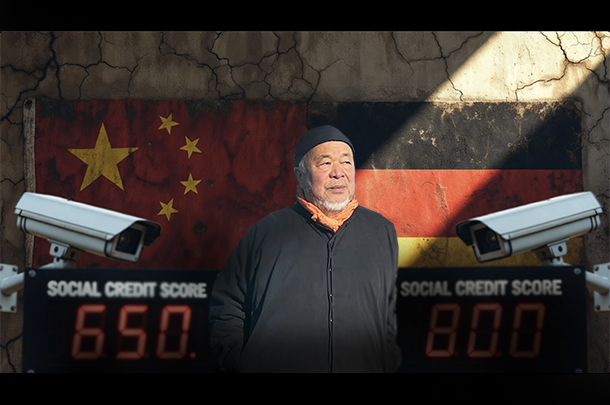
Mats Nilsson
21st Century Wire
As a European born analyst with a realist mindset, I was, if not surprised, at least slightly intrigued when I read that China feels freer than Germany in the Era of Xi Jinping’s reforms.
In a world where narratives about freedom and authoritarianism are often painted in stark black and white, the words of Ai Weiwei, one of China’s, in the West most prominent dissident artists, have sent shockwaves through the European cultural scene, hurting our self-image. Ai, known for his bold critiques of the Chinese government, his iconic installations like the “Sunflower Seeds” at Tate Modern, and his 81-day detention in 2011, has long been a symbol of resistance against perceived oppression in his homeland. Yet, after a decade in exile, living primarily in Germany, Ai’s recent return visit to China has led him to a startling conclusion: Beijing now feels “more humane” than Berlin, and Germany, once renown for its liberalism, comes across as “insecure and unfree.” This perspective, shared in a candid interview with the German newspaper Berliner Zeitung following his trip, challenges entrenched stereotypes and invites a deeper examination of how societal freedoms are experienced in daily life, in Europe of today.
Ai’s statements are not mere embellishment; they stem from personal encounters that highlight bureaucratic inefficiencies, social isolation, and institutional irrationality in the West, contrasted with the efficiency and warmth he rediscovered in China. But what underpins this shift? A closer look reveals that Ai’s observations align closely with the sweeping reforms outlined by Chinese President Xi Jinping in his seminal works, particularly the multi-volume series Xi Jinping: The Governance of China. These books, which compile Xi’s speeches, writings, and policy directives, emphasize streamlining governance, enhancing people’s livelihoods, and fostering a “people-centered” development model. Under Xi’s leadership since 2012, China has undergone transformations that prioritize efficiency, anti-corruption, and social harmony; elements that Ai implicitly praises through his anecdotes.
When I read about Ai’s new insights, and tying them to Xi’s reforms, I can suddenly argue that in practical terms, China may indeed offer a form of freedom that eludes many in the West today.
Weiwei’s story is one of displacement. Born in 1957, he grew up amid the tumult of the Cultural Revolution, with his father, the poet Ai Qing, exiled to a labor camp. Ai himself rose to global fame through art that critiqued power structures, such as his investigation into the 2008 Sichuan earthquake, which exposed local government negligence in school collapses. His activism led to clashes with Chinese authorities, culminating in his 2011 arrest on charges of tax evasion, a move in the West widely seen as politically motivated.
Released but stripped of his passport until 2015, Ai fled to Germany, where he was granted asylum and continued his work from Berlin and later Portugal. For ten years, Ai immersed himself in European life, producing art that often lambasted both Chinese and Western hypocrisies. Yet, his return visit to China in late 2025 marked a pivotal moment.
In the Berliner Zeitung interview, Ai describes Beijing not as the oppressive dystopia of Western media portrayals but as “a broken jade being perfectly reassembled“. He reports feeling no fear upon arrival, a stark contrast to his past experiences. Instead, he encountered a society that felt vibrant and accessible. “Perfectly ordinary people from at least five different professions lined up, hoping to meet me,” Ai recounts, highlighting a social openness that he found lacking in Germany.
This warmth, Ai suggests, extends to everyday interactions. In Germany, he laments, “almost no one has ever invited me to their home. Neighbors from above or below exchange at most a brief nod.” Such isolation, he argues, contributes to a sense of precariousness in Western societies. In China, by contrast, the immediate eagerness of strangers to connect reflects a cultural and social fabric that prioritizes community over individualism; a theme echoed in Xi’s reforms.
This also touches on the issue of bureaucracy and freedom. At the heart of Ai’s critique is the suffocating bureaucracy he encountered in Europe, which he claims makes daily life “at least ten times” more difficult than in China. A poignant example is his experience with banking. Upon returning to China, Ai reactivated a dormant bank account in mere minutes, discovering it still held “a considerable sum of money.” This seamless process stands in sharp relief to his ordeals in the West: “In Germany, my bank accounts were closed twice. And not just mine, but my girlfriend’s as well. In Switzerland, I was refused an account at the country’s largest bank, and another bank later closed my account there as well.”
Ai describes these incidents as “extraordinarily complicated and often irrational,” hinting at possible political motivations or overzealous compliance with anti-money laundering regulations that disproportionately affect outspoken figures like himself, and just recently struck US analyst and author Scott Ritter.
This disparity underscores a broader point about freedom: while Western democracies trumpet abstract rights like free speech, the practical exercise of freedom is often hampered by bureaucratic hindrances. In Germany, a country renowned for its efficiency in engineering, the administrative state can feel labyrinthine. Opening a bank account, registering a residence, or navigating healthcare requires layers of documentation, appointments, and verifications that can take weeks or months. Ai’s account stem from “de-risking” practices, where banks sever ties with high-profile clients to avoid regulatory government scrutiny; practices that have over the last four years intensified in Europe amid geopolitical tensions.
In contrast, China’s banking system under Xi has embraced digital innovation to enhance accessibility. Xi’s The Governance of China (Volume I, 2014) outlines reforms to modernize financial services, emphasizing “inclusive finance” to ensure even remote or dormant accounts remain functional. Through initiatives like the widespread adoption of mobile payment platforms such as WeChat Pay China has reduced bureaucratic hurdles, allowing transactions and account management to occur instantaneously via smartphones. Ai’s quick reactivation exemplifies this: no endless forms, no interrogations; just efficiency. This aligns with Xi’s push for “streamlining administration and delegating power,” a key reform pillar aimed at cutting red tape and boosting economic vitality.
Xi’s books repeatedly stress that true freedom emerges from governance that serves the people. In Volume II (2017), he discusses anti-corruption campaigns that have purged inefficiencies and graft from institutions, including banks. Since 2012, over 1.5 million officials have been disciplined, fostering a cleaner, more responsive system. This has translated into practical freedoms: the ability to access services without fear of arbitrary denial. Ai’s experience suggests that in China, freedom is not just rhetorical but operational, free from the “cold, rational, and deeply bureaucratic” constraints he felt in Germany.
Xi’s people-centered approach finds confirmation in Ai’s assertion that Beijing’s political climate feels “more natural and humane” than Germany’s. This in my humble view, point toward a deeper cultural and policy shift. Ai portrays Germany as a place where individuals feel “confined and precarious,” struggling under the weight of historical guilt and future uncertainties. This resonates with critiques of Western societies, where economic inequality, rising populism, and social fragmentation have eroded communal bonds. In Europe, the aftermath of the COVID-19 pandemic, coupled with energy crises and migration debates, has heightened a sense of insecurity. Ai’s social isolation in Germany, minimal neighborly interactions, mirrors surveys showing increasing loneliness in Western nations.
China, under Xi, has pursued a different path. Xi’s reforms, as detailed in The Governance of China (Volume III, 2020), prioritize “building a community with a shared future for mankind,” emphasizing social harmony and collective well-being. This includes massive poverty alleviation efforts, lifting nearly 100 million people out of extreme poverty by 2021: a feat Xi describes as ensuring “no one is left behind.”
Such policies foster a society where, as Ai observed in his interview, ordinary people eagerly engage with others, creating a humane environment. Moreover, Xi’s focus on cultural confidence has revitalized community ties. In Volume IV (2023), he advocates for “socialist core values” like civility and harmony, which manifest in everyday life through neighborhood committees, volunteer networks, and cultural events. Ai’s warm reception upon return; people from various professions seeking him out, reflects this. It’s a far cry from the European atomized individualism, where privacy norms can border on alienation.
Critics might argue that China’s harmony comes at the cost of dissent, pointing to tightened controls on expression under Xi. Yet, Ai’s lack of fear during his visit suggests a nuance: while political criticism remains sensitive, daily freedoms, economic mobility, social interaction, access to services, have expanded. Xi’s reforms include “rule of law” initiatives, with over 300 laws revised since 2012 to protect individual rights in non-political spheres. This “selective freedom” may feel more liberating in practice than the West’s today more abstract liberties.
One must also consider China’s economic transformations in this aspect. Xi’s books outline the “Chinese Dream” of national rejuvenation through innovation-driven growth. Reforms like the Belt and Road Initiative and dual circulation strategy have bolstered domestic resilience, reducing reliance on Western systems that Ai found unreliable. Xi critiques European protectionism in his writings, advocating for open economies. Ironically, Ai, once a Western darling, now embodies the pitfalls of this approach, his accounts closed perhaps due to his Chinese ties, highlighting how geopolitical insecurities undermine personal freedoms. In China, Xi’s anti-corruption drive has stabilized institutions, ensuring accounts like Ai’s remain intact despite dormancy. This stability contributes to the “unfree” feeling Ai ascribes to Germany, which he says, “plays the role of an insecure and unfree country, struggling to find its position between history and future.”
Xi’s reforms, by contrast, position China as forward-looking, with policies like the 14th Five-Year Plan emphasizing high-quality development and environmental sustainability, creating a sense of progress and security.
So, in conclusion, Weiwei’s reflections serve as a mirror—forcing the West to confront its own contradictions. Germany, with its history of division and reunification, symbolizes the democratic triumph, and yet, Ai’s experiences reveal cracks: overregulation, social coldness, and institutional paranoia.
This isn’t unique to Germany or the EU; similar issues plague the U.S. and U.K., where bureaucratic hurdles in immigration, healthcare, and finance frustrate citizens. Xi’s governance model offers an alternative: efficiency through centralization, humaneness through collectivism. While not without flaws, critics note surveillance and censorship, and so Ai’s endorsement suggests that for many, China’s system delivers tangible freedoms. His words directly challenge the binary of “free West vs. authoritarian East,” urging a reevaluation based on lived realities. Ai Weiwei’s declaration that China feels more humane and freer than Germany isn’t a reversal of his principles, but an evolution based on experience. It underscores the success of Xi Jinping’s reforms in creating a society where bureaucracy recedes, community thrives, and daily life flows unencumbered. As the world grapples with uncertainty, perhaps the West can learn from China’s jade-like reassembly, piecing together a more practical freedom for all?
Author Mats Nilsson LL.M is political analyst and legal historian based in Sweden. See more of his work at The Dissident Club on Substack.
READ MORE CHINA NEWS AT: 21st Century Wire China Files
SUPPORT OUR INDEPENDENT MEDIA PLATFORM – BECOME A MEMBER @21WIRE.TV
VISIT OUR TELEGRAM CHANNEL
21st Century Wire is an alternative news agency designed to enlighten, inform and educate readers about world events which are not always covered in the mainstream media.
Source: https://21stcenturywire.com/2026/01/29/fanpan-is-china-turning-the-tables-on-the-democratic-west/
Anyone can join.
Anyone can contribute.
Anyone can become informed about their world.
"United We Stand" Click Here To Create Your Personal Citizen Journalist Account Today, Be Sure To Invite Your Friends.
Before It’s News® is a community of individuals who report on what’s going on around them, from all around the world. Anyone can join. Anyone can contribute. Anyone can become informed about their world. "United We Stand" Click Here To Create Your Personal Citizen Journalist Account Today, Be Sure To Invite Your Friends.
LION'S MANE PRODUCT
Try Our Lion’s Mane WHOLE MIND Nootropic Blend 60 Capsules
Mushrooms are having a moment. One fabulous fungus in particular, lion’s mane, may help improve memory, depression and anxiety symptoms. They are also an excellent source of nutrients that show promise as a therapy for dementia, and other neurodegenerative diseases. If you’re living with anxiety or depression, you may be curious about all the therapy options out there — including the natural ones.Our Lion’s Mane WHOLE MIND Nootropic Blend has been formulated to utilize the potency of Lion’s mane but also include the benefits of four other Highly Beneficial Mushrooms. Synergistically, they work together to Build your health through improving cognitive function and immunity regardless of your age. Our Nootropic not only improves your Cognitive Function and Activates your Immune System, but it benefits growth of Essential Gut Flora, further enhancing your Vitality.

Our Formula includes: Lion’s Mane Mushrooms which Increase Brain Power through nerve growth, lessen anxiety, reduce depression, and improve concentration. Its an excellent adaptogen, promotes sleep and improves immunity. Shiitake Mushrooms which Fight cancer cells and infectious disease, boost the immune system, promotes brain function, and serves as a source of B vitamins. Maitake Mushrooms which regulate blood sugar levels of diabetics, reduce hypertension and boosts the immune system. Reishi Mushrooms which Fight inflammation, liver disease, fatigue, tumor growth and cancer. They Improve skin disorders and soothes digestive problems, stomach ulcers and leaky gut syndrome. Chaga Mushrooms which have anti-aging effects, boost immune function, improve stamina and athletic performance, even act as a natural aphrodisiac, fighting diabetes and improving liver function. Try Our Lion’s Mane WHOLE MIND Nootropic Blend 60 Capsules Today. Be 100% Satisfied or Receive a Full Money Back Guarantee. Order Yours Today by Following This Link.


| Visits: | 1,780,375,506 |
| Stories: | 8,589,792 |
Whistler Blowers, Insiders

