

Abu Dhabi’s Kill List: Inside the Israel–UAE Mercenary Death Squads from Yemen to Serbia


Freddie Ponton
21st Century Wire
A Gulf monarchy hired an Israeli‑Hungarian mercenary and a team of American special forces veterans to run a black‑budget assassination program against a civilian political party in Yemen. It did this while posing in Washington and Brussels as a “stability partner” under Iranian threat and a responsible host for U.S. bases.
This article follows that kill program from a bombed party office in Aden, through a Belgrade weapons arrest and a murdered lawyer, all the way to a world where Western pundits can credibly fear being targeted by deniable squads trained by allies. If you want to understand how state power, private military contractors, and “counterterrorism” rhetoric have fused into a market for political murder, this is a story for you.
The Assassination Contract
On the night of December 29, 2015, an armored SUV moved through Aden toward the local headquarters of Yemen’s al‑Islah party, carrying American special operations veterans and former French Foreign Legionnaires working for the Spear Operations Group, a company registered in Delaware, in the town of Camden, and hired by the United Arab Emirates. Their target was Anssaf Ali Mayo, a member of Yemen’s parliament and al‑Islah’s chairman in Aden, who had already been warned there was a price on his head.
The plan was brutally simple. One man would attach a shrapnel‑packed bomb to the party office door. Another was ready to throw grenades and open fire if anyone survived the blast. Footage and later reporting described a powerful explosion, bursts of gunfire, and the detonation of a booby‑trapped vehicle parked nearby to widen the kill zone. Mayo survived only because he had fled moments earlier after receiving word that the attack was imminent.
A sealed complaint later filed in federal court in San Diego argues that this was not an isolated battlefield incident but the opening move in a paid assassination program. The lawsuit says former special forces commando Abraham Golan, former Navy SEAL Isaac Gilmore, and former Green Beret Dale Comstock agreed to run a targeted killing campaign for the UAE in Yemen for $1.5 million a month, with additional bonuses for successful hits. Their vehicle was Spear Operations Group, a company incorporated in Delaware, pitched from the San Diego area, and staffed with American veterans and European mercenaries.
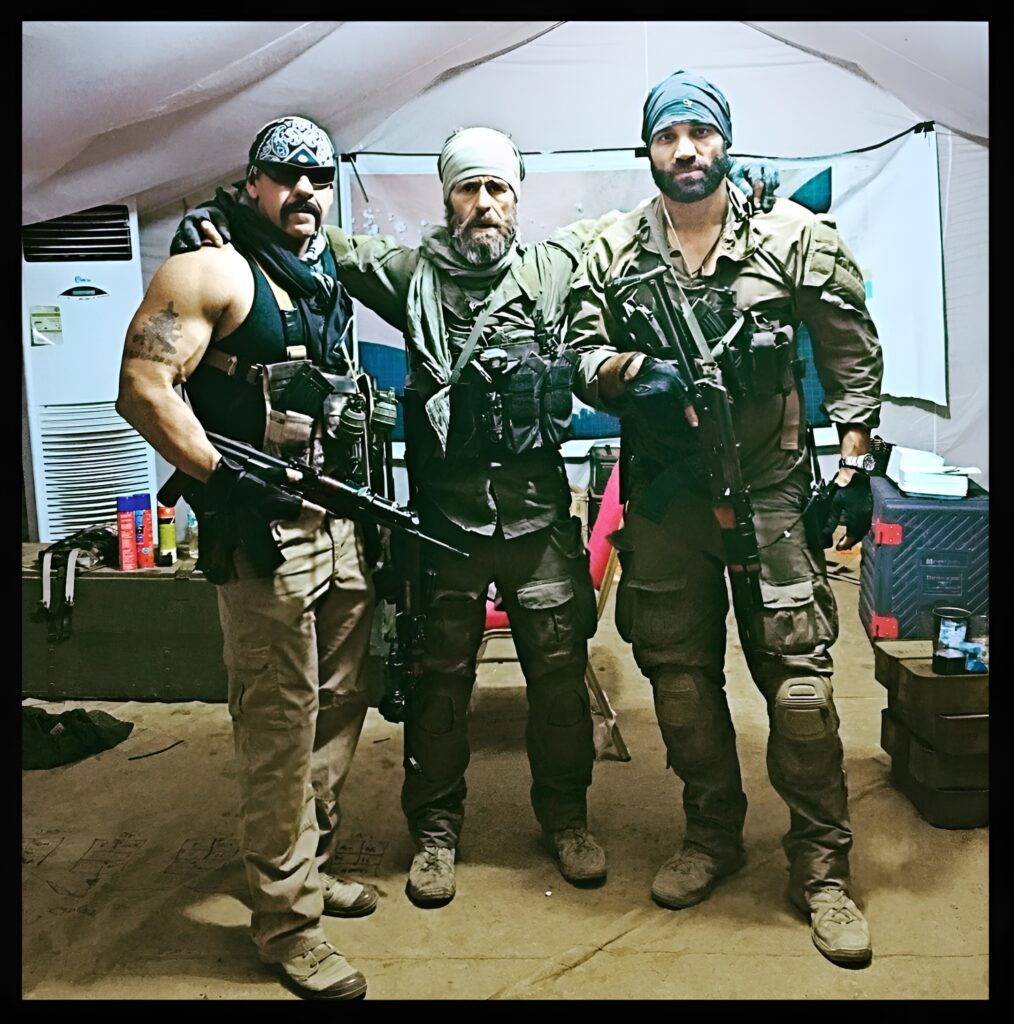
IMAGE: Standing in front of a UAE military plane are Dale Comstock (left), Golan (middle), and Isaac Gilmore (right)(Source: Grey Dynamics)
DOCUMENT: Civil lawsuit filed in U.S. federal court by Yemeni lawmaker Anssaf Ali Mayo against Abraham Golan, Isaac Gilmore, and Dale Comstock, alleging that they ran a UAE‑funded assassination program in Yemen and attempted to kill him with a bomb attack on al‑Islah’s Aden headquarters (Source: The Center for Justice and Accountability | CJA)
001.Complaint.2025.12.23
BuzzFeed’s original investigation put Spear at the intersection of three trends reshaping war itself: targeted killing replacing conventional objectives, the outsourcing of almost every military function to private firms, and a generation of special operations veterans able to sell state‑grade violence on the open market. In that reporting, Golan distilled the whole experiment into a single line that sounds less like a confession than like a sales pitch for what he sees as the future of warfare. “There was a targeted assassination program in Yemen, I was running it, we did it,” he said, and insisted it was sanctioned by the UAE inside the wider coalition war.
Mayo’s case reveals more than one failed murder. It exposes a model in which a Gulf monarchy outsourced political killing to foreign contractors, and in which men trained in the wars of states repurposed their skills for a deniable campaign against a civilian political movement.
The Death Squad from Rancho Santa Fe
The documentary trail begins in 2015. In August of that year, Golan incorporated Spear Operations Group in Delaware and operated from Southern California, including Rancho Santa Fe. He recruited Isaac Gilmore as chief operating officer that October and soon made a pitch to Emirati officials at a military base in Abu Dhabi.

IMAGE: Isaac Gilmore, paid mercenary contracted by the United Arab Emirates to carry out targeted assassinations (Source: BBC Africa)
Their key intermediary was Mohammed Dahlan, the former Palestinian security chief who had become a powerful adviser to Abu Dhabi’s crown prince, Mohamed Ben Zayed. At that meeting, Golan offered something beyond training or perimeter security. Reporting and court filings describe the proposal as a targeted assassination program designed to “disrupt and destroy” al‑Islah by killing its leadership. According to the sealed complaint, the UAE agreed to pay Spear $1.5 million a month for the mission.
Back in California, Golan moved quickly. He flew Comstock to his home, explained that the Emiratis had hired Spear to carry out targeted killings in Yemen, handed him $40,000, and asked him to run the operation. Spear then recruited roughly a dozen men, many of them former U.S. military personnel, at salaries above $20,000 a month plus bonuses. According to the complaint, the team gathered near Teterboro Airport on December 14, 2015, was told explicitly that the mission was a targeted assassination program, and was given the chance to walk away with its advance pay. No one did.
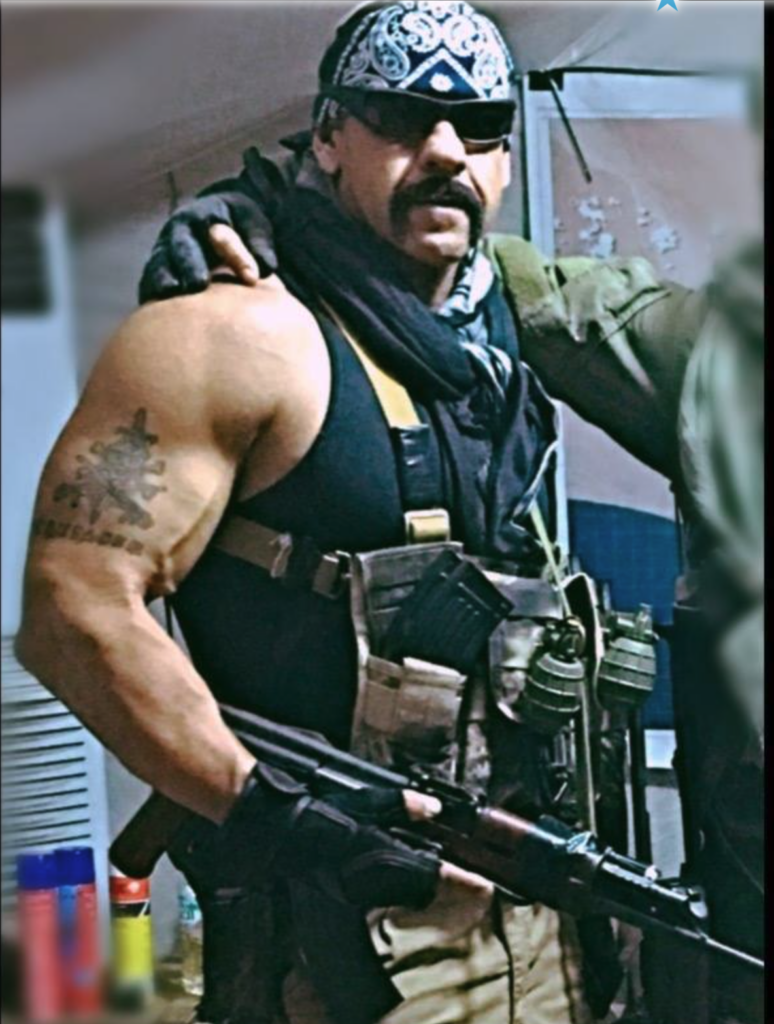
IMAGE: Dale Comstock in Yemen. (Source: Courtesy of Dale Comstock | via SOFREP)
The next day, they boarded a chartered jet in tactical gear, flew to a UAE base, and then travelled onward on an Emirati military aircraft to Assab in Eritrea. During that trip, a uniformed Emirati officer handed them 23 cards showing names and faces of intended targets. At the top of the list was Mayo. The cards carried the insignia of the UAE Presidential Guard. Golan and Gilmore also insisted that the team be folded into the UAE chain of command, issued uniforms and dog tags, and equipped by serving officers for what Golan himself described as “juridical reasons,” an effort to blur the line between soldier and mercenary in the event of exposure.
BuzzFeed’s reconstruction shows how quickly the experiment hardened into a unit with its own culture. The team flew out of Teterboro (NJ) after folding down the hotel’s U.S. flag, packed three cases of Basil Hayden’s for Christmas in Aden, and soon painted a skull and crossed swords emblem on their vehicles and living quarters. After the first mission, the Emiratis upgraded their “shitty Chinese” rifles to American‑made M4 carbines, C4 explosives, suppressors, and motorbikes fitted with magnet bombs, and Golan quietly swapped the cheaper ex‑Legionnaires for more Americans once he knew who was willing to cross the line.
Extinguishing a Political Party
The men sent to kill Mayo were not tracking an anonymous insurgent in the desert. They were hunting a known politician in a party office in a city the Saudi‑UAE coalition publicly claimed to be liberating. Al‑Islah, as Mayo’s complaint notes, is Yemen’s second‑largest political party, founded in 1990 and recognized internationally as a legitimate political actor whose leaders met Western diplomats and UN officials. Mayo himself had met the UN special envoy and the U.S. ambassador. He later went on to chair the Arab Parliament’s economic and financial affairs committee, as laid out in the complaint.
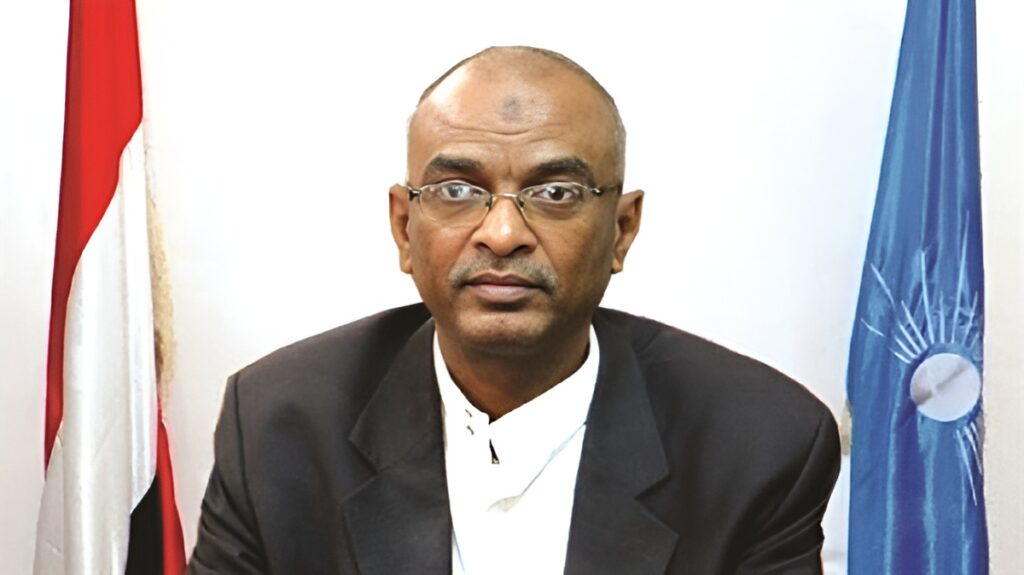
IMAGE: The head of the Yemeni Islah Party in the interim capital of Aden, the deputy head of the Parliamentary Bloc of the Islah Party, MP Insaf Mayo (Source: Al Islah, Yemen)
For Abu Dhabi, that legitimacy was beside the point. The UAE regarded al‑Islah as an arm of the Muslim Brotherhood, which it treats as a mortal political enemy, and made weakening or destroying the party one of its core goals in Yemen, a view also described in this TWZ War Zone analysis, by Joseph Trevithick, Mayo’s complaint says that from late 2015 onward the UAE used its own forces and local proxies to intimidate, detain, disappear, and assassinate al‑Islah figures in Aden. Spear was one instrument in that wider campaign. The complaint adds that Spear did not just kill. It says the team trained local recruits, including Yemeni men drawn from Emirati‑run detention and torture centers, to carry out further assassinations on the UAE’s behalf.
US and UN reporting describes the same pattern from another angle, with the State Department, Amnesty International, Freedom House, and a UN panel all documenting how Emirati‑backed Security Belt and Elite units rounded up, disappeared, and allegedly killed al‑Islah supporters and critics of the coalition under the guise of counterterrorism. The UN Group of Eminent Experts investigated ten assassinations in Aden and concluded there were reasonable grounds to believe the UAE was responsible, framing these killings as arbitrary deprivation of life in violation of human rights law.
The bombing of al‑Islah’s Aden office was not the end of the story. BuzzFeed documented more than two dozen assassinations of al‑Islah clerics and political figures in southern Yemen in the months that followed, while other reporting described a broader string of 25 to 30 killings, though attribution of each individual operation remains contested.
That is the real force of Mayo’s lawsuit. It argues that the UAE’s campaign was not conventional warfare but persecution of political opponents through extrajudicial killing and attempted killing of civilians. Mayo’s survival turned what might have remained rumor, drone footage, and whispered intelligence chatter into a case with named defendants, dates, payments, routes, and operational details.
The Israeli Legionnaire at the Center
At the center of the network stands Abraham Golan, whose biography reads like a map of the private war economy that grew in the shadows of the post‑9/11 order. The complaint identifies him as an Israeli‑Hungarian citizen living in Rancho Santa Fe at the time of the Yemen operation and owning multiple homes in California. BuzzFeed’s reporting adds that he said he was born in Hungary to Jewish parents, educated in France, served in the French Foreign Legion, and later worked on security contracts around the world.
Former intelligence officials quoted in reporting described him as competent, ruthless, and exactly the sort of operator hired for deniable missions. Golan himself did not deny the existence of the Yemen program. He told reporters there was a targeted assassination program in Yemen, said he was running it, and framed the operation as something sanctioned by the UAE within the coalition war. He even presented it as a model that the United States should consider using more broadly. One former CIA officer told investigators he initially dismissed the idea that Americans would be allowed to run such a program, then called back after checking his sources to say “there were guys basically doing what you said” and that they were “almost like a murder squad.”
That self‑presentation matters because it strips away the alibi of misunderstanding. The Mayo operation was not a surgical strike on an armed commander in an active firefight. The target was a politician. The method was a bomb on a party office door, followed by grenades and gunfire if necessary. The doctrine behind the mission was not counterterrorism in any meaningful legal sense. It was assassination sold as a service by a man who believed deniable killing could be normalized as statecraft.
Once that profile is established, later episodes stop looking random. Golan is not just a colorful mercenary figure on the fringes of empire. He is a bridge between state patrons, intelligence‑adjacent networks, ex‑commandos looking for new markets, and political violence dressed up in bureaucratic language.
From Aden to Belgrade
The Yemen program might still have been dismissed as a grotesque exception if the same names and methods had not surfaced again in the Balkans. In early 2018, Serbian media reported that Abraham Golan traveled to Serbia with former SEAL Team 6 operator Daniel David Corbett shortly before Corbett was arrested in Belgrade with a Zastava CZ99 pistol whose serial number had been filed off. Corbett was then held for roughly 18 months under Serbian judicial detention, after being indicted by a Belgrade court, as N1 reported, and his lawyer was later murdered in a still‑unsolved shooting in Belgrade, according to subsequent Serbian reporting.
BuzzFeed had already identified Corbett as one of Golan’s later hires, a DEVGRU veteran still in the Navy Reserve with a top‑secret clearance who joined the Yemen program in early 2016 even as he remained on U.S. rolls. The Mayo complaint adds that Golan kept recruiting from the United States after the initial deployment and that payments for the program flowed through U.S. bank accounts to team members. Open‑source material then picks Corbett up in Belgrade two years later, arrested with a defaced weapon after traveling there with Golan on security business.
Local tabloids and Russian outlets did not portray Corbett as a businessman caught in a weapons case. They described him as a professional assassin sent to liquidate a “well‑known and respected” Serbian politician or businessman, and some reports even floated his name in connection with the killing of Kosovo Serb leader Oliver Ivanović. One pro‑government paper, citing Interior Ministry sources, said Corbett worked for a “well‑known international security agency owned by an Israeli who is close to the former prime minister of Kosovo, Hashim Thaçi and Ramush Haradinaj,” then the president and prime minister of Kosovo.
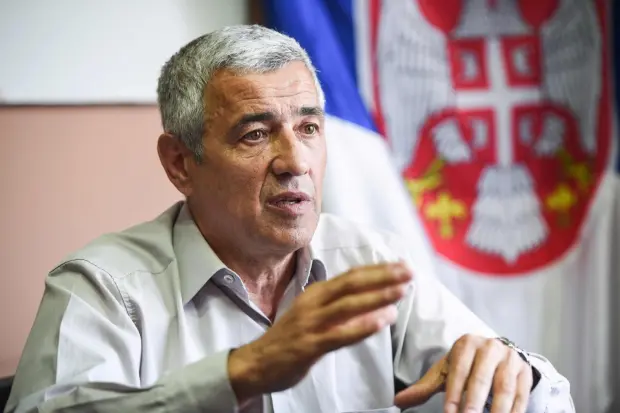
IMAGE: Serb politician Oliver Ivanovic assassinated in drive-by shooting, forcing suspension of Kosovo-Serbia talks (Source: New York Daily News)
That line is where the Serbia story locks back into the Golan network. Open‑source summaries, including Wikipedia’s entry on Golan and OSINT syntheses that cite specialist reporting, identify that unnamed Israeli owner as Golan and state that Golan and Corbett had traveled together in Serbia on security business just before the arrest. Another open‑source summary links Corbett’s Serbia arrest back to his earlier role in the Yemen assassination program run under Golan’s Spear Operations Group and repeats that his lawyer was killed before trial proceedings could fully play out.
The evidentiary texture in Serbia is different from Mayo’s complaint. Yemen gives us a detailed lawsuit, named defendants, and a reconstructed operation. Serbia gives us a convergence of tabloid reporting, specialist references, open‑source compilations, a weapons arrest, a murdered lawyer, and repeated claims that Golan and Corbett were operating together in a politically charged environment. But the pattern is too specific to ignore. A former DEVGRU operator in the mercenary world is detained in Belgrade with a defaced weapon. Local reporting ties him to an Israeli‑owned security structure close to Kosovo’s top leadership. The Israeli figure at the center fits the profile of a man already known to have run a paid assassination apparatus in Yemen. The TWZ War Zone report, looking at Spear’s record in Yemen, has already argued that it is hard to imagine U.S. intelligence did not know that a close ally had hired a Delaware company staffed with American veterans to conduct targeted killings in a war Washington closely monitored.
Taken together, these episodes suggest that the architecture revealed in Aden was not confined to the Red Sea. The same mix of ex‑commandos, Israeli‑linked private networks, political targets, and deniable patrons appears again in the Balkans, not as a courtroom‑finished fact pattern but as a heavily attested open‑source trail that points in the same direction.
The World Candace Owens Described
When Candace Owens published a long post in late 2025 claiming that a high‑ranking French official had warned her of a Macron‑ordered plot to kill her, much of the commentariat treated it as delirium. She wrote that a “green light was given to a small team in National Gendarmerie Intervention Group,” that “there is one Israeli that is on this assassination squad,” and that “Charlie Kirk’s assassin trained with the French legion 13th brigade with multi‑state involvement,” while naming French journalist Xavier Poussard as another alleged target. Those claims combined an elite French intervention unit, an Israeli operator, a French Legion‑trained assassin, and a transatlantic political vendetta in a way that sounded more like a thriller script than a plausible threat.
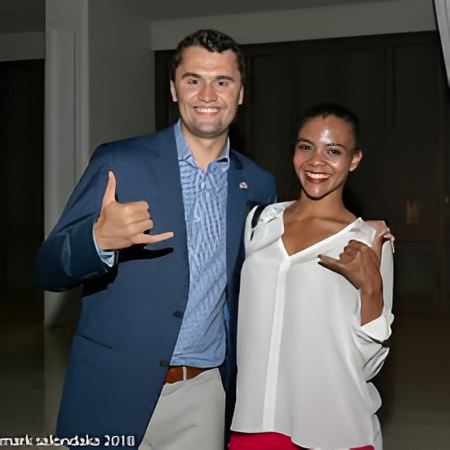
IMAGE: Candace Owens with Charlie Kirk at Halekulani Hotel, Waikiki, Hawaii, 20 Sept. 2018 (Source: Instagram | @charliekirk1776
Nothing in the Yemen filings or the Serbia coverage proves Owens’s story. What they do is erase the comfort of assuming that the world she described does not exist. The Mayo case and the surrounding reporting document an assassination program run for a Gulf monarchy by an Israeli operator who says he joined the French Foreign Legion, cultivated relationships in Israel (Mossad) and the Balkans, and led a mixed team of American veterans and ex‑Legionnaires on paid missions to kill political figures in Yemen. Open‑source material then places that same operator in Serbia on “security” work with a former SEAL later cast by local media as an assassin, and links their presence to an Israeli‑owned security structure close to Kosovo’s leaders.
Viewed against that backdrop, the profile Owens sketched stops looking like pure fantasy. A French Legion‑trained assassin with an Israeli connection does not sound like a cartoon villain when we already have a named man who fits that description and who has admitted to running a state‑sanctioned targeted killing program. A small mixed team with state backing tasked with eliminating political figures no longer belongs only to dystopian fiction. It is exactly what Spear became in Yemen, and what the Serbia material suggests may have reappeared in the Balkans under another flag.
The point is not to collapse Owens’s story into this one or to insist that the same squad targeted her. It is to show that once you accept that governments hire foreigners to kill on contract, the distance between “conspiracy theory” and “classified program” shrinks dramatically. Owens was mocked for describing a world where French structures, Israeli operators, and political killings intersect. The Yemen and Serbia records show that such a world already exists, even if its present centres of gravity are Abu Dhabi, Aden, and Belgrade rather than Paris and Washington.
When the Hidden World Becomes Visible
This is why the Yemen case matters beyond Yemen. It exposes a world in which foreign states can rent assassination capability from private operators, wrap them in uniforms for legal cover, and direct them not only against armed enemies but against politicians and party networks standing in the way of regional strategy. Once that world is acknowledged, claims that once sounded too lurid to print begin to look less like fantasy and more like distorted glimpses of a real transnational infrastructure of coercion. One former CIA officer’s admission that Spear’s men were “almost like a murder squad,” and specialist reporting that questions whether U.S. officials could really have been unaware of what an ally was doing in a war Washington helped run, only sharpens that discomfort.
The UAE sells itself to Western audiences as a bulwark against Iranian aggression, a responsible partner under missile fire that only wants regional stability. In practice, it hosts U.S. assets used to threaten Iran while at the same time organizing contract hits with Israeli operators and American mercenaries against politicians in Yemen, turning “counterterrorism” into a cover story for dismantling a rival political movement. The same monarchy that denounces Iran for destabilizing the region has quietly pioneered a privatized assassination architecture of its own, using Western expertise to fragment Yemen’s politics in ways Tehran could only dream of.
Mayo’s complaint gives that infrastructure names and mechanics. Dahlan appears as the broker. The UAE appears as the patron. Golan appears as the operator. Spear appears as the corporate shell, whilst American veterans and former Legionnaires appear as the workforce. The Mayo filing also spells out the legal terrain the operation tried to skirt, pointing to potential violations of the War Crimes Act, the federal conspiracy statute on killing and maiming abroad, and U.S. export‑control rules, and noting that the State Department says it has never licensed any American firm to supply combat troops or targeted assassination services to a foreign government. The Serbia material then widens the map, suggesting that the same kind of network did not vanish after Aden but resurfaced in another arena where political murder, organized influence, intelligence rumors, and private contractors overlap. (Raven Military and Golan-linked Serbia activity)
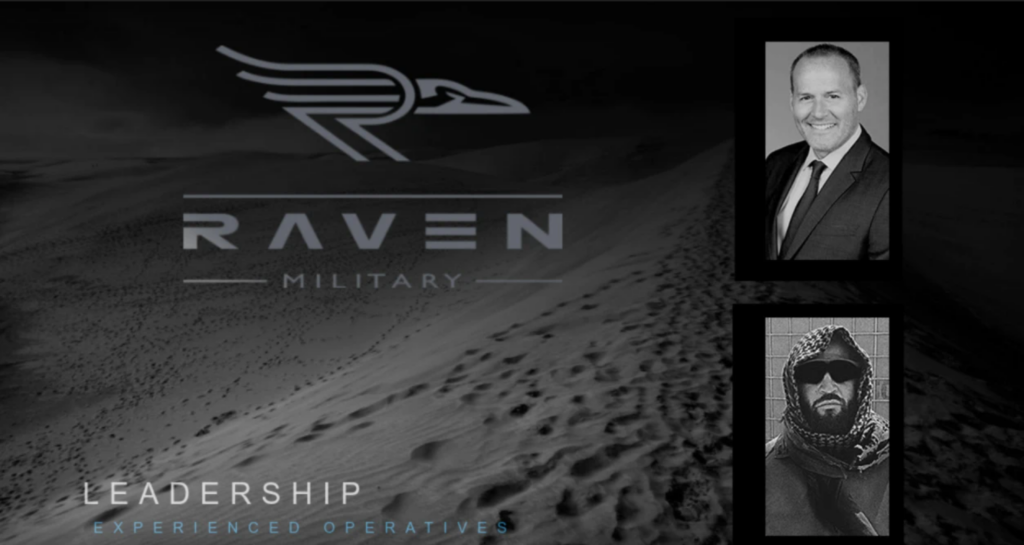
IMAGE: Raven Military firm’s official website until it was shut down after being contacted by journalists (Source: Insajder)
At the center of all this is Mayo himself, a parliamentarian who survived an attempt to erase him and who now forces that hidden machinery into the light of a U.S. courtroom. His case turns a secret war into a documented record. It says that what was done in Aden was not unfortunate excess, not rogue freelancing, and not collateral damage. It was a contract to make political opponents disappear.
That is the true scandal. A monarchy allied to Washington decided to break a political party in Yemen. It hired a Delaware‑registered company run by an Israeli‑Hungarian veteran of the French Foreign Legion to do it. That company recruited Western special operators, flew them through U.S. and Gulf transit points, handed them a kill list, and sent them to plant bombs on the doors of civilians marked for elimination.
Mayo lived long enough to tell the story. In doing so, he has exposed not just one assassination attempt but a model of power in which contracts replace law, deniability replaces accountability, and murder becomes one more outsourced function of empire.
READ MORE UAE NEWS AT: 21st Century Wire UAE Files
SUPPORT OUR INDEPENDENT MEDIA PLATFORM – BECOME A MEMBER @21WIRE.TV
VISIT OUR TELEGRAM CHANNEL
21st Century Wire is an alternative news agency designed to enlighten, inform and educate readers about world events which are not always covered in the mainstream media.
Source: https://21stcenturywire.com/2026/04/04/abu-dhabis-kill-list-inside-the-israel-uae-mercenary-death-squads-from-yemen-to-serbia/
Anyone can join.
Anyone can contribute.
Anyone can become informed about their world.
"United We Stand" Click Here To Create Your Personal Citizen Journalist Account Today, Be Sure To Invite Your Friends.
Before It’s News® is a community of individuals who report on what’s going on around them, from all around the world. Anyone can join. Anyone can contribute. Anyone can become informed about their world. "United We Stand" Click Here To Create Your Personal Citizen Journalist Account Today, Be Sure To Invite Your Friends.
LION'S MANE PRODUCT
Try Our Lion’s Mane WHOLE MIND Nootropic Blend 60 Capsules
Mushrooms are having a moment. One fabulous fungus in particular, lion’s mane, may help improve memory, depression and anxiety symptoms. They are also an excellent source of nutrients that show promise as a therapy for dementia, and other neurodegenerative diseases. If you’re living with anxiety or depression, you may be curious about all the therapy options out there — including the natural ones.Our Lion’s Mane WHOLE MIND Nootropic Blend has been formulated to utilize the potency of Lion’s mane but also include the benefits of four other Highly Beneficial Mushrooms. Synergistically, they work together to Build your health through improving cognitive function and immunity regardless of your age. Our Nootropic not only improves your Cognitive Function and Activates your Immune System, but it benefits growth of Essential Gut Flora, further enhancing your Vitality.

Our Formula includes: Lion’s Mane Mushrooms which Increase Brain Power through nerve growth, lessen anxiety, reduce depression, and improve concentration. Its an excellent adaptogen, promotes sleep and improves immunity. Shiitake Mushrooms which Fight cancer cells and infectious disease, boost the immune system, promotes brain function, and serves as a source of B vitamins. Maitake Mushrooms which regulate blood sugar levels of diabetics, reduce hypertension and boosts the immune system. Reishi Mushrooms which Fight inflammation, liver disease, fatigue, tumor growth and cancer. They Improve skin disorders and soothes digestive problems, stomach ulcers and leaky gut syndrome. Chaga Mushrooms which have anti-aging effects, boost immune function, improve stamina and athletic performance, even act as a natural aphrodisiac, fighting diabetes and improving liver function. Try Our Lion’s Mane WHOLE MIND Nootropic Blend 60 Capsules Today. Be 100% Satisfied or Receive a Full Money Back Guarantee. Order Yours Today by Following This Link.



| Visits: | 1,799,750,246 |
| Stories: | 8,628,117 |
Whistler Blowers, Insiders


Q is Cornholio?
https://www.youtube.com/watch?v=tgH9rK9YKZM