

Why Classic Scrum Fails Startups: Oleksandr Boiko, CTO of Field Complete

Scrum was built for predictability — not survival. In startups, that’s a problem.
Oleksandr Boiko has been building software for 18 years. He’s the CTO at Field Complete and Principal Backend Engineer at Plat.ai, both US companies. Managing teams across three continents, he’s shipped products in SaaS, FinTech, and Video-on-Demand.
His take on Scrum? It slows startups down.
“Scrum is an implementation of Agile,” Boiko says. “When management decides to use Scrum, it’s usually trying to control chaos with a familiar tool.”
But chaos isn’t bad for early-stage startups. It’s normal. The problem is trying to control it with the wrong processes.
Three Things That Matter

Boiko says startups need to focus on three metrics:
Time. Perfect software tomorrow is worthless. You need working results today.
Developer energy. The early team honeymoon phase is the most productive period. Waste it on bureaucracy and you lose momentum.
Direction. Tasks from management or early customers need to stay flexible.
When teams force themselves into Scrum, they lose that flexibility.
“Sprints either don’t finish, or teams rush to hit demo dates and sacrifice quality,” Boiko explains. “You get bad estimates, demotivated developers, and wasted energy. Plus, too many meetings about process instead of product.”
The Control Problem
Startups move differently from corporations. There’s no ideal team. No stable processes. Things change too fast for templates.
“Scrum is about control, not speed,” Boiko says. “We focus on product. We give developers ownership, a voice, and the ability to influence decisions.”
In standard Scrum, roles are separated. Product Owners, developers, and QA rarely discuss trade-offs together before a release. Everyone owns their piece, not the result.
Boiko combines responsibility instead of dividing it.
What Works Instead
Both Field Complete and Plat.ai, as well as previous companies, use Boiko’s modified Scrumban. It adapts to fast releases.
The concept: iterate on releases, not sprints.
“We plan a release at the start, but the content can change,” he says. “Management gets flexible with dates. Development focuses on quality.”
When we first tried this model, the team literally exhaled — the pressure of chasing sprint dates disappeared overnight.
If a feature isn’t ready, pull it from the release. Don’t stop everything else. Nobody breaks the cycle.
What his teams do:
- Fewer meetings. Key ad-hoc or weekly sessions that combine planning and grooming.
- Flexible estimates. Based on actual velocity or skipped entirely. Quality matters, not burn rate.
- No downtime. Developers always know what’s next. Leads prepare the backlog.
- QA involvement. Testers help define when tasks are done and influence release dates.
- Changes mid-iteration are fine. Deliver what the business needs, not what was planned.
“We get higher quality and less technical debt, which positively impacts time-to-market for each subsequent iteration,” Boiko says. “Developers stop guessing task duration. They solve problems instead.”
Skip the WIP Limits
Boiko thinks too many constraints slow things down.
“WIP limits are another barrier to time-to-market,” he says. “Especially with teams across continents and time zones. It’s an anchor.”
But keep daily standups and retrospectives. They’re for team sync and catching problems early.
Results Over Story Points
Boiko’s teams don’t measure effectiveness in story points. They look at product quality and customer feedback.
“Both my products are B2B SaaS,” he says. “We check system stability, speed, feature quality, and user response. When we did B2C, we tracked performance under load, response time, and resource utilization.”
People over processes, plus customer satisfaction. That’s actual Agile.
How He Leads
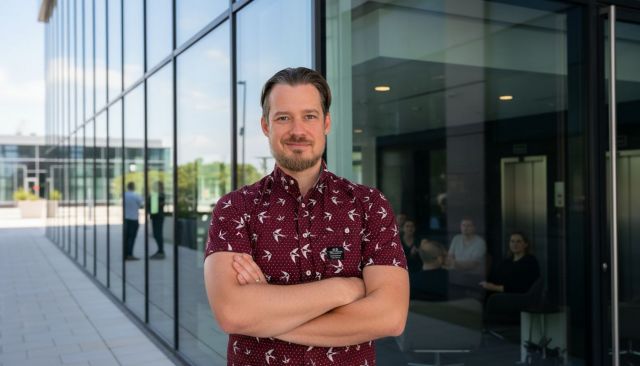
“In startups, everyone wears multiple hats,” Boiko says. “Sometimes there’s no one for a new role, and someone has to take it. In healthy teams, several people volunteer.”
His management approach: involvement, trust, voice.
“Everyone should be in the right spot. Enjoying their work, influencing outcomes, feeling connected. If someone sees a better way, they speak up. And they get heard.”
At his companies, business brings problems to developers, not solutions. They figure out the best approach together.
“When you build trust from top management to juniors, business generates ideas and development says what makes sense to build and when.”
Scaling Culture Across Time Zones
Leading distributed teams across three continents adds another layer of complexity. Time zones, communication styles, and cultural nuances can break even well-designed processes.
Boiko says trust and visibility replace control when teams are global.
“We can’t rely on constant meetings. We rely on shared context and autonomy,” he explains. “The best developers don’t wait for permission — they understand the product goal and move fast toward it.”
His leadership philosophy blends autonomy with alignment — giving people space to act, but clarity on why their work matters.
AI in the Process
Besides Field Complete, Boiko works on Plat.ai, building a loan origination system for US lenders.
“We use AI to evaluate borrower reliability and assess risks,” he explains. “In fintech, errors cost too much. We combine specialized models with human oversight. We integrated LLM tools, but with strict limits and checks.”
This gives him insight into how technology affects business efficiency and team management.
“AI doesn’t replace people. It scales discipline.”
What Comes Next
“The worst thing you can do is freeze the process while the environment keeps changing,” Boiko says.
For him, the future isn’t about choosing between discipline and flexibility — it’s about combining them in ways that fit the context.
“Startups don’t need Scrum certificates and ritual meetings,” he says. “They need to learn fast, change priorities, and ship quality results. Everything else is noise.”
As AI tools become standard in engineering, Boiko believes team dynamics will evolve — where machine intelligence assists human teams in real time.
“In a few years, project management won’t be about boards and sprints,” he predicts. “It’ll be about dynamic orchestration — humans and AI co-creating workflows that adapt on their own.”
For Boiko, agility isn’t a framework — it’s a mindset of continuous delivery and trust.
Oleksandr Boiko is CTO of Field Complete and Principal Backend Engineer at Plat.ai. Over 18 years, has built large-scale products in SaaS, FinTech, and Video-on-Demand. Manages global engineering teams and judges Ukrainian-founded startups at UAtech Venture Night during Web Summit Vancouver — an international platform for emerging tech leaders. Also recognized for mentoring early-stage founders and evaluating AI-driven SaaS startups, bridging technical execution with business scalability.
About the author
Ryan Feldman is a technology writer and startup analyst covering engineering culture, product development, and scaling challenges in early-stage companies. With a focus on how real teams build and ship software, they write founder-driven stories that bridge technical decision-making with business impact, highlighting pragmatic alternatives to rigid frameworks in fast-moving environments.
Anyone can join.
Anyone can contribute.
Anyone can become informed about their world.
"United We Stand" Click Here To Create Your Personal Citizen Journalist Account Today, Be Sure To Invite Your Friends.
Before It’s News® is a community of individuals who report on what’s going on around them, from all around the world. Anyone can join. Anyone can contribute. Anyone can become informed about their world. "United We Stand" Click Here To Create Your Personal Citizen Journalist Account Today, Be Sure To Invite Your Friends.
LION'S MANE PRODUCT
Try Our Lion’s Mane WHOLE MIND Nootropic Blend 60 Capsules
Mushrooms are having a moment. One fabulous fungus in particular, lion’s mane, may help improve memory, depression and anxiety symptoms. They are also an excellent source of nutrients that show promise as a therapy for dementia, and other neurodegenerative diseases. If you’re living with anxiety or depression, you may be curious about all the therapy options out there — including the natural ones.Our Lion’s Mane WHOLE MIND Nootropic Blend has been formulated to utilize the potency of Lion’s mane but also include the benefits of four other Highly Beneficial Mushrooms. Synergistically, they work together to Build your health through improving cognitive function and immunity regardless of your age. Our Nootropic not only improves your Cognitive Function and Activates your Immune System, but it benefits growth of Essential Gut Flora, further enhancing your Vitality.

Our Formula includes: Lion’s Mane Mushrooms which Increase Brain Power through nerve growth, lessen anxiety, reduce depression, and improve concentration. Its an excellent adaptogen, promotes sleep and improves immunity. Shiitake Mushrooms which Fight cancer cells and infectious disease, boost the immune system, promotes brain function, and serves as a source of B vitamins. Maitake Mushrooms which regulate blood sugar levels of diabetics, reduce hypertension and boosts the immune system. Reishi Mushrooms which Fight inflammation, liver disease, fatigue, tumor growth and cancer. They Improve skin disorders and soothes digestive problems, stomach ulcers and leaky gut syndrome. Chaga Mushrooms which have anti-aging effects, boost immune function, improve stamina and athletic performance, even act as a natural aphrodisiac, fighting diabetes and improving liver function. Try Our Lion’s Mane WHOLE MIND Nootropic Blend 60 Capsules Today. Be 100% Satisfied or Receive a Full Money Back Guarantee. Order Yours Today by Following This Link.


| Visits: | 1,781,048,176 |
| Stories: | 8,591,153 |
Whistler Blowers, Insiders

