

Indian court reaffirms Dalit Christians have no right to lower-caste protections

NEW DELHI, India — The Catholic Church in India has described as “misleading” a Supreme Court ruling that reaffirmed Dalit Christians have no right to the constitutional protections and government benefits reserved for lower-caste Hindus, Sikhs, and Buddhists.
Dalit Christians account for more than two-thirds of India’s approximately 35 million Christians, and the ruling has generated widespread concern in the community.
“The Supreme Court’s judgment on Dalit Christians is very much misleading to the general public, because it is an individual case and doesn’t come on our ground,” the Commission for Scheduled Castes of the Catholic Bishops’ Conference of India (CBCI) said in a March 31 statement.
On March 24, a two-judge bench of the Supreme Court ruled in Chinthada Anand v. State of Andhra Pradesh that a person cannot simultaneously profess a religion other than Hinduism, Sikhism, or Buddhism and claim membership in a Scheduled Caste.
The case involved a Christian pastor born into the Madiga community, a Scheduled Caste in Andhra Pradesh, who sought protection under the Scheduled Castes/Scheduled Tribes (Prevention of Atrocities) Act after alleging he was assaulted with caste-based slurs. The court upheld a lower-court ruling quashing his complaint, finding that his conversion to Christianity resulted in the loss of his Scheduled Caste status.
Father Bijoy Kumar Nayak, secretary of the CBCI Commission for Dalits, told EWTN News that “this is not a verdict on our decades-old demand. The court made this observation while dismissing the appeal of a convert pastor who sought protection under the Atrocities Against Dalits.”
“We have been fighting for the last 75 years … for the constitutional rights that were denied by the presidential order of 1950. Our case is in the honorable Supreme Court … the appeal of the cause based on the constitutional rights,” the commission said.
Despite the ruling, the commission expressed confidence in an eventual resolution. “We have hope in God as well as in judiciary that the justice will be done to the Dalit Christians,” the commission’s statement said.
What is at stake
“Dalit,” literally meaning “trampled upon,” refers to communities at the bottom of India’s traditional caste hierarchy, historically treated as “untouchables” and relegated to menial jobs such as scavenging while living in segregation from upper castes.
In 1950, the Indian government issued a presidential order designating Hindu Dalits as “Scheduled Castes,” making them eligible for free education, a 15% quota in government jobs, and reserved seats in legislatures. Those protections were extended to Sikh Dalits in 1956 and Buddhist Dalits in 1990 but have been denied to Muslim and Christian Dalits.
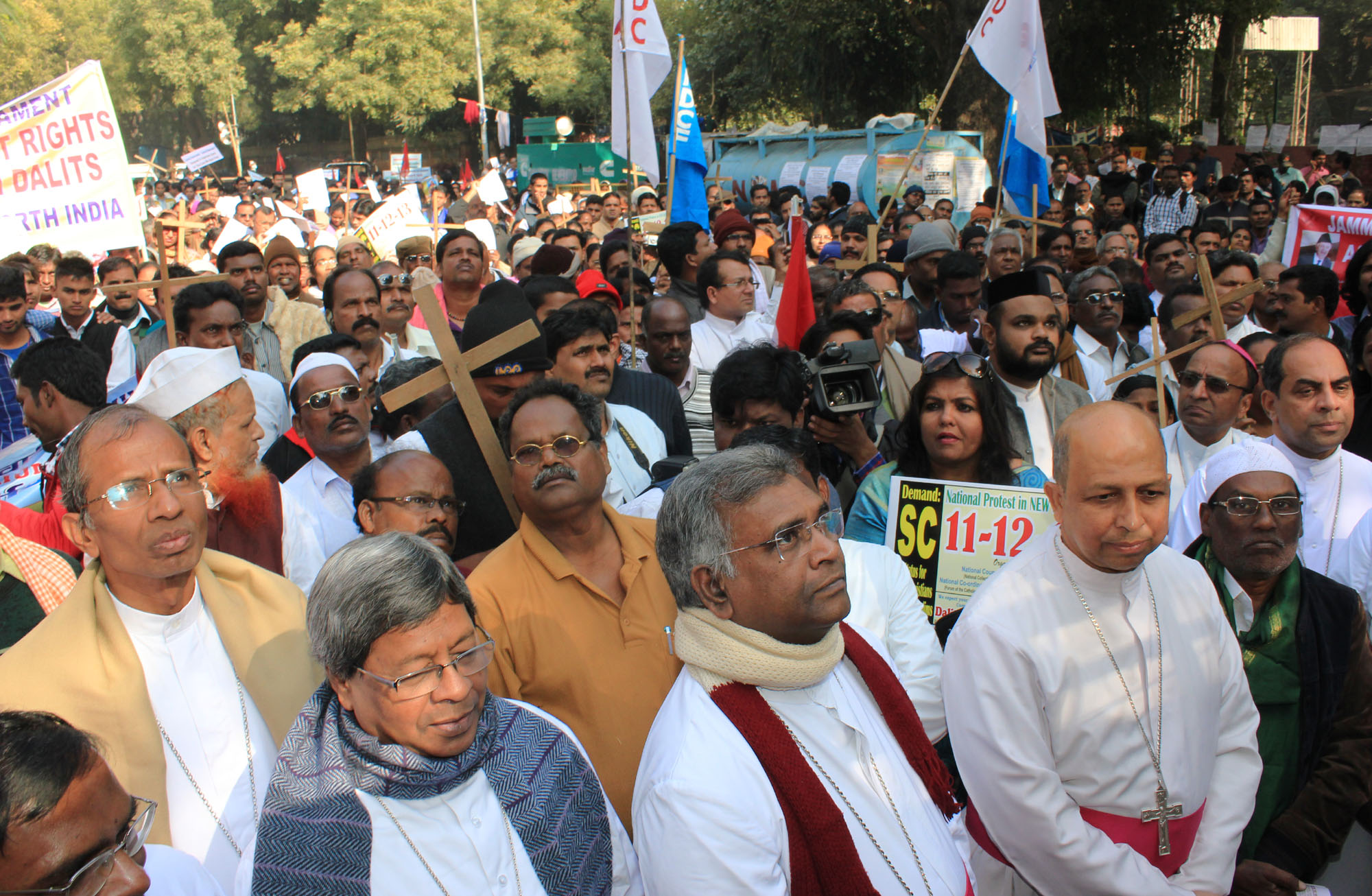
Christian and civil rights groups have challenged the constitutionality of this exclusion. A petition filed in the Supreme Court in 2004 demanding an end to discrimination against Dalit Christians remains pending before a three-judge bench.
Franklin Caesar Thomas, the Dalit Catholic lawyer who filed the 2004 petition, told EWTN News from southern Tamil Nadu state that the latest ruling has no bearing on the broader constitutional challenge.
“This order has created a lot of confusion and fear among the people. But it does not have any legal impact,” Caesar Thomas said.
He noted that past inquiry commissions, including the Justice Ranganath Misra Commission, “have clearly stated that conversion to Christianity does not end caste discrimination in society.”
Government commission still pending
However, the Hindu nationalist Bharatiya Janata Party government that came to power in 2014 demanded a fresh inquiry during the continued court hearing. A new commission under Justice K.G. Balakrishnan, a former chief justice of India, was established in October 2022 to study the social status of converts. The commission has yet to submit its report, with the latest deadline set for April 10.
The concern generated by the Supreme Court’s remarks was evident in Indian Currents, a Catholic sociopolitical weekly, which published several critical articles about the verdict.
“The recent judgment of the Supreme Court to continue the marginalization of those in the peripheries based on their religious identity is revelatory in itself,” the magazine’s editorial said.
A decades-long struggle
Since 1990, when Buddhists were included in the Scheduled Caste category, the Catholic Church in India has waged vigorous campaigns for the same recognition for Christian Dalits, with Aug. 10 observed annually as a “black day” with protests across the country. Thousands of demonstrators have been brought to New Delhi each year, led by bishops, to press the demand.
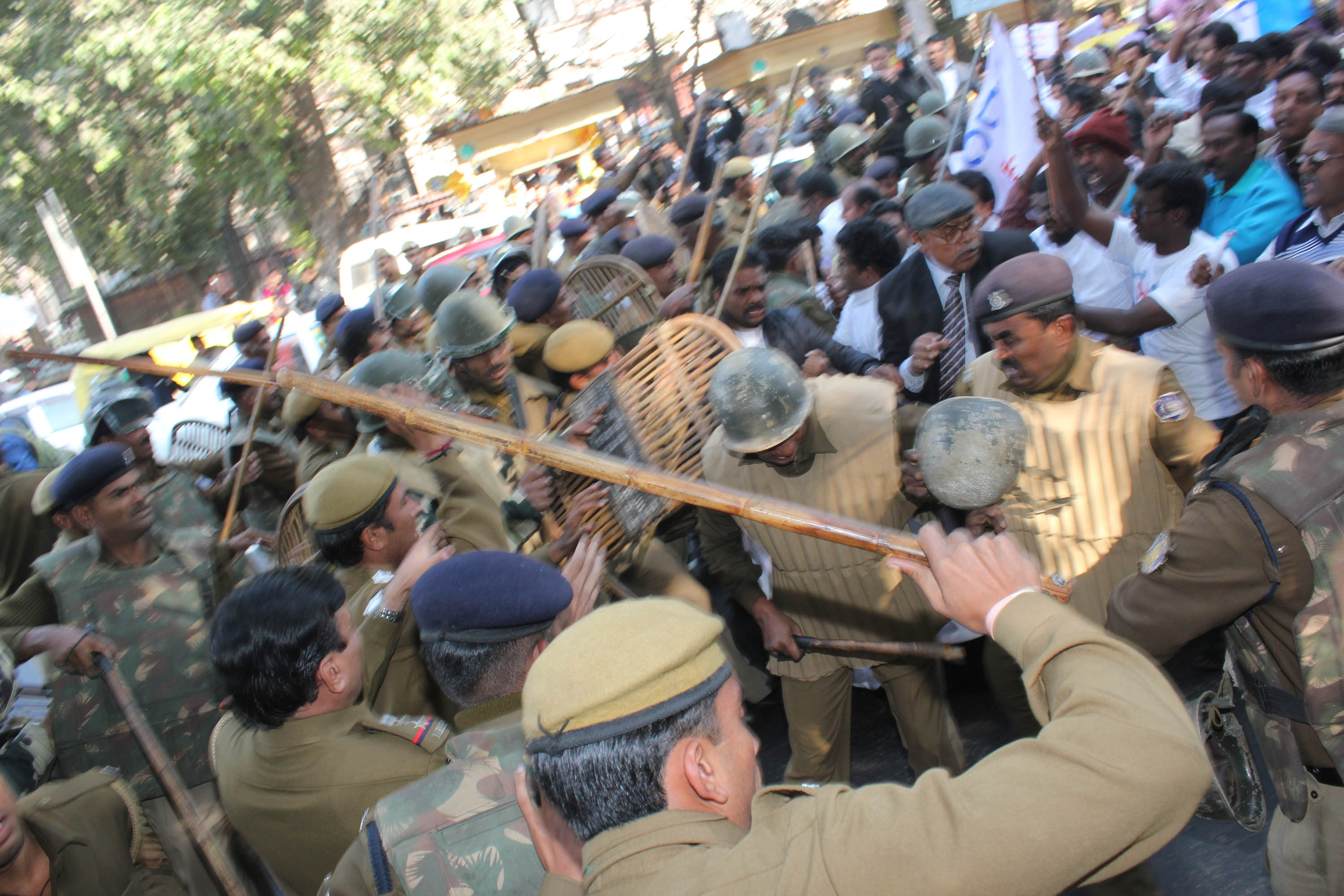
During a 2013 march to Parliament, police in New Delhi sprayed dirty water from water cannons on protesting priests in cassocks and other Dalit Christian demonstrators — images that Dalit Christian advocates say illustrate the institutional bias against their cause.
The CBCI’s biennial assembly in Bangalore in February 2026 reiterated the Church’s position.
“The denial of rights to Dalit Christians continues for decades as an indirect form of discrimination, despite numerous appeals for equality and justice. We express our concerns about the denial of rights to the minorities, as such acts weaken the democratic fabric of our society,” the assembly’s statement said.
Source: https://www.ewtnnews.com/world/asia-pacific/indian-court-reaffirms-dalit-christians-have-no-right-to-lower-caste-protections
Anyone can join.
Anyone can contribute.
Anyone can become informed about their world.
"United We Stand" Click Here To Create Your Personal Citizen Journalist Account Today, Be Sure To Invite Your Friends.
Before It’s News® is a community of individuals who report on what’s going on around them, from all around the world. Anyone can join. Anyone can contribute. Anyone can become informed about their world. "United We Stand" Click Here To Create Your Personal Citizen Journalist Account Today, Be Sure To Invite Your Friends.
LION'S MANE PRODUCT
Try Our Lion’s Mane WHOLE MIND Nootropic Blend 60 Capsules
Mushrooms are having a moment. One fabulous fungus in particular, lion’s mane, may help improve memory, depression and anxiety symptoms. They are also an excellent source of nutrients that show promise as a therapy for dementia, and other neurodegenerative diseases. If you’re living with anxiety or depression, you may be curious about all the therapy options out there — including the natural ones.Our Lion’s Mane WHOLE MIND Nootropic Blend has been formulated to utilize the potency of Lion’s mane but also include the benefits of four other Highly Beneficial Mushrooms. Synergistically, they work together to Build your health through improving cognitive function and immunity regardless of your age. Our Nootropic not only improves your Cognitive Function and Activates your Immune System, but it benefits growth of Essential Gut Flora, further enhancing your Vitality.

Our Formula includes: Lion’s Mane Mushrooms which Increase Brain Power through nerve growth, lessen anxiety, reduce depression, and improve concentration. Its an excellent adaptogen, promotes sleep and improves immunity. Shiitake Mushrooms which Fight cancer cells and infectious disease, boost the immune system, promotes brain function, and serves as a source of B vitamins. Maitake Mushrooms which regulate blood sugar levels of diabetics, reduce hypertension and boosts the immune system. Reishi Mushrooms which Fight inflammation, liver disease, fatigue, tumor growth and cancer. They Improve skin disorders and soothes digestive problems, stomach ulcers and leaky gut syndrome. Chaga Mushrooms which have anti-aging effects, boost immune function, improve stamina and athletic performance, even act as a natural aphrodisiac, fighting diabetes and improving liver function. Try Our Lion’s Mane WHOLE MIND Nootropic Blend 60 Capsules Today. Be 100% Satisfied or Receive a Full Money Back Guarantee. Order Yours Today by Following This Link.


| Visits: | 1,800,187,675 |
| Stories: | 8,628,692 |
Whistler Blowers, Insiders

