

9/11 + 25: When History Turns Silver

This post 9/11 + 25: When History Turns Silver appeared first on Daily Reckoning.
It’s September 1st and we’re ten days out from 9/11 + 25 years. Next week, on Friday, September 11th, we’ll say something suitable for the occasion.
But in the runup, I’ve been pondering the meaning – and power – of historical milestones, especially now that we’ve reached a quarter-century post-event, aka the “silver anniversary.” Let’s dig in…
Reflection and Recollection
The tradition of silver at 25 years began in the 1500s, in German mining towns. It’s an idea with staying power, considering that people still follow the custom after 500 years; eg., a wedding anniversary. As for silver, it’s ceremonial and polished, if not elegant. And it suggests reflection and continuity.
Then again, how “polished” is a calamitous event with national and international impact? What happens on year 25 when a date recalls a path of painful history?
At five years, a terrible event may still be playing out, complete with raw scars if not open wounds. By the tenth anniversary, remembrance likely includes rituals, and approved versions of public vocabulary. By year 20, public ceremonies angle towards a historical view, although it’s not quite yet a museum display.
Now, skip ahead to a 50th anniversary, by which time memory has transformed into heritage. That is, most adult eyewitnesses are gone, or at best elderly and fading, and thus is ceremony often wrapped in an evolved sense of national nostalgia.
Which brings us back to the 25th anniversary, moored in the middle of this river of time. The initial shock has passed. Early monuments are up. Public language is distant enough to speak in terms of doctrine yet also close enough to events that living witnesses can still object.
Still, it’s fair to say that by the silver moment, at 25 years, much memory has crystallized into something like an approved curriculum and ceremony, all intended to become the “official” explanation.
The Battle to Harness Legitimacy
In other words, at five and ten, recollection is controlled by recent shock and pain. At twenty, history writers and policy wonks are reorganizing evidence and framing future narratives. Then by year 50, the state and culture own the story.
But midway, at the 25th annual mark? Memory remains contested. Witnesses, institutions and political actors all compete for positional authority. Participants demand fidelity to what they saw, heard and lost. While younger people who inherited the consequences ask what the event means to them; that is, why it still matters and where does its legacy take them as they blaze their own trail through life.
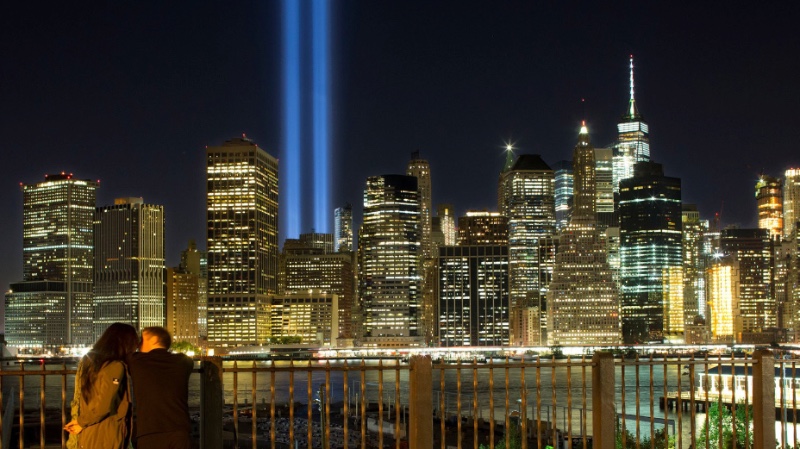
Remembering 9/11. Credit New York Times.
At year 25, the story still begins by honoring the loss; but it can end by narrowing the past. That is, grief has transformed into doctrine which then becomes a shield against questions; definitely, it’s a problem with “official” history. And inevitably, governments, political actors, media, academics, museums and other groups – think of veterans – begin to close ranks around the version of history that future citizens will be encouraged to remember.
Another angle is that, by year 25, state actors and other powerful interests have converted the catastrophe into what passes for moral permission to do… well, to do whatever they want. Old pain and scars become the basis for current policy, while politicians and policymakers willingly mask their own failures with patriotic language, if not treat inquiry as disloyalty.
In this sense, a 25th anniversary is a center of gravity within the long-term contest over who gets to define the past for the benefit of the present and future. So, as noted above, we’ll look at 9/11 on 9/11. But for today, let’s revisit two other 25-year markers from long-ago in 1966, both of which are revealing.
First, on December 7, 1966, America recalled Japan’s surprise attack on Pearl Harbor in 1941. Also in 1966, the Soviet Union recalled the German invasion of June 21, 1941, aka “Operation Barbarossa” which led to what Russians call the “Great Patriotic War.”
Both Barbarossa and Pearl Harbor began with surprise attacks. Both led to immediate and vast warfare, immense death and destruction, and creation of a very different, postwar European and Pacific worlds. Yet by their respective 25thanniversaries, the two events played different roles in different cultures.
In the U.S., Pearl Harbor+25 began with memorial and grief for the direct loss, but then followed an upbeat arc: from defeat to mobilization, then victory, occupation, global reach, superpower status, and even alliance with the former foe.
In the USSR, the quarter-century remembrance also mourned the dead and celebrated victory. Plus, it harnessed past suffering to reinforce the ongoing legitimacy of Communist state power, along with permanent anti-capitalist/imperialist vigilance.
Again, as we approach 9/11+25, the question is not just how a nation remembers its past, but who controls the framing and narrative; of what questions remain permissible, and whether the dead are honored by truth in full, or by a polished story that leaves too much out.
Pearl Harbor+25: Grief Recast as Victory
On December 7, 1966, America marked Pearl Harbor+25 while already moving towards another Asian war, this one in Vietnam. Many veterans of the fight against Japan were in the prime of life. Certainly, many were political actors if not movers and shakers in public life, business, media and academe; and of course, the U.S. was full of old vets who swapped tales down at the VFW halls.
In this sense, the 25th Pearl Harbor anniversary was not just history, but a state-level reminder of the need for America to be vigilant: watch for enemies, watch the sky, watch the Pacific, expect surprise, and never assume that vast oceans protect America. The lessons of December 7th carried great force.
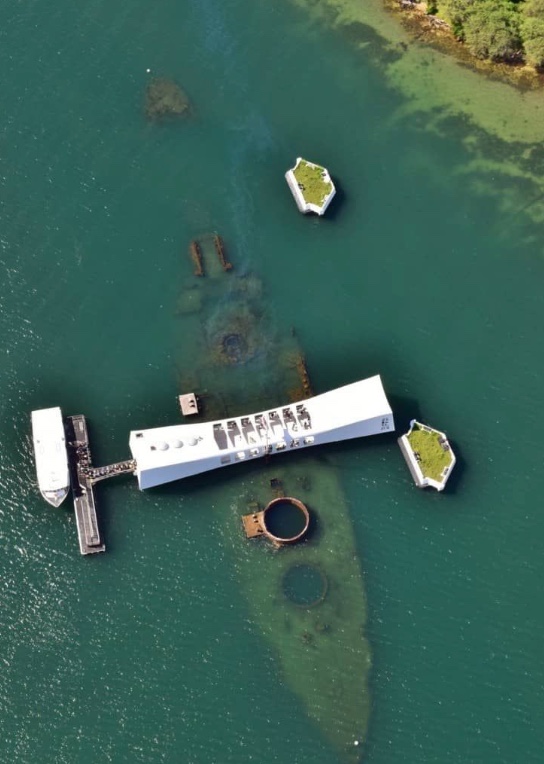
USS Arizona Memorial, Pearl Harbor. Credit U.S. Navy.
In this sense, Pearl Harbor+25 differed from our own, upcoming 9/11+25 because, by 1966, the U.S. could look back on wartime victory of great scale and scope. Between 1941 – 45, American energy, industry and arms defeated and occupied Japan and converted that nation into a Cold War ally. Thus did memory and memorial begin in fire and death, but the arcs ended in triumph and overwhelming American power and influence.
Along these lines, the sunken battleship ex-USS Arizona (BB-39) and the USS Arizona Memorial mattered much to the 25th anniversary in 1966. By then, an elegant white structure spanned the ruined ship without touching it, while the names of entombed Sailors and Marines were carved into white marble within the structure. The harbor’s flat water and soft breezes remain part of the evidence; the memorial admits the disaster without turning loss into abstraction.
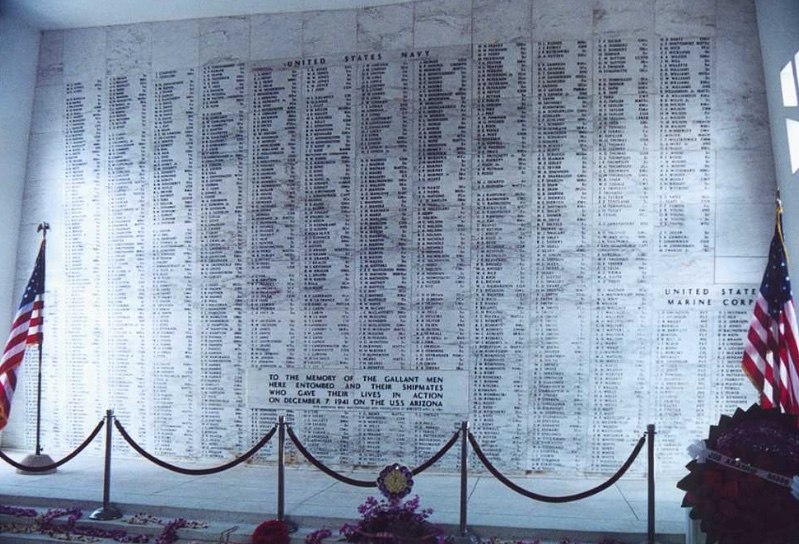
List of names, lost on December 7, 1941. Credit U.S. Navy.
Artistically, the memorial carries the Pacific war’s whole message: surprise attack, mobilization, energy, industry, logistics, overcoming the tyranny of geography, fighting, bombing, blood, surrender and the postwar American order. Yet at root, the overall physical Arizona memorial displays the human cost as exact and visible, with names fixed in stone where no future politician can erase them.
In the Soviet Union, Memory Became State Armor
In the Soviet Union of 1966, the 25-year reckoning worked differently. Emphasis fell less on the final victory of 1945 than on the treacherous surprise of Germany’s June 1941 invasion, the opening of the Great Patriotic War.
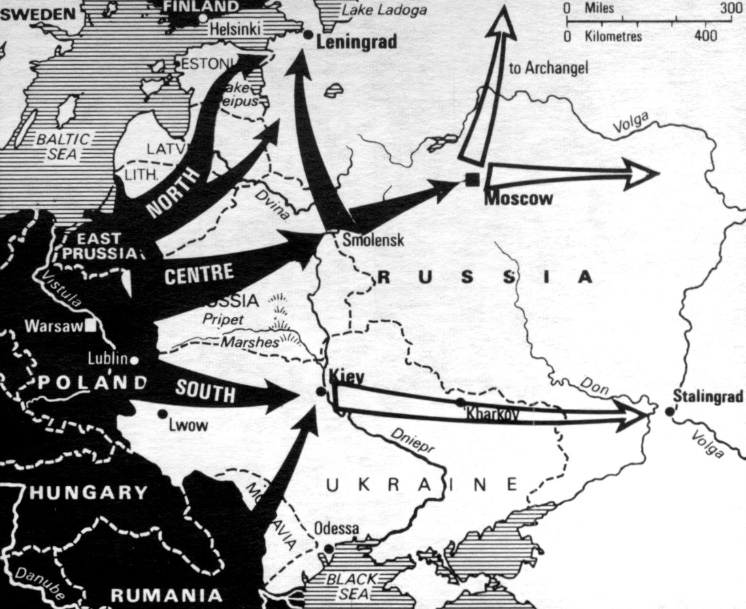
Germany’s Operation Barbarossa. Credit Imperial War Museum.
By 1966, that memory had become an emotional and political foundation for Soviet legitimacy. Moscow had already made the May 9th “Victory Day” remembrance into a public holiday, and the story of total, continental-scale war became more than solemn remembrance; it was hard proof that the Communist Party had saved both the post-1917 Soviet state as well as the ancient and venerable Russian civilization.
The Soviet sacrifice was immense: about 27 million dead, of whom 10 million were military and 17 million civilians. Plus, innumerable cities and regions were occupied, burned, wrecked and starved. Indeed, Soviet losses surpass anything like easy comprehension to an outsider, and even today in 2026 families across the former-USSR still live with painful memories.
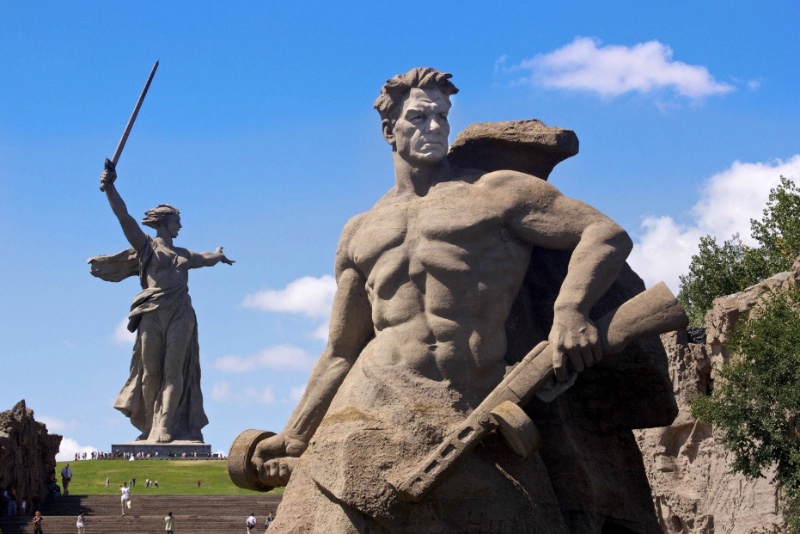
Soviet monuments at Stalingrad. Credit Kremlin.ru.
At the same time, the Soviet silver anniversary also showed how total state power can dominate memory. Official history emphasized unyielding resistance, heroic suffering and inevitable triumph, while masking Stalin’s pre-war purges, misjudgments and terror. The state-level story elevated military endurance but suppressed political culpability. It honored veterans yet subordinated them to the power of the Communist Party. The famous phrase “No one and nothing is forgotten” sounded absolute, but many questions remained dangerous to ask.
In the Cold War context, the 1966 message was contemporary as much as historical. For example, West Germany’s place in NATO was cast as revanchism in postwar dress, while the U.S. war in Vietnam became ipso facto proof of imperial aggression.
All in all, in 1966, Soviet postwar power – its comprehensive, national-scale militarism and Communist international agitprop – was presented not only as the force that defeated H!tler and the N@z!s, but also as the shield of global peace; and hence, went the argument, none of Moscow’s policies of the era deserved scrutiny.
The Lesson of 25 Years
There’s more to say; whole libraries exist on these subjects. But as we approach America’s 9/11+25, the lesson is clear: a silver anniversary can sharpen national understanding, but also harden a narrative into official doctrine, if not national myth.
Handled honestly, a 25th year, silver remembrance can widen inquiry while witnesses remain to correct the record. But handled politically, remembrance risks morphing into liturgy that narrows inquiry because the entireties of an event – its overall moments in time – are now masked by well-choreographed ceremony and approved vocabulary. As in… yes, we honor the dead; but at the same time bury the inconvenient questions.
Even today, certain Big Questions from 1941 have never quite disappeared: Did President Franklin Roosevelt know enough to warn his Pearl Harbor commanders that Japan would strike, yet fail to raise the alarm? Did Joseph Stalin know enough to see Barbarossa coming, yet fail to prevent the catastrophe? In both cases, the issue is not cheap accusation; it’s accountability.
A serious anniversary of a serious event – and certainly, its silver moment – must be a “house with many mansions,” to borrow an old term (John 14:2-6). Recollection must make room for heroism, courage, fear, grief, sacrifice, policy success; but also, for policy failure, mistakes and unintended consequences.
A day of remembrance is a teachable moment, or otherwise it becomes mere theater. Worse, it becomes whitewash for people and institutions that deserve true scrutiny. And whether the subject is Pearl Harbor, Barbarossa or our own upcoming 9/11, the warning stands: memory monopolized by the state uses just enough truth to build a grand façade. It salutes the dead, waves the flag, and asks the rest of us to stop asking questions.
But don’t stop asking questions. And that’s all for today.
Thank you for subscribing and reading.
The post 9/11 + 25: When History Turns Silver appeared first on Daily Reckoning.
This story originally appeared in the Daily Reckoning
Source: https://dailyreckoning.com/9-11-25-when-history-turns-silver/
Anyone can join.
Anyone can contribute.
Anyone can become informed about their world.
"United We Stand" Click Here To Create Your Personal Citizen Journalist Account Today, Be Sure To Invite Your Friends.
Before It’s News® is a community of individuals who report on what’s going on around them, from all around the world. Anyone can join. Anyone can contribute. Anyone can become informed about their world. "United We Stand" Click Here To Create Your Personal Citizen Journalist Account Today, Be Sure To Invite Your Friends.
LION'S MANE PRODUCT
Try Our Lion’s Mane WHOLE MIND Nootropic Blend 60 Capsules
Mushrooms are having a moment. One fabulous fungus in particular, lion’s mane, may help improve memory, depression and anxiety symptoms. They are also an excellent source of nutrients that show promise as a therapy for dementia, and other neurodegenerative diseases. If you’re living with anxiety or depression, you may be curious about all the therapy options out there — including the natural ones.Our Lion’s Mane WHOLE MIND Nootropic Blend has been formulated to utilize the potency of Lion’s mane but also include the benefits of four other Highly Beneficial Mushrooms. Synergistically, they work together to Build your health through improving cognitive function and immunity regardless of your age. Our Nootropic not only improves your Cognitive Function and Activates your Immune System, but it benefits growth of Essential Gut Flora, further enhancing your Vitality.

Our Formula includes: Lion’s Mane Mushrooms which Increase Brain Power through nerve growth, lessen anxiety, reduce depression, and improve concentration. Its an excellent adaptogen, promotes sleep and improves immunity. Shiitake Mushrooms which Fight cancer cells and infectious disease, boost the immune system, promotes brain function, and serves as a source of B vitamins. Maitake Mushrooms which regulate blood sugar levels of diabetics, reduce hypertension and boosts the immune system. Reishi Mushrooms which Fight inflammation, liver disease, fatigue, tumor growth and cancer. They Improve skin disorders and soothes digestive problems, stomach ulcers and leaky gut syndrome. Chaga Mushrooms which have anti-aging effects, boost immune function, improve stamina and athletic performance, even act as a natural aphrodisiac, fighting diabetes and improving liver function. Try Our Lion’s Mane WHOLE MIND Nootropic Blend 60 Capsules Today. Be 100% Satisfied or Receive a Full Money Back Guarantee. Order Yours Today by Following This Link.


| Visits: | 1,833,166,043 |
| Stories: | 8,711,072 |
Whistler Blowers, Insiders

