

What Is Muslim Liberalism? A Discussion in Pakistan

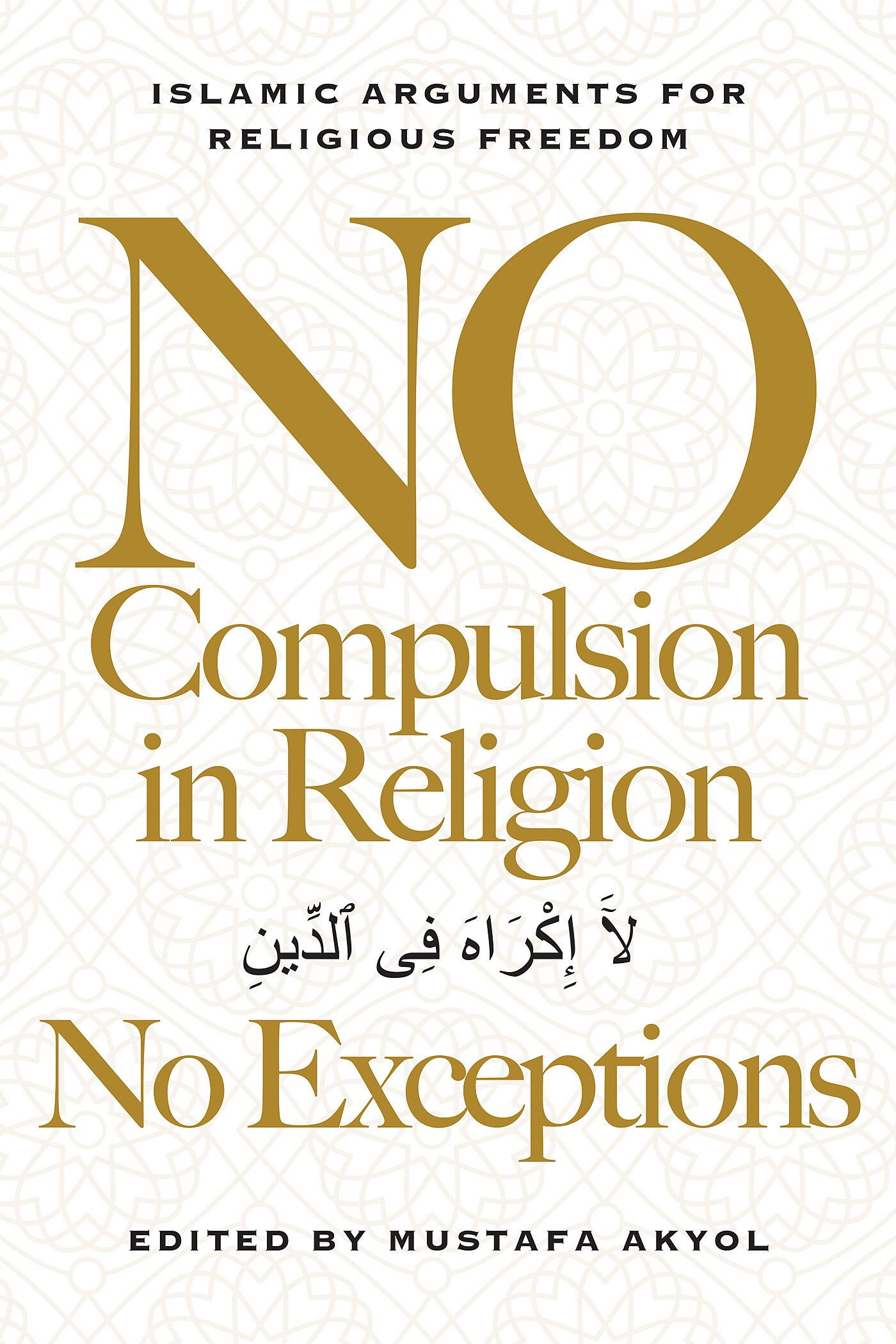
On July 23, Khurshid Ahmed Nadeem, a prominent Pakistani intellectual, devoted his column in Dunya News, a national Urdu daily, to the question, “What is Muslim liberalism?” The piece is essentially a review of my book Why, As a Muslim, I Defend Liberty, whose Urdu edition was recently launched in Pakistan, and my edited volume, No Compulsion in Religion—No Exceptions: Islamic Arguments for Religious Freedom, which Cato published earlier this year.
Nadeem appreciated some of the ideas behind “Muslim liberalism”—of which he kindly described me as its “most prominent advocate”—but also shared some reservations about rethinking Islam “while taking the liberal paradigm as its standard.” I sent him a respectful response, which he graciously published in full in his own column. Its English version follows:
What ‘Muslim Liberalism’ Is—And Is Not

As the author of a book that recently made its Urdu edition, Why, As a Muslim, I Defend Liberty, I was glad to read its review in Dunya News, titled “What Is Muslim Liberalism?” I am also grateful to the reviewer, Professor Khurshid Ahmed Nadeem, for his thoughtful comments and his gracious remarks about my work in general.
Meanwhile, there are some points on which some clarification may be helpful.
Liberalism is a political doctrine that holds that governments should not impose particular beliefs or ways of life on society. Instead, governments should protect the rights and freedoms of individuals, who should be free to live as they choose, so long as they do not violate the rights of others.
For example, the French Republic—which is among the least liberal governments in the West regarding religion—should not interfere in Muslim women’s right to wear a hijab in public. And the Indian government should not criminalize the production or consumption of beef by Muslims, nor pass anti-conversion laws that restrict conversion to Islam.
When such non-Muslim dictates are in question, our fellow Muslims often see why liberalism makes sense. But this intuitive sense raises another question: Are we Muslims ready to grant the freedoms that we want for ourselves to others? If not, on what basis can we defend our own freedoms?
Grappling with this modern question, first in my native Türkiye and then globally, has convinced me that we need an authentic Muslim liberalism—or even “Islamic liberalism,” as I often define it, because my arguments refer to the sources of Islam: the Quran and the sunna, as well as the Islamic legal and theological tradition.
Yet right on this point, Professor Nadeem raises a subtle criticism, arguing that my work offers a “reinterpretation of Islam considering the liberal paradigm as the standard.” In return, I would say that if this is true, it is because Islam has already been interpreted by “considering the authoritarian paradigm as the standard.”
For example, consider the Quranic phrase in verse 2:256, “There is no compulsion in religion,” which is a remarkable basis for religious freedom. But if we look at our classical exegetes, we will see that most considered this verse to be either “abrogated” by verses on jihad or only limited to allowing the People of the Book—Jews and Christians—to keep their religion under Islamic rule. While the latter was a remarkable act of tolerance, it fell short of extending the “no compulsion” principle to Muslims themselves.
That is why S. A. Rehman, a former chief justice of Pakistan who praised verse 2:256 as “a charter of freedom of conscience unparalleled in the religious annals of mankind,” had also regretted the “attempts made by Muslim scholars themselves to whittle down its broad humanistic meaning.” Today, we can revive that “humanistic meaning” without any disrespect to our classical scholars, but with a new perspective that their times would not have allowed—as argued in my new edited book, No Compulsion in Religion—No Exceptions: Islamic Arguments for Religious Freedom.
The case here is not too different from what many early Islamic modernists (and even some late conservatives) have offered regarding slavery: It was allowed by our sharia for centuries because it was the norm of those times, but the Qur’an’s moral imperative for freeing slaves (as in verse 90:13) can now be realized through universal emancipation. (Yet still, 19th-century Muslim abolitionists who made this argument were condemned for trying to “please Europeans, annihilate Islam and abolish the Shari’ah,” as Haroon Bashir shows in his book, Slavery, Abolition, and Islam.)
The issue of our century is not freedom from slavery but other freedoms: freedom of religion, freedom of expression, legal equality for all, democratic governance, and economic liberty. I defend these principles because I have seen how they made many Western countries—and a few others, like Japan or South Korea—more peaceful, prosperous, and powerful. I hope for the same success for our ummah.
This does not mean that everything in the West today is admirable. Rather, there are ills such as the collapse of the traditional family, a crisis of meaning, and political zealotry. Meanwhile, “liberalism” has come to mean, to some people, a hedonist worldview of endless pleasure-seeking, often ending in addiction, nihilism, or distortions of human nature (fitra). None of these are things I advocate. Nor do I advocate “absolute freedom,” stripped of any sense of public order, decency, faith, or morality.
But there is a world of difference between safeguarding faith and morality through civic means and imposing them through state coercion. The latter simply does not work in the modern era—as Iran’s failed experiment in policing religion and morality has shown so starkly. I was glad that Professor Nadeem found that argument an “eye-opener.”
Where Professor Nadeem finds my case weakest—even “helpless,” in his words—is on the Quran and sexual morality. But I would urge him to look more closely at the distinction I drew between sins and crimes: The Quran condemns many personal sins, yet reserves hudud (fixed penalties) for only a handful of them—those involving injury to life, property, or the family. It’s a distinction that can still guide Muslim societies today: promoting morality, and criticizing its absence, through the heart-winning path of nasiha, or preaching, rather than the cold machinery of the modern bureaucratic state.
There is much more to say, and also to hear, so I hope this will be the beginning of more conversations on these important topics of our times. I am grateful to Fida Ur Rahman for translating my book, to Dr. Nadeem for engaging with it, and to Dunya News for offering a platform.
Source: https://www.cato.org/blog/what-muslim-liberalism-discussion-pakistan
Anyone can join.
Anyone can contribute.
Anyone can become informed about their world.
"United We Stand" Click Here To Create Your Personal Citizen Journalist Account Today, Be Sure To Invite Your Friends.
Before It’s News® is a community of individuals who report on what’s going on around them, from all around the world. Anyone can join. Anyone can contribute. Anyone can become informed about their world. "United We Stand" Click Here To Create Your Personal Citizen Journalist Account Today, Be Sure To Invite Your Friends.
LION'S MANE PRODUCT
Try Our Lion’s Mane WHOLE MIND Nootropic Blend 60 Capsules
Mushrooms are having a moment. One fabulous fungus in particular, lion’s mane, may help improve memory, depression and anxiety symptoms. They are also an excellent source of nutrients that show promise as a therapy for dementia, and other neurodegenerative diseases. If you’re living with anxiety or depression, you may be curious about all the therapy options out there — including the natural ones.Our Lion’s Mane WHOLE MIND Nootropic Blend has been formulated to utilize the potency of Lion’s mane but also include the benefits of four other Highly Beneficial Mushrooms. Synergistically, they work together to Build your health through improving cognitive function and immunity regardless of your age. Our Nootropic not only improves your Cognitive Function and Activates your Immune System, but it benefits growth of Essential Gut Flora, further enhancing your Vitality.

Our Formula includes: Lion’s Mane Mushrooms which Increase Brain Power through nerve growth, lessen anxiety, reduce depression, and improve concentration. Its an excellent adaptogen, promotes sleep and improves immunity. Shiitake Mushrooms which Fight cancer cells and infectious disease, boost the immune system, promotes brain function, and serves as a source of B vitamins. Maitake Mushrooms which regulate blood sugar levels of diabetics, reduce hypertension and boosts the immune system. Reishi Mushrooms which Fight inflammation, liver disease, fatigue, tumor growth and cancer. They Improve skin disorders and soothes digestive problems, stomach ulcers and leaky gut syndrome. Chaga Mushrooms which have anti-aging effects, boost immune function, improve stamina and athletic performance, even act as a natural aphrodisiac, fighting diabetes and improving liver function. Try Our Lion’s Mane WHOLE MIND Nootropic Blend 60 Capsules Today. Be 100% Satisfied or Receive a Full Money Back Guarantee. Order Yours Today by Following This Link.


| Visits: | 1,831,756,001 |
| Stories: | 8,703,724 |
Whistler Blowers, Insiders

