
Vietnam-Era 'Donut Dolly' Continues Service With Red Cross in Poland

Dorner Carmichael grew up in rural Georgia with a curiosity about the world beyond her hometown. As the Vietnam War escalated and the draft loomed over her male classmates, she graduated from college determined to see more of the world and take part in the events shaping her generation.
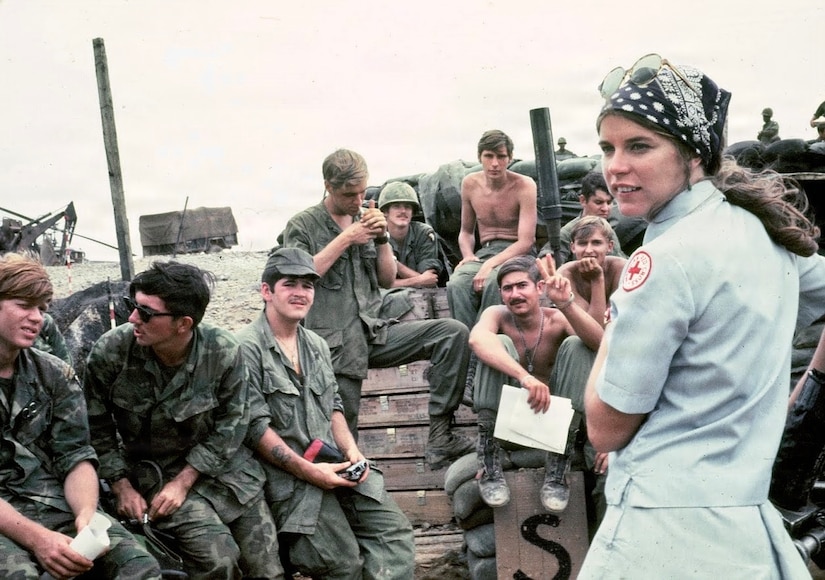
Carmichael learned about the Red Cross “Donut Dollies” while volunteering in college, teaching first aid with her local chapter. Drawn by a mix of adventure, curiosity and a desire to participate in history rather than watch it from a distance, she volunteered for service in Vietnam despite opposition from her mother and skepticism from friends.
The term “Donut Dolly” originated during World War II as an affectionate nickname for Red Cross women who staffed club mobiles. Those vehicles were outfitted with coffee and donut machines and phonographs to bring comfort and a sense of home to service members in Europe, North Africa, India and the Pacific.
Although the nickname carried into Vietnam, the mission evolved. Carmichael notes that during her tour, she never actually saw a donut.
Assigned forward, Carmichael lived close to combat operations. At first light, she and other Donut Dollies boarded Huey helicopters carrying hot breakfasts to remote firebases. After serving the meals, they moved between artillery, mortar and infantry positions, running fast-paced recreation programs designed to give soldiers a break from the stresses of war.
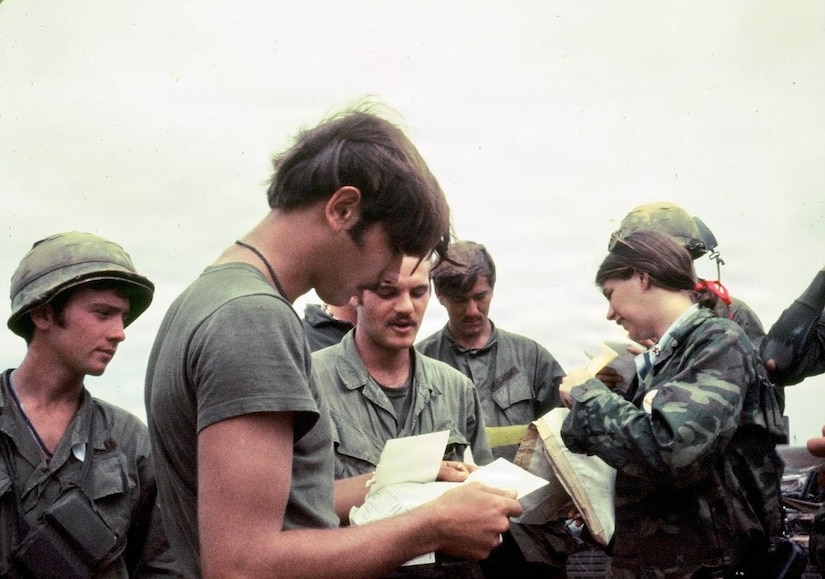
Programs ranged from game-show-style contests focused on baseball, football and basketball to paper airplane competitions and improvised challenges meant to spark laughter and engagement. One program ended with a mechanical challenge that required a member of each team to assemble a carburetor she had checked out from the motor pool.
There was always a quiet mechanic in the back; the others called forward. One such soldier later greeted Carmichael on different bases for months, each time asking if she remembered him. She did.
By midday, Carmichael and her partner often boarded another helicopter to reach a different base or shifted to jeep runs, adjusting plans as the tactical situation changed within the area of operations.
Some of Carmichael’s most vivid memories are not of combat, but of faces. She recalls arriving with another Donut Dolly, Pam, on a firebase shortly after a soldier had been killed in a firefight. The men stood in small clusters, silent and withdrawn.
Pam approached one group, introduced herself and asked if anyone was from Georgia. When no one responded, she continued talking until a soldier quietly said he was from Kansas. Pam seized the moment, talking about cornfields and “The Wizard of Oz.” Slowly, others joined in, naming their home states.
Within minutes, the men began looking up, sharing photos of dogs, homes and plans for life after the war. In that moment, Carmichael saw how simple human connections could restore a sense of normalcy.
Carmichael served as the war wound down, a period marked by declining morale, widespread drug use and increased tension after college deferments ended in 1971. Many of the soldiers she remembers were barely out of their teens.
Those experiences shaped her understanding of service, sacrifice and community, concepts she says she could not fully grasp before Vietnam.
Decades later, at a Red Cross convention, a filmmaker asked Carmichael to participate in a documentary about the 627 women who served as Donut Dollies in Vietnam. After years of limited public attention, she agreed.
Revisiting those memories on camera was difficult, forcing her to confront experiences she had long buried. She believes those stories matter precisely because they are rarely told.
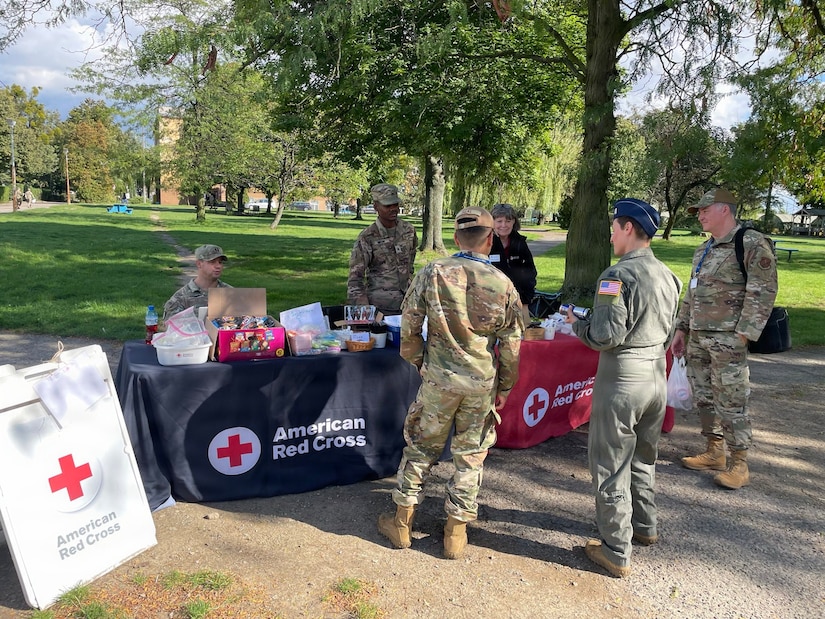
Today, Carmichael continues to serve with the Red Cross in Powidz, Poland. Her work includes delivering emergency messages between service members and their families, supporting resiliency efforts and helping create spaces for rest, education and connection.
While she notes that nothing compares to life in a combat zone, the underlying mission remains the same. Showing up when people need support.
Carmichael hopes younger generations remember the Donut Dollies as part of a broader history of women’s service, including both those who traveled to war zones and those who served quietly at home caring for families. She believes many of those contributions have gone unrecognized.
She encourages service members stationed in Powidz to view their tour as a fixed window of opportunity, offering experiences and perspectives they may not encounter elsewhere.
To Carmichael, service is not limited to uniforms or deployments. A meaningful life, she believes, is grounded in compassion and service to others. Even small acts of kindness matter, whether it is a conversation in a grocery store, checking in on a neighbor or offering quiet support.
“You don’t have to travel far to serve,” she said. “You just have to start.”
Source: http://military-online.blogspot.com/2025/12/vietnam-era-donut-dolly-continues.html
Anyone can join.
Anyone can contribute.
Anyone can become informed about their world.
"United We Stand" Click Here To Create Your Personal Citizen Journalist Account Today, Be Sure To Invite Your Friends.
Before It’s News® is a community of individuals who report on what’s going on around them, from all around the world. Anyone can join. Anyone can contribute. Anyone can become informed about their world. "United We Stand" Click Here To Create Your Personal Citizen Journalist Account Today, Be Sure To Invite Your Friends.
LION'S MANE PRODUCT
Try Our Lion’s Mane WHOLE MIND Nootropic Blend 60 Capsules
Mushrooms are having a moment. One fabulous fungus in particular, lion’s mane, may help improve memory, depression and anxiety symptoms. They are also an excellent source of nutrients that show promise as a therapy for dementia, and other neurodegenerative diseases. If you’re living with anxiety or depression, you may be curious about all the therapy options out there — including the natural ones.Our Lion’s Mane WHOLE MIND Nootropic Blend has been formulated to utilize the potency of Lion’s mane but also include the benefits of four other Highly Beneficial Mushrooms. Synergistically, they work together to Build your health through improving cognitive function and immunity regardless of your age. Our Nootropic not only improves your Cognitive Function and Activates your Immune System, but it benefits growth of Essential Gut Flora, further enhancing your Vitality.

Our Formula includes: Lion’s Mane Mushrooms which Increase Brain Power through nerve growth, lessen anxiety, reduce depression, and improve concentration. Its an excellent adaptogen, promotes sleep and improves immunity. Shiitake Mushrooms which Fight cancer cells and infectious disease, boost the immune system, promotes brain function, and serves as a source of B vitamins. Maitake Mushrooms which regulate blood sugar levels of diabetics, reduce hypertension and boosts the immune system. Reishi Mushrooms which Fight inflammation, liver disease, fatigue, tumor growth and cancer. They Improve skin disorders and soothes digestive problems, stomach ulcers and leaky gut syndrome. Chaga Mushrooms which have anti-aging effects, boost immune function, improve stamina and athletic performance, even act as a natural aphrodisiac, fighting diabetes and improving liver function. Try Our Lion’s Mane WHOLE MIND Nootropic Blend 60 Capsules Today. Be 100% Satisfied or Receive a Full Money Back Guarantee. Order Yours Today by Following This Link.


| Visits: | 1,770,509,048 |
| Stories: | 8,571,002 |
Whistler Blowers, Insiders

