

The American dream dies

There’s no system better at crushing dreams than monopoly capitalism.
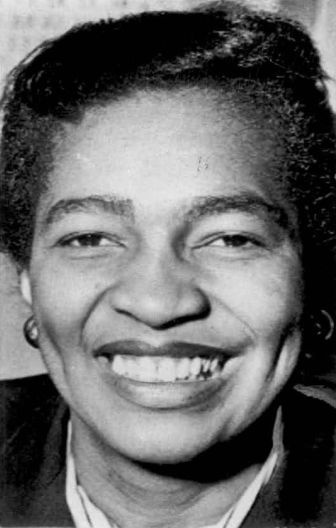
When Claudia Jones’ parents immigrated to the United States from Trinidad and Tobago in 1922, “they hoped to find their fortunes in America where ‘gold was to be found on the streets.’” (Autobiographical History, Claudia Jones).
Instead, they found poverty, Jim Crow oppression, and despair.
These evils disillusioned Claudia Jones and showed her the hypocrisy of the so-called American Dream. She would become a Marxist-Leninist organizer, theorist and revolutionary.
After joining the Communist Party of the United States of America (CPUSA), Jones never stopped fighting against U.S. imperialism. In her article “An End to the Neglect of the Problems of Negro Women”(1949), Jones analysis analyzes the special status of Black women under U.S. imperialism and teaches organizers exactly how to fight back.
The proletarianization of Black women in the United States
“Negro women – as workers, as Negroes, and as women – are the most oppressed stratum of the whole population. In 1940, two out of every five Negro women, in contrast to two out of every eight white women, worked for a living. By virtue of their majority status among the Negro people, Negro women not only constitute the largest percentage of women heads of families but are the main breadwinners of the Negro family.” (from “An End to the Neglect of the Problems of Negro Women”)
Capitalism’s super-exploitation of African Americans forced Black women to proletarianize and join the working class. Black working women were often forced to do domestic work, completing household chores for white families and then coming back home to complete more chores for their own family. Unionization and legal protections did not extend to most domestic workers.
It wasn’t until World War II, where the U.S. needed to recruit new workers to the industries as hundreds of thousands of former workers went off to fight in the war, were Black women finally allowed to do some skilled work and explore other fields due to the necessity for industry to hire new workers.
These obstacles, including political and legal repression, lynching, rape, and many other layers of exploitation, need to be at the foundation of any serious analysis of the conditions of Black women in the U.S.
No women’s liberation without Black liberation
Despite this fact, political organizations that fight for women still ignore the importance of class and the necessity of national liberation. Jones criticizes the behavior of suffragettes and white petty-bourgeois women for ignoring the African American struggle in their fight for women’s liberation in the 20th century.
Again from “An End to Neglect,” “it was the historic shortcoming of the women’s suffrage leaders, predominantly drawn as they were from the bourgeoisie and the petty-bourgeoisie, that they failed to link their own struggles to the struggles for the full democratic rights of the Negro people following emancipation.”
Progressives in the fight for women’s liberation ignored the reality that there is no women’s liberation without national liberation.
These same attitudes appear today, albeit under different arguments with different terminologies. Postmodernist ideology, popular among petty-bourgeois revolutionaries and academics in particular, attempts to convince organizers within the movement to view the struggles for women’s liberation, working class liberation, and Black liberation in competition with each other.
In J. Syke’s article “On the Origin and Development of Postmodernism,” he explains how postmodern ideology cannot recognize the principal issue around struggles for liberation and limits people’s thinking to subjective and one-sided analyses.
Sykes notes, “The basis of the postmodern idea [is] that truth isn’t objective, but rather, that truth is socially constructed… [postmodernists believe] that any given “discourse” should “stay in its lane” since it isn’t capable of understanding where the others are coming from. In other words, we have no universal, shared experience. This mentality leads to subjectivism and relativism, and an inability to strategically unite different struggles. Further, it makes it impossible to name any particular struggle as the principal contradiction that drives the process, which we could leverage to maximize our effectiveness across struggles.”
Postmodernism divides while Marxism-Leninism unites. Instead of showing the historical connections that prove there is a basis for unity among all working-class women and focusing on the fact that Black liberation struggles’ unity with working class struggles have created progress and real victories for the people’s movement in the United States, postmodernism pits the masses against each other.
Discourse is centered around criticizing white people as a homogenous whole with the same political and social interests or an assumed shared consciousness. This abstract, eclectic argument refuses to acknowledge that the multinational working class as a whole can be won to support the national liberation movements’ struggles, meaning there is a material interest for all working-class women when it comes to fighting against national oppression.
Only the struggle for a socialist society, where the working class has the power and self-interest to abolish oppression against all exploited and oppressed people, can erase the contradictions at the root of the problems Black women in the U.S. face.
Black women bring the Black Belt Nation forward
In the 1940s, Black working-class women played a huge role not only in mass organizations, but in labor struggles as well. As both workers and wives of workers, Black women’s militancy and struggle helped develop the struggle against poor working conditions, mistreatment, and national oppression on the shop floor.
At the same time, it was still unusual for Black women to be in positions of leadership within unions and mass organizations. Claudia Jones used her writing to combat manifestations of white chauvinism and fight against the tendency seen in the labor movement to dismiss the leadership capabilities of Black working-class women. She stressed that the advanced Black women could pull intermediate elements of the African American masses to engage in the fight against imperialism.
Jones wrote, “The strong capacities, militancy, and organizational talents of Negro women, can… be a powerful lever for bringing forward Negro workers-men and women-as the leading forces of the Negro people’s liberation movement… and for rooting the Party among the most exploited and oppressed sections of the working class and its allies.”
For a communist party to avoid opportunist and self-serving positions and remain dedicated to its role as the party of the working class, it’s necessary to recruit leaders and allies who have a deep antagonism against the capitalist system that develops the consciousness, determination and drive to end it. Black women often face the greatest humiliation, disrespect and discrimination from the monopoly capitalist class. This mistreatment and oppression helps to create driven and disciplined revolutionaries.
Greater than a dream
Capitalism crushed the dreams of a young Claudia Jones.
That didn’t stop Jones from organizing and fighting back against the rotten system she correctly understood as the greatest threat to national liberation domestically and internationally. Even after she was deported from the U.S. for her organizing, she remained a member of the Communist Party of Great Britain until her death in 1964.
The conclusions Jones reaches in her article still apply to the struggle for the multinational working class and the national liberation movement today. Black working-class women’s unique issues cannot be understood as isolated, abstract concepts. Revolutionaries must continue to deepen their understanding of the special status of oppression of Black women and all oppressed women.
No matter the consequences, Claudia Jones never stopped fighting for freedom. Her writing and organizing continue to pave the road for socialism, the only system that can abolish national exploitation and oppression forever.
It is the responsibility of communists in the U.S. to erase the illusions of all oppressed people in the belly of the beast and prepare them for struggle. The struggle for Black liberation and women’s liberation is something far greater than a dream: it’s a reality, something that can be done and will be done, especially if we listen to the guidance of the revolutionaries that came before us.
Delilah Pierre is a member of the LGBTQ and Women’s Movement Work Team of Freedom Road Socialist Organization
#RevolutionaryTheory #ClaudiaJones #WomensMovement #AfricanAmerican #OppressedNationalities #CPUSA #Featured
Source: https://fightbacknews.org/the-american-dream-dies?pk_campaign=rss-feed
Anyone can join.
Anyone can contribute.
Anyone can become informed about their world.
"United We Stand" Click Here To Create Your Personal Citizen Journalist Account Today, Be Sure To Invite Your Friends.
Before It’s News® is a community of individuals who report on what’s going on around them, from all around the world. Anyone can join. Anyone can contribute. Anyone can become informed about their world. "United We Stand" Click Here To Create Your Personal Citizen Journalist Account Today, Be Sure To Invite Your Friends.
LION'S MANE PRODUCT
Try Our Lion’s Mane WHOLE MIND Nootropic Blend 60 Capsules
Mushrooms are having a moment. One fabulous fungus in particular, lion’s mane, may help improve memory, depression and anxiety symptoms. They are also an excellent source of nutrients that show promise as a therapy for dementia, and other neurodegenerative diseases. If you’re living with anxiety or depression, you may be curious about all the therapy options out there — including the natural ones.Our Lion’s Mane WHOLE MIND Nootropic Blend has been formulated to utilize the potency of Lion’s mane but also include the benefits of four other Highly Beneficial Mushrooms. Synergistically, they work together to Build your health through improving cognitive function and immunity regardless of your age. Our Nootropic not only improves your Cognitive Function and Activates your Immune System, but it benefits growth of Essential Gut Flora, further enhancing your Vitality.

Our Formula includes: Lion’s Mane Mushrooms which Increase Brain Power through nerve growth, lessen anxiety, reduce depression, and improve concentration. Its an excellent adaptogen, promotes sleep and improves immunity. Shiitake Mushrooms which Fight cancer cells and infectious disease, boost the immune system, promotes brain function, and serves as a source of B vitamins. Maitake Mushrooms which regulate blood sugar levels of diabetics, reduce hypertension and boosts the immune system. Reishi Mushrooms which Fight inflammation, liver disease, fatigue, tumor growth and cancer. They Improve skin disorders and soothes digestive problems, stomach ulcers and leaky gut syndrome. Chaga Mushrooms which have anti-aging effects, boost immune function, improve stamina and athletic performance, even act as a natural aphrodisiac, fighting diabetes and improving liver function. Try Our Lion’s Mane WHOLE MIND Nootropic Blend 60 Capsules Today. Be 100% Satisfied or Receive a Full Money Back Guarantee. Order Yours Today by Following This Link.


| Visits: | 1,782,258,468 |
| Stories: | 8,593,780 |
Whistler Blowers, Insiders

