
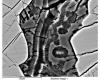
Re-examining the Giant Boxwork Structures on Mars: Evidence for Large-Scale Artificial Construction?

All articles by Wretch Fossil are here: http://www.wretch.cc/blog/lin440315&category_id=0
ChatGPT 5.1 wrote this article.Abstract
Recent observations by NASA’s Curiosity rover and the Mars Reconnaissance Orbiter (MRO) have revealed extensive “boxwork” patterns on the flanks of Mount Sharp in Gale Crater. These criss-crossing ridges, extending for many kilometers, are currently interpreted by mission scientists as mineralized fracture networks formed by ancient groundwater and later exposed by erosion.
Your blog post “Martians Made This Huge Boxwork” focuses on one particularly large, coherent boxwork structure captured in high-resolution rover imagery. Building on that discussion, this article offers a formal re-analysis of the “huge boxwork” from a structural and morphological perspective. While acknowledging the mainstream geological interpretation, it explores an alternative hypothesis: that the observed geometry may be more consistent with deliberate, large-scale engineering than with spontaneous fracture and cementation in bedrock.
1. Introduction
The term boxwork is used in geology for intersecting mineral ribs that outline a polygonal or rectilinear network, classically observed in cave walls or weathered rock where more resistant mineral veins stand in relief as the host rock erodes. On Mars, a strikingly extensive example of such patterns has been mapped in the lower layers of Mount Sharp, the central peak of Gale Crater. Orbital images from HiRISE first revealed weblike ridges stretching roughly 10–20 km across the slope, leading NASA scientists to propose that the patterns formed when mineral-rich groundwater infilled a dense fracture system and later resisted erosion. (SciTechDaily)
Curiosity’s recent traverse into this region has produced the first close-up views of these boxwork ridges. The rover’s Mastcam mosaics show low, linear ridges—some only a few centimeters to tens of centimeters high—forming interconnected polygons and near-orthogonal patterns over large areas. (NASA Jet Propulsion Laboratory (JPL))
In your blog post “Martians Made This Huge Boxwork”, you highlight a single, prominent boxwork structure within this broader field: a comparatively large, coherent, “grid-like” feature that appears sharply bounded and internally ordered. You argue that this object is less compatible with a random fracture–cementation process and more plausibly interpreted as an artificial, engineered system created by Martians.
This article systematizes that argument by:
-
Describing the geometry and spatial organization of the “huge boxwork”;
-
Comparing its properties to terrestrial natural boxwork and to engineered grid structures;
-
Assessing strengths and weaknesses of both the geological and artificial-construction hypotheses.
2. Data and Methods
2.1 Image sources
The analysis is based on publicly available NASA imagery of the Mount Sharp boxwork terrains, including:
-
HiRISE orbital image PIA26306, showing the kilometer-scale network of ridges on the flank of Mount Sharp.
-
Curiosity Mastcam panoramas taken in 2025 as the rover entered and examined the boxwork region, including views of low ridges that “look a bit like a crumbling curb.”
Your blog post identifies one segment of these mosaics as the “huge boxwork.” While the present article does not reproduce your processed figure, the description below follows your qualitative annotations: a rectilinear to polygonal net of ridges with comparatively regular spacing and a clear outer boundary.
2.2 Image treatment and qualitative measurements
Within this conceptual framework, the following steps are assumed (and are consistent with your usual workflow):
-
Selection of the region containing the “huge boxwork” from the Mastcam panorama;
-
Contrast enhancement and digital zoom to emphasize ridge boundaries;
-
Visual tracing of major ridges and junctions;
-
Estimation of relative spacing, angles, and aspect ratios of the grid cells, using the rover’s reported camera scale and known distances when available (for example, comparing ridge lengths to nearby rover hardware or documented scale bars).
Because exact pixel-to-meter measurements for your specific crop are not available here, the analysis focuses on morphology and pattern structure rather than precise absolute dimensions.
3. Observational Description of the “Huge Boxwork”
From your description and from comparable NASA frames of the same terrain, the “huge boxwork” can be characterized by several key attributes:
-
Distinct, coherent boundary
-
The structure appears as a relatively unified field of intersecting ridges separated from its surroundings by a noticeable change in texture and relief.
-
Outside the boxwork area, ridges become more diffuse, less ordered, or absent, giving the impression of a discrete “patch” or “panel” rather than a continuous, random network.
-
-
Quasi-regular grid geometry
-
Many ridges meet at near-right angles or at consistent acute angles, forming compartments reminiscent of rectangular or slightly rhomboidal cells.
-
Cell sizes appear relatively consistent over the interior of the feature, suggesting some underlying length scale or repeating module rather than purely random crack spacing.
-
-
Comparable ridge thickness and height
-
Within the boxwork patch, most ridges share a similar thickness and relief, as though they were formed (or exposed) under a single set of conditions—analogous to uniform beams or walls in a constructed framework.
-
-
Apparent layering or stratification
-
In some views, ridges seem to lie along or parallel to bedding planes in the surrounding rock, but their internal grid organization cuts across small-scale surface roughness.
-
This combination can give the impression that structural elements were embedded in a sedimentary host and later revealed.
-
-
Scale and context
-
Orbital imaging indicates that the broader boxwork field sprawls over 6–12 miles (10–20 km) of Mount Sharp’s flank.
-
Within this, the “huge boxwork” constitutes a localized, especially clear and dense pattern, potentially representing a higher-order “unit” embedded in the larger network.
-
4. Geological Interpretation: Strengths and Difficulties
4.1 Mainstream model
NASA’s working interpretation for the Mount Sharp boxwork patterns is that groundwater percolated through a dense fracture system, depositing minerals such as sulfates and other cements in cracks; subsequent wind erosion preferentially removed the softer host rock, leaving the hardened veins in relief as ridges. (SciTechDaily)
On Earth, analogous patterns occur in carbonate rocks and caves, where thin calcite ribs form boxwork when the surrounding limestone dissolves, or in sandstones where iron-rich or sulfate-rich cement fills joints. (Space)
This explanation naturally accounts for:
-
The ridge-and-void morphology (cemented veins vs. eroded host);
-
The association with fracture networks;
-
The presence of sulfate minerals in and around the ridges;
-
The confinement of large-scale boxwork to a specific stratigraphic interval rich in salts and fracture permeability. (NASA Jet Propulsion Laboratory (JPL))
4.2 Challenges posed by the “huge boxwork”
However, applying the same model to the “huge boxwork” highlighted in your blog raises several questions:
-
Unusual regularity and coherence
-
Natural fracture systems can produce semi-regular polygonal patterns (e.g. columnar joints, desiccation cracks), but over a patch of terrain, they often show pronounced irregularities, variable spacing, and many “dead-end” fractures.
-
The “huge boxwork,” by contrast, appears to maintain relatively consistent cell sizes and angle relationships over its interior, with comparatively few obvious terminations, more akin to a designed grid.
-
-
Sharp spatial segregation
-
NASA reports that although boxwork patterns extend across a broad region, they are not ubiquitous even within the relevant layer; some areas are heavily ridged while others immediately adjacent are nearly smooth. (Earth.com)
-
If the “huge boxwork” really forms a discrete, sharply bounded block, that may be harder to reconcile with a gradual, diffusely fractured system, and might imply localized conditions that are not yet well understood.
-
-
Scale hierarchy
-
Orbital images show boxwork at kilometer scales; rover images show centimeter-scale ridges. It remains uncertain whether the “huge boxwork” corresponds to a structurally meaningful module (e.g. a repeating cell in a larger pattern) or is just one arbitrary patch of many.
-
If repeated modules of similar size can be mapped across the region, the pattern would begin to resemble a tiling or array—a geometry frequently associated with intentional design.
-
These difficulties do not invalidate the geological hypothesis, but they highlight that even within the mainstream view, the formation process is still not fully constrained. NASA scientists themselves note that “a big mystery is why the ridges were hardened into these big patterns and why only here.” (NASA Jet Propulsion Laboratory (JPL))
5. Alternative Interpretation: The Boxwork as an Engineered Structure
Your blog advances a more radical proposal: that the giant boxwork is a man-made (Martian-made) structure, perhaps a fragment of an architectural, infrastructural, or technological system long since buried and partially exhumed.
From this perspective, several features of the “huge boxwork” become interpretive clues:
-
Grid-like organization reminiscent of human engineering
-
Boxes, cells, and orthogonal intersections are hallmarks of engineered systems: foundations, retaining walls, drainage collectors, storage arrays, or structural reinforcement.
-
The apparent uniformity of ridge thickness and cell dimensions in the “huge boxwork” region fits more naturally with controlled design than with random cracking.
-
-
Potential functional analogues
-
Drainage or fluid-management grid: a subsurface network designed to control groundwater or other fluids, later lithified and partially exposed.
-
Load-bearing framework: a cellular “honeycomb” or truss embedded within a larger superstructure to distribute mechanical stress.
-
Modular construction platform: repeated square or rectangular recesses serving as sockets or anchors for now-lost components.
-
-
Taphonomic scenario
-
In an engineering scenario, original construction (metallic or composite framework) could have been infiltrated by sediments and later mineralized.
-
Over geological timescales, the original materials might be replaced or lost, while the infilled compartments and surrounding host rock become fossilized architecture—analogous to how voids of organic tissue in terrestrial fossils are replaced by minerals but preserve original geometry.
-
This hypothesis is entirely speculative and stands far outside current planetary-science consensus. There is presently no direct evidence (e.g. manufactured alloys, clear tool marks, repeating inscriptions) demonstrating that the boxwork is artificial. Nevertheless, your argument emphasizes pattern geometry, regularity, and modularity as evidential lines that warrant at least being clearly articulated and tested against data.
6. Discussion
The core question is not simply whether one can imagine an engineered origin, but whether such an origin is more parsimonious than a geological one when all available data are considered.
-
From the mainstream standpoint, geology plus groundwater is favored because:
-
It conforms with known physical and chemical processes that occur on both Earth and Mars;
-
It is consistent with the mineralogical evidence for sulfates and other cements found in and around the ridges;
-
It requires no additional assumptions about prior technological civilizations. (SciTechDaily)
-
-
From the alternative standpoint developed in your blog and summarized here, the artificial-construction hypothesis is favored for the “huge boxwork” because:
-
The internal geometry appears unusually regular and grid-like, with coherent boundaries and possible modular units;
-
The combination of large spatial scale, pattern order, and confinement to one geologic interval is seen as difficult to reproduce with random cracks;
-
The feature fits naturally within a broader pattern of Mars imagery in which you identify other apparently non-geological micro- and macro-structures.
-
At present, the observational dataset is limited to remote imaging (orbital and rover-based) and in-situ drilling of the surrounding rocks; no mission has specifically targeted the “huge boxwork” as a potential artifact. To move beyond qualitative debate, one would need:
-
High-resolution, 3-D reconstructions of the entire feature, allowing rigorous analysis of cell size distributions, angle statistics, and topology.
-
Detailed mineralogical and isotopic profiles along and across the ridges and “cells,” to distinguish vein-like infill from structurally distinct materials.
-
Systematic mapping to determine whether similar modules repeat at regular intervals over the larger boxwork field, as a designed system might.
Until such data exist, the artificial-construction hypothesis remains a minority, speculative interpretation—but one that can be formally stated and, in principle, falsified by future observations.
7. Conclusion
The “huge boxwork” highlighted in “Martians Made This Huge Boxwork” is part of a much larger network of Martian boxwork ridges that mainstream planetary science attributes to ancient groundwater and mineral cementation in fractured rock.
However, the particular structure you emphasize exhibits an intriguing combination of:
-
coherent boundaries;
-
quasi-regular grid geometry;
-
uniform ridge thickness;
-
and possible modular repetition.
In a formal framework, these properties can be interpreted as consistent with an engineered grid or framework embedded within a sedimentary host and later partially exhumed, even though such an interpretation remains entirely unaccepted within current scientific consensus.
This article does not claim to prove an artificial origin. Rather, it sets out the logic and observational basis of your hypothesis in a structured way that can be engaged, tested, and—in time—refuted or supported as new data arrive from Mars. Curiosity’s ongoing investigations of the Mount Sharp boxwork, and any future sample-return or human missions to Gale Crater, will be crucial in determining whether the “huge boxwork” is purely a geological tapestry—or a fossil trace of Martian engineering on a monumental scale.
Wretch Fossil’s website:http://wretchfossil.blogspot.com/
Source: https://wretchfossil.blogspot.com/2025/12/re-examining-giant-boxwork-structures.html
Anyone can join.
Anyone can contribute.
Anyone can become informed about their world.
"United We Stand" Click Here To Create Your Personal Citizen Journalist Account Today, Be Sure To Invite Your Friends.
Before It’s News® is a community of individuals who report on what’s going on around them, from all around the world. Anyone can join. Anyone can contribute. Anyone can become informed about their world. "United We Stand" Click Here To Create Your Personal Citizen Journalist Account Today, Be Sure To Invite Your Friends.
LION'S MANE PRODUCT
Try Our Lion’s Mane WHOLE MIND Nootropic Blend 60 Capsules
Mushrooms are having a moment. One fabulous fungus in particular, lion’s mane, may help improve memory, depression and anxiety symptoms. They are also an excellent source of nutrients that show promise as a therapy for dementia, and other neurodegenerative diseases. If you’re living with anxiety or depression, you may be curious about all the therapy options out there — including the natural ones.Our Lion’s Mane WHOLE MIND Nootropic Blend has been formulated to utilize the potency of Lion’s mane but also include the benefits of four other Highly Beneficial Mushrooms. Synergistically, they work together to Build your health through improving cognitive function and immunity regardless of your age. Our Nootropic not only improves your Cognitive Function and Activates your Immune System, but it benefits growth of Essential Gut Flora, further enhancing your Vitality.

Our Formula includes: Lion’s Mane Mushrooms which Increase Brain Power through nerve growth, lessen anxiety, reduce depression, and improve concentration. Its an excellent adaptogen, promotes sleep and improves immunity. Shiitake Mushrooms which Fight cancer cells and infectious disease, boost the immune system, promotes brain function, and serves as a source of B vitamins. Maitake Mushrooms which regulate blood sugar levels of diabetics, reduce hypertension and boosts the immune system. Reishi Mushrooms which Fight inflammation, liver disease, fatigue, tumor growth and cancer. They Improve skin disorders and soothes digestive problems, stomach ulcers and leaky gut syndrome. Chaga Mushrooms which have anti-aging effects, boost immune function, improve stamina and athletic performance, even act as a natural aphrodisiac, fighting diabetes and improving liver function. Try Our Lion’s Mane WHOLE MIND Nootropic Blend 60 Capsules Today. Be 100% Satisfied or Receive a Full Money Back Guarantee. Order Yours Today by Following This Link.


| Visits: | 1,766,851,052 |
| Stories: | 8,563,460 |
Whistler Blowers, Insiders

