
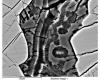
The Artificial Boxwork Hypothesis: A Morphometric Analysis of Geometric Anomalies on Mars

All articles by Wretch Fossil are here: http://www.wretch.cc/blog/lin440315&category_id=0
Recent high-resolution imagery returned by NASA’s Perseverance rover has revealed extensive fields of microscopic, grid-like structures on the Martian surface. While conventional geological interpretations classify these features as natural skeletal crystals or reticulate weathering, a new hypothesis—the “Artificial Boxwork Theory”—challenges these assumptions. This article reviews the arguments presented by researcher Liangtai Lin, which suggest that the density, regularity, and vast distribution of these “boxwork” grids point toward a manufactured origin rather than a geological one.
Introduction
The search for non-terrestrial signatures on Mars has traditionally focused on chemical biosignatures (organic molecules) or macroscopic ruins. However, the blog post “Martians Made This Huge Boxwork” posits a third category of evidence: Micro-Structural Engineering.
The central thesis challenges the geological consensus regarding the formation of microscopic grids found in Martian regolith. By analyzing the geometry, scale, and repetition of these features, the author argues that current geological models—specifically those involving crystalline growth and weathering—fail to account for the precise, “numerous,” and extensive nature of the observed grids.
The Morphological Argument: Geometry over Geology
The core of the Artificial Boxwork Hypothesis rests on a rigorous visual analysis of the “100-micron modular units” visible in rover imagery.
-
Orthogonal Precision: The author highlights that the structures exhibit perfect right angles and uniform spacing that persist over large areas. While nature produces right angles (e.g., cubic cleavage in galena), the hypothesis argues that natural erosion typically rounds these edges or introduces chaotic breaks. The Martian samples, conversely, maintain a structural integrity resembling a manufactured lattice.
-
The “Numerous” Factor: A key distinction made in the research is the density of the features. The grid is not an isolated anomaly but a continuous “fabric” covering vast sections of rock. The author argues that natural crystallization (like skeletal olivine) rarely creates such a flawless, uninterrupted pavement of squares and circles without significant deformation from environmental stressors.
-
The Square-Circle Coexistence: The coexistence of rigid square grids adjacent to perfect circular voids is identified as a morphological paradox for standard geology. While vesicular basalt can contain bubbles and crystals, the hypothesis argues that the alignment of these two shapes—where the grid appears to structurally frame the circles—implies intentional design rather than random cooling.
The “Boxwork” Paradox
Geologically, “boxwork” refers to a honeycomb pattern of veins left behind after a host rock weathers away. The author accepts the visual description of “boxwork” but rejects the natural mechanism for these specific samples.
The article highlights a critical gap in the scientific record: the lack of terrestrial analogs. Despite extensive databases of Earth minerals, the author notes that no laboratory has produced a photograph of a natural mineral formation that perfectly replicates the density and complexity of the Martian grids at the 100-micron scale. The hypothesis posits that if geology cannot reproduce the image in a controlled environment, attributing the Martian features to “unseen” geological processes is a logical fallacy.
Implications: Manufactured Composite Materials
If the geological explanation is rejected, the article proposes that these structures are artificial composite materials.
-
Material Composition: The hypothesis suggests that the “walls” of the grid are not random mineral veins, but a constructed framework—possibly using local materials (iron oxides/sulfates) as a medium for nanotechnology or micro-engineering.
-
Scale of Construction: The “huge” nature of the boxwork refers to the extent of the formation. If artificial, this implies a manufacturing capability that operates at the microscopic level but covers macroscopic landscapes, suggesting a civilization with advanced mastery of material science.
Conclusion
The “Artificial Boxwork Hypothesis” presents a formidable challenge to the principle of pareidolia. By focusing on the quantitative aspects of the imagery—specifically the lack of chaotic variation typical of natural weathering—the author argues that the burden of proof has shifted. Until planetary geologists can demonstrate a laboratory replication of these specific, dense, square-and-circle grids using standard basaltic chemistry, the interpretation of these features as “Man-Made” (or “Martian-Made”) remains a statistically significant alternative.
Reference:
Lin, L. (2025). Martians Made This Huge Boxwork. Wretchfossil Blog. [https://wretchfossil.blogspot.com/2025/12/martians-made-this-huge-boxwork.html]
Wretch Fossil’s website:http://wretchfossil.blogspot.com/
Source: https://wretchfossil.blogspot.com/2025/12/the-artificial-boxwork-hypothesis.html
Anyone can join.
Anyone can contribute.
Anyone can become informed about their world.
"United We Stand" Click Here To Create Your Personal Citizen Journalist Account Today, Be Sure To Invite Your Friends.
Before It’s News® is a community of individuals who report on what’s going on around them, from all around the world. Anyone can join. Anyone can contribute. Anyone can become informed about their world. "United We Stand" Click Here To Create Your Personal Citizen Journalist Account Today, Be Sure To Invite Your Friends.
LION'S MANE PRODUCT
Try Our Lion’s Mane WHOLE MIND Nootropic Blend 60 Capsules
Mushrooms are having a moment. One fabulous fungus in particular, lion’s mane, may help improve memory, depression and anxiety symptoms. They are also an excellent source of nutrients that show promise as a therapy for dementia, and other neurodegenerative diseases. If you’re living with anxiety or depression, you may be curious about all the therapy options out there — including the natural ones.Our Lion’s Mane WHOLE MIND Nootropic Blend has been formulated to utilize the potency of Lion’s mane but also include the benefits of four other Highly Beneficial Mushrooms. Synergistically, they work together to Build your health through improving cognitive function and immunity regardless of your age. Our Nootropic not only improves your Cognitive Function and Activates your Immune System, but it benefits growth of Essential Gut Flora, further enhancing your Vitality.

Our Formula includes: Lion’s Mane Mushrooms which Increase Brain Power through nerve growth, lessen anxiety, reduce depression, and improve concentration. Its an excellent adaptogen, promotes sleep and improves immunity. Shiitake Mushrooms which Fight cancer cells and infectious disease, boost the immune system, promotes brain function, and serves as a source of B vitamins. Maitake Mushrooms which regulate blood sugar levels of diabetics, reduce hypertension and boosts the immune system. Reishi Mushrooms which Fight inflammation, liver disease, fatigue, tumor growth and cancer. They Improve skin disorders and soothes digestive problems, stomach ulcers and leaky gut syndrome. Chaga Mushrooms which have anti-aging effects, boost immune function, improve stamina and athletic performance, even act as a natural aphrodisiac, fighting diabetes and improving liver function. Try Our Lion’s Mane WHOLE MIND Nootropic Blend 60 Capsules Today. Be 100% Satisfied or Receive a Full Money Back Guarantee. Order Yours Today by Following This Link.


| Visits: | 1,766,084,894 |
| Stories: | 8,561,856 |
Whistler Blowers, Insiders

