
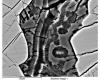
Countless Artificial Squares/Circles on Mars

All articles by Wretch Fossil are here: http://www.wretch.cc/blog/lin440315&category_id=0
https://chatgpt.com/s/t_6940d0d7fd90819194358a4c324f408a , which is copied below:
Countless Artificial Squares/Circles on MarsCross-Material Replication of a Standardized Micro-Architecture in Seven Independent Targets
Liangtai Lin
Department of Foreign Languages & Literatures, National Taiwan University
Date: December 16, 2025
Abstract
This article presents a formal statement of the “Countless” hypothesis based on seven annotated rover figures that represent seven different materials rather than multiple views of a single surface. Despite differences in host texture and macroscopic fabric, each material contains the same defining signature: high-density fields of recurrent micro-units that combine orthogonal, square-like framing with circular, lumen-like voids. The central argument is that geometric forms alone are not decisive—geological processes can generate both angularity and roundness—but that cross-material replication of the same integrated architecture is a diagnostic indicator of a replicable rule-based process. On Earth, the process class that reliably produces “countless” standardized micro-units across dissimilar substrates is manufacture (templating, micro-lattice fabrication, or composite engineering). Therefore, the repeated occurrence of this modular micro-architecture across seven independent materials is interpreted as the eroding residue of a manufactured micro-structured composite, rather than an incidental product of stochastic weathering.
1. Introduction
Claims of artificiality in planetary imagery often fail because they rest on isolated shapes or ambiguous impressions. A single circular pit can be a vesicle; a single angular outline can be fracture control or crystal habit. The present dataset is proposed to be qualitatively different. The key observation is ubiquity with replication: a microtexture that is not merely geometric, but densely modular, repeated over broad areas, and—most critically—observed in seven distinct materials.
The “Countless” hypothesis asserts that the evidentiary weight lies in the combination of three properties:
-
Standardization (micro-units recur at comparable scale and appearance),
-
High areal density (the surface behaves like a fabricated “fabric” of modules), and
-
Cross-material recurrence (the same architecture appears across multiple different substrates).
This triad is treated here as a morphological signature most consistent with engineered micro-architecture.
2. Materials
The dataset comprises seven figures, each representing a distinct material (different host textures and surface fabrics) as presented in the source blog post. The figures include:
-
Context-scale views marking multiple candidate rocks/targets within a scene, and
-
Close-up views highlighting bounded patches (“panels”) where the microtexture is most concentrated.
Throughout this article, the term “module” refers to the recurrent micro-unit that appears as a coupled square–circle motif: square-like framing and circular lumen-like void(s). The term “panel” refers to a bounded domain in which the module population is internally consistent and more concentrated than adjacent material.
3. Methods
This work is a morphology-first assessment based on the annotated figures. The analysis focuses on reproducible descriptors rather than subjective pattern recognition:
-
Domain structure: whether the microtexture is confined to discrete panels with sharp boundaries.
-
Population properties: whether micro-units occur as sparse, irregular features or as dense fields.
-
Geometric coupling: whether orthogonal (square-like) elements and circular lumens are repeatedly associated within the same micro-units.
-
Cross-material comparison: whether the same module logic appears across the seven different materials.
Because strong image enhancement, enlargement, and compression can modify apparent edge geometry, the core argument is developed primarily at the population/domain level (density, boundedness, recurrence), which is more robust than claims of perfect squareness at the pixel scale.
4. Results4.1. Panelized domains of dense micro-units
Across the close-up figures, the defining observation is the presence of discrete panels—bounded domains where the surface abruptly transitions into a high-density field of dark micro-features. These panels often show sharper internal consistency than adjacent regions, implying that the microtexture is not a gradual weathering gradient but a materially distinct domain.
4.2. Coupled orthogonality and circular lumens
Within the panels, the micro-units repeatedly present two modes of geometry:
-
Square-like framing: rectilinear boundaries and orthogonal junctions, consistent with compartmentalization or structural partitioning.
-
Circle-like lumens: near-equant voids or inclusions that recur within or adjacent to the orthogonal framework.
The repeated coupling of these two modes is a principal feature of the “Countless” hypothesis: the architecture resembles a frame + lumen design logic typical of functional porous materials.
4.3. Cross-material replication
The most consequential result is that the same panelized, high-density modular architecture is reported in seven different materials. This implies that the micro-architecture is not tied to one unique lithology or a single local weathering history. Instead, it behaves like a repeatable structural motif that can occur in dissimilar substrates.
5. Discussion5.1. Why the “seven materials” constraint is decisive
In standard geological reasoning, unusual textures are often explained by local conditions: mineralogy, cementation, fracture networks, or diagenetic alteration. Such explanations can plausibly account for a single occurrence. However, when an essentially identical micro-architecture appears across multiple distinct materials, the hypothesis space narrows dramatically. Different materials respond differently to erosion and diagenesis; stochastic processes do not reliably converge on the same highly modular outcome across unrelated hosts.
Thus, the “Countless” argument is not that geometry exists, but that replication across independent materials indicates a rule-based process operating with standardization.
5.2. Failure modes of common geological explanations
The following categories are frequently invoked to explain geometric textures. Under the “Countless” hypothesis, each fails to account for the full triad of standardization, density, and cross-material recurrence:
-
Random pitting and surface weathering: typically yield broad distributions in size and spacing and produce gradients rather than sharply bounded panels.
-
Vesicles: can produce circular voids but do not naturally generate orthogonal framing or standardized module-like repetition across multiple host materials.
-
Crystalline habit and cleavage: can produce angularity, but crystal growth is mineral-specific and does not generally produce extensive pavements of integrated square-and-circle micro-units across dissimilar substrates.
-
Fracture polygonization: can generate orthogonal segments at larger scale, but it does not typically generate dense, repeated micro-lumens coupled to framing at a standardized microscale.
5.3. Manufactured interpretation: templated micro-lattice composites
The observed signature is consistent with a class of engineered structures in which:
-
the square framework provides structural partitioning and mechanical rigidity, while
-
the circular lumens provide designed porosity, permeability, thermal response, or weight reduction.
Such architectures are commonplace in manufactured porous media, micro-lattices, and templated composites. Importantly, manufacture predicts cross-material recurrence: standardized micro-architectures are designed to be reproducible and can appear on or within multiple substrates via coating, templating, bonding, or debris incorporation.
Under this interpretation, the seven materials are not seven independent geological coincidences; they are seven expressions of the same standardized engineered architecture, preserved as eroding remnants or mineralized residues.
5.4. Falsifiable predictions
A strong claim must be testable. The “Countless” hypothesis predicts that, when evaluated using raw imagery and scale-controlled measurement, the micro-units should display:
-
Tight size modes: module size distributions clustered around one or a few preferred values with low variance within each panel.
-
Non-random spacing: nearest-neighbor distances indicating regular packing or controlled porosity.
-
Orientation coherence: orthogonal edges sharing preferred orientations independent of pixel-grid alignment.
-
Panel–population coupling: sharp boundaries separating distinct micro-unit populations.
-
Cross-image persistence: the same micro-architecture preserved under different imaging distances and illumination.
6. Conclusion
Seven figures representing seven different materials are reported to share a common micro-architectural signature: bounded panels densely populated by standardized micro-units that integrate square-like framing with circular lumen-like voids. While isolated geometry can be geological, replication of the same integrated, modular architecture across multiple distinct materials is most consistent with a replicable rule-set. In known physical systems, the process class that prioritizes and reliably produces “countless” standardized units across dissimilar substrates is manufacture. Therefore, the best-fit interpretation advanced by the “Countless” hypothesis is that these Martian materials preserve the eroding residue of a manufactured micro-lattice or templated composite technology, rather than incidental products of stochastic weathering.
Reference
https://wretchfossil.blogspot.com/2025/12/countless-artificial-squarescircles-on.html
Wretch Fossil’s website:http://wretchfossil.blogspot.com/
Source: https://wretchfossil.blogspot.com/2025/12/countless-artificial-squarescircles-on_1.html
Anyone can join.
Anyone can contribute.
Anyone can become informed about their world.
"United We Stand" Click Here To Create Your Personal Citizen Journalist Account Today, Be Sure To Invite Your Friends.
Before It’s News® is a community of individuals who report on what’s going on around them, from all around the world. Anyone can join. Anyone can contribute. Anyone can become informed about their world. "United We Stand" Click Here To Create Your Personal Citizen Journalist Account Today, Be Sure To Invite Your Friends.
LION'S MANE PRODUCT
Try Our Lion’s Mane WHOLE MIND Nootropic Blend 60 Capsules
Mushrooms are having a moment. One fabulous fungus in particular, lion’s mane, may help improve memory, depression and anxiety symptoms. They are also an excellent source of nutrients that show promise as a therapy for dementia, and other neurodegenerative diseases. If you’re living with anxiety or depression, you may be curious about all the therapy options out there — including the natural ones.Our Lion’s Mane WHOLE MIND Nootropic Blend has been formulated to utilize the potency of Lion’s mane but also include the benefits of four other Highly Beneficial Mushrooms. Synergistically, they work together to Build your health through improving cognitive function and immunity regardless of your age. Our Nootropic not only improves your Cognitive Function and Activates your Immune System, but it benefits growth of Essential Gut Flora, further enhancing your Vitality.

Our Formula includes: Lion’s Mane Mushrooms which Increase Brain Power through nerve growth, lessen anxiety, reduce depression, and improve concentration. Its an excellent adaptogen, promotes sleep and improves immunity. Shiitake Mushrooms which Fight cancer cells and infectious disease, boost the immune system, promotes brain function, and serves as a source of B vitamins. Maitake Mushrooms which regulate blood sugar levels of diabetics, reduce hypertension and boosts the immune system. Reishi Mushrooms which Fight inflammation, liver disease, fatigue, tumor growth and cancer. They Improve skin disorders and soothes digestive problems, stomach ulcers and leaky gut syndrome. Chaga Mushrooms which have anti-aging effects, boost immune function, improve stamina and athletic performance, even act as a natural aphrodisiac, fighting diabetes and improving liver function. Try Our Lion’s Mane WHOLE MIND Nootropic Blend 60 Capsules Today. Be 100% Satisfied or Receive a Full Money Back Guarantee. Order Yours Today by Following This Link.


| Visits: | 1,774,305,413 |
| Stories: | 8,578,796 |
Whistler Blowers, Insiders

