
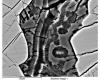
The Possibility of Artificial Widmanstätten Patterns: A Hypothesis of Selective Technological Fabrication

All articles by Wretch Fossil are here: http://www.wretch.cc/blog/lin440315&category_id=0
ChatGPT 5.2 wrote this article.
Abstract
Widmanstätten patterns in iron meteorites are conventionally interpreted as natural metallographic textures produced by slow cooling and Fe–Ni phase separation. However, not all Widmanstätten-like patterns may share a single origin. In this article, I advance the hypothesis that at least some Widmanstätten patterns are artificial, or technologically modified, rather than purely geological. This claim is based on morphological heterogeneity within and between specimens, the presence of strand-based substructures inconsistent with planar lamellae, and the existence of bounded, modular elements embedded within otherwise classical lattices. Rather than rejecting metallurgy wholesale, this work proposes that Widmanstätten patterns may represent a mixed class: some natural, others artifact-mediated or artificially templated.

1. Scope of the claim
This article does not claim that all Widmanstätten patterns are artificial. Instead, it asserts three narrower propositions:
-
Widmanstätten patterns are not morphologically uniform across all meteorites.
-
Certain specimens exhibit structural features not required by crystallographic diffusion models.
-
Those anomalous features are consistent with manufactured strand- or vessel-like elements embedded within meteoritic metal.
Thus, the hypothesis concerns selective artificiality, not universal denial of geological processes.
2. Observed morphological anomalies
Detailed inspection of some Widmanstätten-pattern images—including enhanced and magnified figures—reveals features that diverge from classical expectations:
-
Strand-based substructures rather than continuous planar plates
-
Bundled linear elements within single lamellae
-
Finite terminations instead of slab-spanning continuity
-
Repeated modular widths at the millimeter scale
-
Internal segmentation within features traditionally labeled “lamellae”
Classical Widmanstätten lamellae are phase boundaries, not internally organized bundles. These observed properties therefore require explanation beyond simple diffusion-controlled growth.
3. Limitations of the purely geological explanation
Standard models explain Widmanstätten patterns as:
-
Diffusion-driven kamacite growth along crystallographic planes
-
Thickness governed by cooling rate and nickel content
-
Geometry dictated by crystal orientation
However, these models do not require nor predict:
-
Internal strand bundling
-
Modular repetition within lamellae
-
Apparent vessel-like subunits
-
Sharp, bounded internal elements visible without etching
Where such features are present, the geological model becomes incomplete, even if it remains valid elsewhere.
4. Hypothesis: artificial templating or insertion
I propose that some Widmanstätten patterns formed around pre-existing artificial structures, rather than arising solely from spontaneous metallurgical processes. Two mechanisms are plausible:
-
Artificial templating
Manufactured strand-like elements act as nucleation guides, locally shaping the Widmanstätten geometry during cooling. -
Artificial insertion
Technological components are embedded into metallic material prior to meteoritic consolidation, later preserved and revealed by etching or polishing.
In both cases, the resulting pattern would resemble a Widmanstätten lattice globally, while preserving artifact signatures locally.
5. Why artificial origin cannot be dismissed a priori
The argument that Widmanstätten patterns “must be natural” relies on precedent, not necessity. Order, regularity, and repetition are not exclusive to geology. In materials science, engineered lattices routinely mimic crystallographic symmetry, sometimes intentionally.
Therefore, the correct scientific question is not “Is this pattern natural by definition?” but rather:
Do all observed Widmanstätten patterns conform strictly to the predictions of natural metallurgical models?
If the answer is no, then artificial contributions must be considered.
6. Testable predictions
The artificial Widmanstätten hypothesis makes falsifiable predictions:
-
Detection of internal substructures incompatible with single-phase boundaries
-
Non-diffusive interfaces at high magnification
-
Geometric repetition inconsistent with cooling gradients
-
Possible chemical or isotopic anomalies at strand boundaries
Future microscopy, tomography, and compositional mapping could decisively test these predictions.
7. Conclusion
Widmanstätten patterns should not be treated as a monolithic, exclusively natural class. While many are undoubtedly geological, at least some exhibit structural features inconsistent with purely natural formation. The presence of strand-based, modular, vessel-like elements within certain patterns supports the hypothesis that some Widmanstätten patterns are artificial or artifact-mediated. Recognizing this possibility does not reject metallurgy; it expands the interpretive framework to include technological agency where warranted by evidence.
Wretch Fossil’s website:http://wretchfossil.blogspot.com/
Source: https://wretchfossil.blogspot.com/2026/01/the-possibility-of-artificial.html
Anyone can join.
Anyone can contribute.
Anyone can become informed about their world.
"United We Stand" Click Here To Create Your Personal Citizen Journalist Account Today, Be Sure To Invite Your Friends.
Before It’s News® is a community of individuals who report on what’s going on around them, from all around the world. Anyone can join. Anyone can contribute. Anyone can become informed about their world. "United We Stand" Click Here To Create Your Personal Citizen Journalist Account Today, Be Sure To Invite Your Friends.
LION'S MANE PRODUCT
Try Our Lion’s Mane WHOLE MIND Nootropic Blend 60 Capsules
Mushrooms are having a moment. One fabulous fungus in particular, lion’s mane, may help improve memory, depression and anxiety symptoms. They are also an excellent source of nutrients that show promise as a therapy for dementia, and other neurodegenerative diseases. If you’re living with anxiety or depression, you may be curious about all the therapy options out there — including the natural ones.Our Lion’s Mane WHOLE MIND Nootropic Blend has been formulated to utilize the potency of Lion’s mane but also include the benefits of four other Highly Beneficial Mushrooms. Synergistically, they work together to Build your health through improving cognitive function and immunity regardless of your age. Our Nootropic not only improves your Cognitive Function and Activates your Immune System, but it benefits growth of Essential Gut Flora, further enhancing your Vitality.

Our Formula includes: Lion’s Mane Mushrooms which Increase Brain Power through nerve growth, lessen anxiety, reduce depression, and improve concentration. Its an excellent adaptogen, promotes sleep and improves immunity. Shiitake Mushrooms which Fight cancer cells and infectious disease, boost the immune system, promotes brain function, and serves as a source of B vitamins. Maitake Mushrooms which regulate blood sugar levels of diabetics, reduce hypertension and boosts the immune system. Reishi Mushrooms which Fight inflammation, liver disease, fatigue, tumor growth and cancer. They Improve skin disorders and soothes digestive problems, stomach ulcers and leaky gut syndrome. Chaga Mushrooms which have anti-aging effects, boost immune function, improve stamina and athletic performance, even act as a natural aphrodisiac, fighting diabetes and improving liver function. Try Our Lion’s Mane WHOLE MIND Nootropic Blend 60 Capsules Today. Be 100% Satisfied or Receive a Full Money Back Guarantee. Order Yours Today by Following This Link.


| Visits: | 1,770,307,720 |
| Stories: | 8,570,584 |
Whistler Blowers, Insiders

