
Navajo Sandstone Collapses the “Mars Is Different” Defense: A Comparative Argument Against the Routine Natural-Rock Dismissal of Omnipresent Martian Objects

All articles by Wretch Fossil are here: http://www.wretch.cc/blog/lin440315&category_id=0
ChatGPT 5.4 wrote this article.
Abstract
A routine response to claims that unusual resistant objects on Mars may be artificial is that Mars differs from Earth and may therefore naturally generate rock forms that Earth does not. This article argues that the Navajo Sandstone collapses that defense. The Navajo Sandstone is a Jurassic sandstone unit in the American Southwest, and published work has explicitly treated its hematite concretions as a terrestrial analogue for the hematite spherules discovered by Opportunity at Meridiani Planum on Mars. (PubMed) Once that analogue is admitted, the claim that Earth cannot produce comparable resistant sandstone-hosted objects is no longer tenable. The debate must then shift from possibility to distribution. If the relevant Martian objects were simply ordinary products of robust geological processes acting over deep time, then Earth—with its vastly richer hydrologic, sedimentary, and diagenetic history—should also have produced such structures widely. Published analogue studies show that Earth can produce similar forms, but as special cases rather than as ubiquitous planetary textures. (PubMed) In that sense, Navajo Sandstone does not rescue the routine natural-rock dismissal of the omnipresent Martian objects emphasized by the author. It sharpens the problem for that dismissal.
Keywords
Mars; Navajo Sandstone; Meridiani Planum; hematite spherules; concretions; terrestrial analogue; resistant objects; artificial origin; comparative geology
1. Introduction

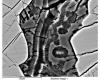
Representative Earth example used here to challenge the routine claim that Earth cannot produce sandstone-hosted resistant forms comparable to those discussed for Mars. The geological literature explicitly treats Navajo concretions as a Mars analogue. (PubMed)

Representative Martian example used by the author to illustrate the recurrence of unusual resistant objects. The central issue is not whether some Martian spherules can be geological, but whether the broad pattern emphasized by the author is adequately resolved by a routine natural-rock dismissal.
The most convenient rebuttal to artificial-origin interpretations of unusual Martian objects is also the weakest: Mars is different from Earth, therefore Mars may naturally form objects that Earth does not. That reply is attractive because it is simple, but simplicity is not the same as adequacy.
The problem is that Earth does, in fact, produce sandstone-hosted resistant objects that planetary geologists themselves have used as Martian analogues. Chan et al. described Navajo Sandstone hematite concretions as “a possible terrestrial analogue for haematite concretions on Mars,” and Potter et al. later characterized Navajo concretions specifically for Mars comparison and for distinguishing diagenetic origins. (PubMed)
Meanwhile, NASA’s summaries of Meridiani Planum state that Opportunity found BB-sized hematite-rich spherules, or “blueberries,” that litter the surface and are also embedded within soft layered sandstone outcrops. (NASA Science) This embedded-plus-lag occurrence is one of the central reasons those Martian objects were interpreted geologically.
But the present article is not defending that mainstream reading. It is making a narrower and more forceful point: once Navajo Sandstone is acknowledged, the fallback claim that “Mars can do this naturally but Earth cannot” is no longer defensible.
2. The central logical failure in the standard rebuttal
The standard rebuttal fails because it confuses difference with exemption.
Yes, Mars differs from Earth. But that fact alone does not entitle one to say that Mars may naturally form a class of resistant objects that Earth somehow never forms, especially when the literature already documents an Earth analogue. Published work explicitly states that Navajo Sandstone concretions provide a terrestrial comparison for Mars spherules and that spherical concretions require a permeable host rock, groundwater flow, and a chemical reaction front. (PubMed)
Once that is admitted, the argument changes. One can no longer say Earth cannot produce comparable objects. One can only say Earth produces them under more limited conditions.
That is a much weaker defense. It no longer explains away the author’s concern. It merely narrows it.
3. Navajo Sandstone removes the easy escape
Navajo Sandstone matters here because it blocks a rhetorical escape route.
Geologic references describe the Navajo Sandstone as Jurassic in age, often Early Jurassic in summary treatments. (地質數據庫) It is not some recent anomaly. It is part of Earth’s deep rock record. Its concretions are not hypothetical, and their Mars relevance is not a fringe suggestion. The analogue relationship is present in the literature itself. (PubMed)
That means the sentence “Mars can naturally form such objects while Earth cannot” is simply false. Earth can form at least some comparable resistant objects in sandstone.
Therefore the real issue is no longer whether Earth can do it. The real issue is why the Earth cases are special enough to be cited as analogues, while the author argues that corresponding Martian objects are abundant and repeated.
4. Possibility is not explanation
This distinction is where the argument becomes decisive.
A demonstrated natural possibility does not automatically explain a claimed broad distribution. Navajo Sandstone proves that Earth can generate some resistant concretions and related sandstone-hosted forms. It does not prove that all broad populations of unusual resistant objects on Mars are therefore adequately explained as ordinary geology.
In fact, the analogue can be read as exposing the weakness of overgeneralization. Potter et al. describe Navajo concretions as showing similar characteristics such as self-organized spacing, spheroidal geometries, internal structures, and conjoined forms, but that very need for detailed comparison shows these are distinctive objects worthy of special treatment, not merely the most ordinary rock textures on Earth. (ScienceDirect)
So the analogue demonstrates resemblance and possibility. It does not, by itself, settle abundance, recurrence, or planetary asymmetry.
5. Earth should have been the better factory
This is the strongest comparative argument in the paper.
If the relevant Martian objects were simply natural products of robust geological processes acting over immense timescales, then Earth should have generated them widely. Earth has had long-lived liquid water, persistent groundwater circulation, huge sedimentary basins, repeated burial and exhumation, rich chemical weathering, and vastly greater total opportunities for diagenetic mineral growth than Mars. That is not controversial. The controversy lies in whether those opportunities should have produced the same kind of resistant objects broadly enough to make them routine rather than exceptional.
The analogue literature shows that Earth can indeed produce such forms, but as notable cases. Navajo concretions span broad areas in Utah and show variable conditions and expressions, yet even that literature treats them as a distinctive analogue field rather than as one of the most universally common sedimentary textures on Earth. (LPI)
That is the asymmetry. Earth demonstrates capability, but not the ubiquity that would make the Martian pattern trivial.
6. Why Meridiani does not settle the broader issue
Meridiani Planum is the best-known case because NASA’s own summaries describe the hematite spherules as embedded in outcrop and scattered over the surface after erosion, and because those observations became central to the aqueous-diagenetic interpretation. (NASA Science)
But even if one grants that the Meridiani blueberries are concretions, that does not automatically validate a broad natural-rock dismissal for all unusual resistant Martian objects highlighted by the author. A specific geological interpretation for one famous class of Martian spherules does not eliminate the comparative question raised here: why should Mars display the relevant objects in abundance while Earth, despite far greater geological opportunity, offers only selected analogue localities?
That question remains open even after the analogue is admitted.
7. Discussion
The importance of Navajo Sandstone has often been framed as support for a geological explanation of Martian spherules. That is true in one sense. But in another sense, Navajo Sandstone is equally damaging to an overly casual dismissal of alternative interpretations.
It damages that dismissal because it removes the phrase “Mars is different” as a complete answer. Once Earth is known to produce at least some comparable sandstone-hosted resistant forms, the debate becomes one of scale, recurrence, and distribution, not mere possibility. (PubMed)
In the author’s framework, that shift matters enormously. If the Martian objects are emphasized as widespread or omnipresent, then an explanation based on isolated or selected Earth analogues is incomplete. It shows that nature can mimic some forms. It does not show that the broad Martian pattern is therefore routine geology.
Thus, Navajo Sandstone does not end the debate. It strips away a weak rebuttal and forces the stronger question.
8. Conclusion
Navajo Sandstone collapses the simplistic defense that Mars can naturally generate the relevant resistant objects while Earth cannot. Published studies explicitly identify Navajo Sandstone concretions as analogues for Martian hematite concretions, and NASA’s own descriptions of Meridiani Planum confirm that the famous Martian blueberries occur both embedded in outcrop and scattered on the surface. (PubMed)
Therefore, Earth can produce comparable sandstone-hosted resistant forms.
But that concession does not rescue the routine natural-rock dismissal. It weakens it. If the corresponding Martian objects were merely ordinary products of robust geology, Earth should also have formed such structures widely across its far richer geological history. Instead, one points to notable analogue localities such as Navajo Sandstone. That is not a trivial detail. It is the core asymmetry.
In that sense, Navajo Sandstone does not solve the problem for the natural-rock explanation invoked against the author’s thesis. It exposes the limitation of that explanation.
References
Chan, M. A., Beitler, B., Parry, W. T., Ormö, J., & Komatsu, G. 2004. A possible terrestrial analogue for haematite concretions on Mars. Nature. (PubMed)
Potter, S. L., Chan, M. A., Petersen, E. U., Dyar, M. D., & Sklute, E. C. 2011. Characterization of Navajo Sandstone concretions: Mars comparison and criteria for distinguishing diagenetic origins. Earth and Planetary Science Letters. (ScienceDirect)
NASA Science. Meridiani Planum. (NASA Science)
NASA JPL. Mineral in Mars “Berries” Adds to Water Story. (NASA Jet Propulsion Laboratory (JPL))
USGS Geolex. Navajo publications / Navajo unit summary. (地質數據庫)
Wretch Fossil’s website:http://wretchfossil.blogspot.com/
Source: https://wretchfossil.blogspot.com/2026/03/navajo-sandstone-collapses-mars-is.html
Anyone can join.
Anyone can contribute.
Anyone can become informed about their world.
"United We Stand" Click Here To Create Your Personal Citizen Journalist Account Today, Be Sure To Invite Your Friends.
Before It’s News® is a community of individuals who report on what’s going on around them, from all around the world. Anyone can join. Anyone can contribute. Anyone can become informed about their world. "United We Stand" Click Here To Create Your Personal Citizen Journalist Account Today, Be Sure To Invite Your Friends.
LION'S MANE PRODUCT
Try Our Lion’s Mane WHOLE MIND Nootropic Blend 60 Capsules
Mushrooms are having a moment. One fabulous fungus in particular, lion’s mane, may help improve memory, depression and anxiety symptoms. They are also an excellent source of nutrients that show promise as a therapy for dementia, and other neurodegenerative diseases. If you’re living with anxiety or depression, you may be curious about all the therapy options out there — including the natural ones.Our Lion’s Mane WHOLE MIND Nootropic Blend has been formulated to utilize the potency of Lion’s mane but also include the benefits of four other Highly Beneficial Mushrooms. Synergistically, they work together to Build your health through improving cognitive function and immunity regardless of your age. Our Nootropic not only improves your Cognitive Function and Activates your Immune System, but it benefits growth of Essential Gut Flora, further enhancing your Vitality.

Our Formula includes: Lion’s Mane Mushrooms which Increase Brain Power through nerve growth, lessen anxiety, reduce depression, and improve concentration. Its an excellent adaptogen, promotes sleep and improves immunity. Shiitake Mushrooms which Fight cancer cells and infectious disease, boost the immune system, promotes brain function, and serves as a source of B vitamins. Maitake Mushrooms which regulate blood sugar levels of diabetics, reduce hypertension and boosts the immune system. Reishi Mushrooms which Fight inflammation, liver disease, fatigue, tumor growth and cancer. They Improve skin disorders and soothes digestive problems, stomach ulcers and leaky gut syndrome. Chaga Mushrooms which have anti-aging effects, boost immune function, improve stamina and athletic performance, even act as a natural aphrodisiac, fighting diabetes and improving liver function. Try Our Lion’s Mane WHOLE MIND Nootropic Blend 60 Capsules Today. Be 100% Satisfied or Receive a Full Money Back Guarantee. Order Yours Today by Following This Link.


| Visits: | 1,795,448,319 |
| Stories: | 8,619,554 |
Whistler Blowers, Insiders

