
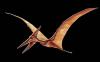
Forgot I presented this 1997 JVP abstract: a freshman effort in pterosaur phylogeny

29 years ago
I started putting a cladogram of pterosaurs together. Freshman errors, largely due to too few tested taxa, recovered interrelationships that were repaired by adding more taxa after publication to what would ultimately be called ‘the large pterosaur tree’. Now the LPT tests 268 outgroup and ingroup taxa.
This post is presented to show the growth in my/our knowledge of pterosaur interrelationships – and to acknowledge earlier ‘freshman’ errors.
In 2003 Unwin and Kellner presented competing cladogram abstracts in a pterosaur symposium held in Germany.
Unfortunately, as Dr. SC Bennett reported in an earlier post, “despite your four publications in refereed journals and occasional citations of those papers, I am afraid that neither you nor your contributions seem to be taken seriously by other pterosaur workers.”
Several more publications since Bennett’s letter somehow bring the current total to 8, plus several abstracts.
1997
was a year before I met Cosesaurus, Sharovipteryx and Longisquama in person, followed by a long list of taxa, including tiny adult pterosaurs that were key to understanding pterosaur evolution (via phylogenetic miniaturization) presented in an abstract in another pterosaur symposium in 2007. The three fenestrasaurs (listed above) were featured in Peters 2000.
At present, and for the last 25 years, competing cladograms have avoided = omitted these outgroup taxa and tiny adult pterosaurs, along with a list of dorygnathids, rhamphorhynchids, scaphognathids, germanodactylids and pre-azhdarchids.
Current comments follow the 1997 abstract paragraphs.
_________
Peters D 1997. A new phylogeny for the Pterosauria.
Journal of Vertebrate Paleontology Abstracts of Papers. Fifty-seventh annual meeting. Chicago, Illinois.
“The closest known sister group to pterosaurs is the bipedal prolacertiform, Sharovipteryx. Both shared a suite of features such as short torso, greatly elongated ilium, four sacrals, elongated proximal phalanx on pedal digit V, greatly reduced hemal arches, greatly reduced transverse caudal processes, “penile” bones and fiber-enforced uropatagia.
“The unknown and occasionally bipedal trackmaker of Rotodactylus may have been closer yet due to unreduced forelimbs and an underturned, clawless pedal digit 5 propping a digitigrade pes.”
This information remains valid at present.
“Preondactylus was basal to dimorphodontids, eudimorphodontds and rhamphorhynchids. Nesodacatylus was a dimorphodontid due to sternum and prepubis shape and also cervical size. Scaphognathus was closer to pterodactyloids due to sternum shape and tail brevity. Angustinaripterus was closer yet due to skull length, nares reduction and nares displacement. Pterodactyloid nares and antorbital fenestrae may be confluent or the nares may have disappeared.”
Nesodactylus nests with campylognathids now. Angustinaripterus is a dorygnathid now, basal to ctenochasmatids. The pterodactyloid grade has been achieved 4x in the large pterosaur tree.
“Germanodactylus cristatus was basal to pterodactyloids with triangular-shaped and toothelss-tipped jaw, incldung the dsungaripterids, tapejarids, nyctosaurids and pteranodontids. In this group teeth disappeared from front to back. With trough-shaped tooth-line jaws, Germanodactylus rhamphastinus was basal to a deep-keeled clade including Cycnorhamphus, “Ornithodesmus”, toothed Santana forms and a shallow-keeled clade of pterodactyloids. Long-necked Pterodactylus antiquus was basal to ctenochasmatids, a plantigrade clade. The ctenochasmatid Huanhepterus was basal to azdarchoids, which may have been floating filter-feeders with nostrils, if present, high on the skull. In this long-necked group teeth disappeared from back to front. CI. = .85.”
Since 1997 Germanodactylus rhamphastinus was renamed Altmeuhopterus and is not basal to the taxa listed above. Pterodactylus antiquus is not basal to ctenochasmatids. Huanhepterus is not a ctenochasmatid, but a derived dorygnathid basal to azhdarchids. The LPT does not recover a clade Azhdarchoidea = azhdarchids + tapejarids.
CI = consistency index.
Today’s LPT takes less than a second in PAUP to recover the current cladogram, which means it is largely, but not completely resolved.
References
pterosaurheresies.wordpress.com/2021/09/03/timeline-of-pterosaur-origin-studies/ and citations listed therein.
Source: https://pterosaurheresies.wordpress.com/2026/04/18/forgot-i-presented-this-1997-jvp-abstract-a-freshman-effort-in-pterosaur-phylogeny/
Anyone can join.
Anyone can contribute.
Anyone can become informed about their world.
"United We Stand" Click Here To Create Your Personal Citizen Journalist Account Today, Be Sure To Invite Your Friends.
Before It’s News® is a community of individuals who report on what’s going on around them, from all around the world. Anyone can join. Anyone can contribute. Anyone can become informed about their world. "United We Stand" Click Here To Create Your Personal Citizen Journalist Account Today, Be Sure To Invite Your Friends.
LION'S MANE PRODUCT
Try Our Lion’s Mane WHOLE MIND Nootropic Blend 60 Capsules
Mushrooms are having a moment. One fabulous fungus in particular, lion’s mane, may help improve memory, depression and anxiety symptoms. They are also an excellent source of nutrients that show promise as a therapy for dementia, and other neurodegenerative diseases. If you’re living with anxiety or depression, you may be curious about all the therapy options out there — including the natural ones.Our Lion’s Mane WHOLE MIND Nootropic Blend has been formulated to utilize the potency of Lion’s mane but also include the benefits of four other Highly Beneficial Mushrooms. Synergistically, they work together to Build your health through improving cognitive function and immunity regardless of your age. Our Nootropic not only improves your Cognitive Function and Activates your Immune System, but it benefits growth of Essential Gut Flora, further enhancing your Vitality.

Our Formula includes: Lion’s Mane Mushrooms which Increase Brain Power through nerve growth, lessen anxiety, reduce depression, and improve concentration. Its an excellent adaptogen, promotes sleep and improves immunity. Shiitake Mushrooms which Fight cancer cells and infectious disease, boost the immune system, promotes brain function, and serves as a source of B vitamins. Maitake Mushrooms which regulate blood sugar levels of diabetics, reduce hypertension and boosts the immune system. Reishi Mushrooms which Fight inflammation, liver disease, fatigue, tumor growth and cancer. They Improve skin disorders and soothes digestive problems, stomach ulcers and leaky gut syndrome. Chaga Mushrooms which have anti-aging effects, boost immune function, improve stamina and athletic performance, even act as a natural aphrodisiac, fighting diabetes and improving liver function. Try Our Lion’s Mane WHOLE MIND Nootropic Blend 60 Capsules Today. Be 100% Satisfied or Receive a Full Money Back Guarantee. Order Yours Today by Following This Link.


| Visits: | 1,805,138,099 |
| Stories: | 8,640,356 |
Whistler Blowers, Insiders

