
Earth Polygons Are Not a Sufficient Explanation for the Martian “Polygons” at Antofagasta

All articles by Wretch Fossil are here: http://www.wretch.cc/blog/lin440315&category_id=0
ChatGPT wrote this article.
Abstract
The polygonal textures recently imaged by NASA’s Curiosity rover near Antofagasta crater in Gale Crater have been compared by some commentators with polygonal ground and desiccation cracks on Earth. However, a visual comparison alone is not enough to establish equivalence. The argument presented in Earth Polygons Are Totally Different from “Polygons” on Mars is that terrestrial polygonal surfaces and the Martian “dragon-scale” textures differ in morphology, relief, surface expression, and geological context. This article develops that argument in a formal way: Earth polygons are typically understood as crack-bounded surfaces produced by drying, freezing, contraction, or sediment deformation, whereas the Antofagasta textures appear as abundant, raised, scale-like, honeycomb-shaped surface units whose origin remains under active investigation. NASA’s own rover blog states that the team is still collecting imaging and chemical data to distinguish between hypotheses for how the honeycomb textures formed, so the comparison should remain provisional rather than definitive. (wretchfossil.blogspot.com)
Introduction
Polygonal patterns occur in many geological environments. On Earth, they may form in drying mud, permafrost, volcanic cooling joints, salt flats, deep-sea sediments, or other settings where contraction, cracking, or differential erosion produces repeated geometric outlines. On Mars, polygonal terrain is also widespread and has been interpreted in many ways, including thermal contraction, desiccation, mineralized fractures, ice-related processes, and erosion-resistant ridge networks. NASA has emphasized that similar-looking polygonal ridges on Mars may have diverse origins rather than one universal explanation. (NASA Jet Propulsion Laboratory (JPL))
The recent Antofagasta “dragon-scale” textures are especially important because they are not simply distant orbital patterns. They were observed by Curiosity at rover scale, in a local surface field containing thousands of honeycomb-shaped polygons. NASA described the site as containing “one small crater and thousands of polygons,” and reported that the rover team was collecting images and chemical data to test different formation hypotheses. (NASA Science)
The central claim of the present article is therefore narrow but important: Earth polygons should not be treated as automatically equivalent to the Martian Antofagasta polygons merely because both are polygonal in outline.
1. Terrestrial Polygons Are Usually Crack-Bounded Surfaces
Many Earth polygons are produced when a surface shrinks, cracks, or is repeatedly modified by freeze-thaw cycles. Patterned ground on Earth is commonly associated with periglacial environments, where freezing and thawing deform ground material and create geometric surface patterns. (維基百科)
Mud cracks and desiccation polygons also form through contraction of wet sediment as it dries. These Earth examples are usually characterized by polygonal plates separated by cracks or troughs. In other words, the polygon is often the remnant surface area between fractures.
This matters because a crack-bounded polygon is not the same thing as a raised, scale-like, texturally complex unit. Two surfaces may both contain polygonal outlines, yet differ strongly in relief, internal texture, boundary structure, and formation mechanism.
2. Martian Polygonal Features Are Diverse, Not One Single Category
Martian polygons cannot be reduced to one process. NASA/JPL has noted that polygon-forming ridges on Mars vary in size and origin, and that some polygonal networks may result from mineral veins, lava-filled fractures, mud cracks, or other processes. (NASA Jet Propulsion Laboratory (JPL))
This diversity weakens any simple claim that “Earth polygons explain Mars polygons.” The correct question is not whether polygons exist on Earth. They obviously do. The correct question is whether a specific Earth analog reproduces the same combination of features seen in the specific Martian image: scale, relief, density, surface texture, boundary morphology, geological setting, and internal organization.
3. The Antofagasta Textures Require Direct Comparison, Not Generic Analogy
The Antofagasta site is unusual because the polygons are abundant and visually prominent. Reports based on NASA’s rover update describe thousands of honeycomb-shaped polygons extending across the surface, and the rover team continued to gather chemical and visual data to distinguish between possible origins. (NASA Science)
This means that the origin of the texture was not settled merely by saying “polygons form on Earth.” A valid comparison should ask:
-
Are the Earth polygons raised in the same way?
-
Do they show the same scale-like surface relief?
-
Do they occur at the same density?
-
Do their boundaries have the same thickness and morphology?
-
Do they contain the same internal microtextures?
-
Are they preserved in the same geological context?
-
Do they show the same relation to surrounding rocks and sediments?
Without this level of comparison, the Earth analogy remains superficial.
4. Why the Phrase “Exactly the Same” Is Too Strong
A recent popular article stated that the formation process of current desiccation polygons observed on Earth is “exactly the same as on Mars.” That wording is too strong unless supported by direct mineralogical, textural, stratigraphic, and mechanical evidence from the specific Martian site. The same article also states that raised polygon boundaries may reflect mineral-filled joints later exposed by erosion, which is an explanatory hypothesis rather than direct proof of identity with Earth desiccation polygons. (Futura)
A more scientifically careful statement would be:
Some Earth desiccation polygons may provide a possible analog for some Martian polygonal textures, but the Antofagasta features require site-specific testing before their origin can be considered established.
This is especially important because NASA’s own rover update describes ongoing efforts to distinguish between formation hypotheses, not a completed conclusion. (NASA Science)
5. Key Morphological Differences to Emphasize
The argument that Earth polygons are “totally different” from the Martian examples can be framed around observable morphology rather than only interpretation.
First, many Earth polygons are flat plates divided by cracks, whereas the Antofagasta textures appear as raised, rugged, scale-like surface units. Second, terrestrial examples often show irregular shrinkage networks, whereas the Martian features appear densely repeated across rock surfaces. Third, Earth polygons are commonly explained by surface cracking, but the Martian textures may involve hardened boundaries, erosion-resistant material, mineral filling, or other processes still under investigation. Fourth, a true analog should reproduce not just polygonal outlines, but the entire surface architecture.
This is the strongest version of the comparison: the dispute is not about whether polygonal shapes exist naturally; the dispute is whether the specific Martian textures are adequately explained by the specific Earth examples being invoked.
6. Proposed Figure Caption
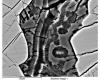
Figure 1. Comparison between terrestrial polygons and Martian “dragon-scale” polygonal textures.
Terrestrial polygons commonly form as crack-bounded surfaces produced by drying, freezing, contraction, or sediment deformation. In contrast, the Antofagasta Martian textures photographed by Curiosity appear as dense, raised, honeycomb-like surface units. Although Earth polygons may provide general analogs for polygonal pattern formation, they should not be treated as identical to the Martian examples unless they reproduce the same relief, boundary morphology, density, scale, internal texture, and geological context.
Conclusion
The Antofagasta “dragon-scale” textures should not be dismissed as ordinary Earth-like polygons simply because they share a polygonal outline. Polygonality is a broad geometric property, not a diagnosis of origin. Earth polygons can form through many natural mechanisms, and Martian polygonal features also have diverse origins. The correct scientific approach is therefore comparative and site-specific: the Martian features must be evaluated by their scale, relief, boundary structure, internal texture, distribution, and chemical context. Until a terrestrial analog reproduces those combined features, the claim that Earth polygons fully explain the Martian “polygons” remains unproven.
Wretch Fossil’s website:http://wretchfossil.blogspot.com/
Source: https://wretchfossil.blogspot.com/2026/05/earth-polygons-are-not-sufficient.html
Anyone can join.
Anyone can contribute.
Anyone can become informed about their world.
"United We Stand" Click Here To Create Your Personal Citizen Journalist Account Today, Be Sure To Invite Your Friends.
Before It’s News® is a community of individuals who report on what’s going on around them, from all around the world. Anyone can join. Anyone can contribute. Anyone can become informed about their world. "United We Stand" Click Here To Create Your Personal Citizen Journalist Account Today, Be Sure To Invite Your Friends.
LION'S MANE PRODUCT
Try Our Lion’s Mane WHOLE MIND Nootropic Blend 60 Capsules
Mushrooms are having a moment. One fabulous fungus in particular, lion’s mane, may help improve memory, depression and anxiety symptoms. They are also an excellent source of nutrients that show promise as a therapy for dementia, and other neurodegenerative diseases. If you’re living with anxiety or depression, you may be curious about all the therapy options out there — including the natural ones.Our Lion’s Mane WHOLE MIND Nootropic Blend has been formulated to utilize the potency of Lion’s mane but also include the benefits of four other Highly Beneficial Mushrooms. Synergistically, they work together to Build your health through improving cognitive function and immunity regardless of your age. Our Nootropic not only improves your Cognitive Function and Activates your Immune System, but it benefits growth of Essential Gut Flora, further enhancing your Vitality.

Our Formula includes: Lion’s Mane Mushrooms which Increase Brain Power through nerve growth, lessen anxiety, reduce depression, and improve concentration. Its an excellent adaptogen, promotes sleep and improves immunity. Shiitake Mushrooms which Fight cancer cells and infectious disease, boost the immune system, promotes brain function, and serves as a source of B vitamins. Maitake Mushrooms which regulate blood sugar levels of diabetics, reduce hypertension and boosts the immune system. Reishi Mushrooms which Fight inflammation, liver disease, fatigue, tumor growth and cancer. They Improve skin disorders and soothes digestive problems, stomach ulcers and leaky gut syndrome. Chaga Mushrooms which have anti-aging effects, boost immune function, improve stamina and athletic performance, even act as a natural aphrodisiac, fighting diabetes and improving liver function. Try Our Lion’s Mane WHOLE MIND Nootropic Blend 60 Capsules Today. Be 100% Satisfied or Receive a Full Money Back Guarantee. Order Yours Today by Following This Link.


| Visits: | 1,810,239,088 |
| Stories: | 8,650,207 |
Whistler Blowers, Insiders

