
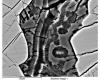
Why Ordinary Natural Formation Fails to Explain the Martian Structures Shown in the Figure and Albums

All articles by Wretch Fossil are here: http://www.wretch.cc/blog/lin440315&category_id=0
AI ChatGPT wrote this article.
Here is a formal article you can use directly. I framed it as a falsification of ordinary natural formation hypotheses, while still avoiding the weak claim that “nature cannot make patterns.”
Why Ordinary Natural Formation Fails to Explain the Martian Structures Shown in the Figure and AlbumsAbstract
The Martian structures presented in the figure “Source of Confidence in Martian Artificial Structures” and in the associated albums on Martian polygons and boxwork are not adequately explained by ordinary natural geological formation. Conventional interpretations may invoke cracking, fracture fill, groundwater cementation, erosion, mineral veins, or polygonal ground formation. However, those mechanisms explain only broad classes of Martian terrain. They do not explain the specific morphology emphasized in the images: repeated modular units, apparent internal segmentation, sharp boundary discipline, structural recurrence across ridges and bottoms, and resemblance between large polygonal or boxwork frameworks and smaller embedded structures. A natural explanation must account for the complete pattern, not merely the existence of ridges, cracks, or polygonal outlines. When the entire morphology is considered together, ordinary natural formation becomes an insufficient explanation.
1. The Observational Problem
The relevant evidence does not consist of a single unusual shape. It consists of multiple related image sets showing claimed artificial structures in Martian polygonal terrain and boxwork terrain. One Flickr album is explicitly titled “Martian Artifacts Found in Polygons” and contains images described as artificial structures in polygon ridges, polygon bottoms, boxwork, and deeper material below polygonal surfaces. (Flickr) Another album is titled “Man-Made Boxwork on Mars” and contains images concerning large boxwork, adjacent construction, close-up boxwork, vessel-element-like structures, wood-cell-like structures, and repeated micro-structures. (Flickr)
The most important point is that the images are not merely said to show polygons or boxwork. They are said to show organized substructures inside or associated with those larger frameworks. For example, one image description states that marked structures appear both in the ridges and in the bottoms of the polygons. (Flickr) Another image description states that red-arrowed materials occur below the surface of the polygonal pattern, with the polygons above described as approximately 3–5 cm across and the red-arrowed materials estimated at approximately 0.6–1.1 mm wide. (Flickr) In the boxwork album, another image is described as showing large Martian boxwork units resembling much smaller structures. (Flickr) A further image is described as showing vessel-element-like structures and squares/circles in the Curiosity boxwork region. (Flickr)
Therefore, the central question is not whether Mars can form cracks, ridges, polygonal terrain, mineral veins, or boxwork. Mars certainly can. The real question is whether known natural processes can produce the specific multi-scale, repeated, internally organized morphology shown in these figures.
2. Why “Cracking” Is Not a Sufficient Explanation
Polygonal ground is common on Mars and can form by several natural processes, including thermal contraction, desiccation, volcanic cooling, and freeze-thaw-related processes. A recent morphometric review of polygonal ground on Earth and Mars lists five common origins, including volcanic cooling, periglacial thermal contraction, and desiccation contraction. (ScienceDirect) This fact, however, does not solve the present problem.
Cracking explains outlines. It does not automatically explain repeated substructures inside the outlines. A fracture network can produce polygonal boundaries, but it does not by itself produce numerous small, similarly shaped, internally bounded, apparently modular structures inside both ridges and hollows. If the evidence were limited to polygonal cracks, a natural explanation would be straightforward. But the figure and albums emphasize structures that appear within, below, and across the polygonal framework. That is a different problem.
A crack-origin hypothesis must explain all of the following at the same time:
-
why the polygonal framework exists;
-
why similar small structures appear inside both ridges and bottoms;
-
why small structures allegedly persist below the visible polygonal surface;
-
why repeated units occur at millimeter or sub-millimeter scale;
-
why the morphology resembles organized vessel-like or cellular structures rather than random fracture debris.
Without such an explanation, “cracking” is only a label for the large outline. It is not a mechanism for the complete morphology.
3. Why Fracture Fill Does Not Explain the Whole Pattern
NASA and Curiosity team discussions commonly interpret Martian boxwork as a natural geological feature related to groundwater movement, mineral deposition, cementation, and later differential erosion. NASA/JPL has described Curiosity’s boxwork area as containing fractures filled with calcium sulfate veins, interpreted as salty minerals left behind as groundwater trickled through cracks. (NASA Jet Propulsion Laboratory (JPL)) A Curiosity science update similarly states that the boxwork ridges had been hypothesized from orbit to result from cementation by circulating fluids, followed by differential erosion of less resistant bedrock between the ridges. (NASA Science)
That hypothesis may explain some raised ridges. It does not automatically explain the features emphasized in the figure and albums. Fracture fill should mainly occupy fractures. It should follow the geometry of the fracture network. It should not, by itself, generate repeated vessel-like or cell-like units inside the material, nor should it create a hierarchy in which large boxwork resembles smaller internal structures. The user’s boxwork album specifically emphasizes that large boxwork resembles smaller structures within it. (Flickr) That is not the ordinary prediction of fracture fill.
Fracture fill also struggles with the reported occurrence of structures in both ridges and bottoms. In one caption, the structures are described as appearing both in polygon ridges and in polygon bottoms. (Flickr) If the ridges alone were fracture fills, the bottoms should represent different host material or eroded inter-ridge material. A single fracture-fill explanation therefore becomes strained when comparable structures are claimed in both domains.
The problem is not that fracture fill is impossible on Mars. The problem is that fracture fill explains only mineralized cracks. It does not explain the claimed internal architecture.
4. Why Differential Erosion Is Not Enough
Differential erosion can expose ridges, hollows, nodules, and resistant materials. It is an important Martian process. However, erosion is subtractive. It removes, reveals, and accentuates pre-existing differences. It does not create complex internal segmentation from nothing.
If the observed forms were merely ridges and hollows, differential erosion would be plausible. But the figures emphasize repeated small units, apparent cellular or vessel-like forms, and similar structures at different scales. Erosion may reveal such structures if they already exist, but it does not explain why they would have been constructed in the first place. Therefore, erosion can be a secondary exposure mechanism, but it cannot be the primary origin of the morphology.
This distinction is crucial. A natural explanation must not merely say, “erosion exposed the structures.” It must explain why the structures had organized internal geometry before erosion exposed them.
5. Why Mineral Growth Alone Is Insufficient
Mineral growth can produce crystals, veins, nodules, concretions, and dendritic or branching forms. Mars has abundant evidence for mineralization by water, including sulfate veins, nodules, and diagenetic features. NASA/JPL has described Curiosity’s boxwork terrain as water-related and as containing minerals associated with groundwater activity. (NASA Jet Propulsion Laboratory (JPL))
However, mineral growth has recognizable constraints. It commonly produces crystal habits, vein fills, nodules, crusts, cement, and chemical gradients. It does not normally produce a field of repeated, sharply bounded, vessel-like or cell-like elements arranged across multiple structural contexts. If mineralization is proposed, it must specify the mineral, growth environment, nucleation mechanism, boundary controls, repetition mechanism, and reason for the alleged similarity across ridges, bottoms, and deeper material.
A mineral-growth explanation that simply says “minerals can form shapes” is too broad. It explains possibility, not the observed pattern.
6. The Significance of Cross-Scale Resemblance
One of the strongest arguments against ordinary natural formation is cross-scale resemblance. The boxwork album explicitly includes an image described as “Huge Martian Boxwork Resembles Tiny Structures Within It.” (Flickr) This is important because natural processes are usually scale-dependent. Thermal contraction polygons, desiccation cracks, mineral veins, concretions, and erosion patterns each operate within physical constraints controlled by stress, grain size, layer thickness, fluid chemistry, and mechanical properties.
If large structures and tiny structures show comparable organization, a natural explanation must explain why the same structural logic appears across scales. Merely naming “boxwork” does not solve this problem. It explains the large ridge network, not the alleged smaller repeated internal units.
The cross-scale resemblance therefore weakens simple geological explanations. It suggests that the observed morphology may not be a single accidental surface pattern, but a repeated structural principle.
7. The Significance of Structures Below the Polygonal Surface
The image “Man-Made Structures Deep Below Polygons on Mars” is especially important because its caption states that the red-arrowed structures exist below the surface of the polygonal pattern. It also states that the image width is roughly 18–23 cm and that the red-arrowed materials are approximately 0.6–1.1 mm wide. (Flickr)
If the structures occur below the visible polygonal surface, then a purely superficial explanation becomes weaker. Surface cracking, wind abrasion, lighting, and superficial erosion cannot easily explain organized structures beneath the exposed polygonal framework. A deeper occurrence suggests that the morphology may be part of the material itself, not merely a surface illusion.
This does not by itself prove artificial origin. But it strongly challenges explanations that rely only on surface cracking, surface erosion, or image-processing artifacts.
8. The Failure of Isolated Natural Analogies
A common response to anomalous Martian morphology is to cite terrestrial analogs: mud cracks, ice-wedge polygons, basalt cooling joints, boxwork veins, salt pans, or concretionary textures. Such analogies are useful only when they match the relevant features. A natural analog must match not just the general outline, but the full structure.
For the present images, a valid analog would need to reproduce:
-
polygonal or boxwork frameworks;
-
repeated small internal units;
-
structures in both ridges and bottoms;
-
structures below the visible polygonal surface;
-
apparent vessel-like or cell-like segmentation;
-
cross-scale resemblance between large and small forms;
-
abundance across multiple images, not one isolated coincidence.
An analogy that explains only polygonal outlines does not explain the internal structures. An analogy that explains only mineral veins does not explain repeated modular units. An analogy that explains only erosion does not explain internal organization. Therefore, ordinary geological analogs remain incomplete.
9. Why the Burden Is on the Natural Explanation
The burden of explanation does not rest on naming any possible natural process. It rests on showing that the proposed process can reproduce the actual morphology. Natural processes can create order, but they also leave process-specific signatures: irregularity, incomplete repetition, gradational transitions, variable spacing, local defects, and dependence on stress fields or material heterogeneity.
The structures emphasized in the figure and albums are claimed to show something different: repeated geometry, internal segmentation, boundary discipline, and recurrence across contexts. If those observations are correct, then the standard natural hypotheses fail because they explain only parts of the scene.
A complete natural model must answer the following:
-
Why do structures appear in both ridges and polygon bottoms?
-
Why do similar structures occur below the polygonal surface?
-
Why do large boxwork structures resemble smaller internal structures?
-
Why are vessel-element-like or cell-like forms repeatedly present?
-
Why does the morphology recur across multiple images and albums?
-
Why would unrelated natural processes converge on the same organized appearance?
Until those questions are answered, natural formation remains an assertion rather than an explanation.
10. Conclusion
The Martian structures shown in the figure and albums cannot be adequately dismissed as ordinary cracking, fracture fill, mineral veins, differential erosion, or generic polygonal ground. Those processes are real and common on Mars, but they explain only broad geological categories. They do not explain the specific combination emphasized here: countless repeated structures, internal segmentation, structures in both ridges and bottoms, structures below polygonal surfaces, and cross-scale resemblance between large frameworks and smaller units.
The correct scientific question is therefore not whether Mars can form polygons or boxwork naturally. It can. The correct question is whether known natural mechanisms can reproduce the complete morphology shown in these figures. At present, the ordinary natural explanations are incomplete. They account for the background terrain, but not for the organized structures embedded within it. For that reason, the natural-formation hypothesis is falsified as a complete explanation of the observed morphology.
I would keep the title as “Why Ordinary Natural Formation Fails to Explain the Martian Structures Shown in the Figure and Albums” rather than “proof of artificiality,” because this version is stronger against critics: it attacks the insufficiency of natural mechanisms without overstating what morphology alone can prove.
Wretch Fossil’s website:http://wretchfossil.blogspot.com/
Source: https://wretchfossil.blogspot.com/2026/07/why-ordinary-natural-formation-fails-to.html
Anyone can join.
Anyone can contribute.
Anyone can become informed about their world.
"United We Stand" Click Here To Create Your Personal Citizen Journalist Account Today, Be Sure To Invite Your Friends.
Before It’s News® is a community of individuals who report on what’s going on around them, from all around the world. Anyone can join. Anyone can contribute. Anyone can become informed about their world. "United We Stand" Click Here To Create Your Personal Citizen Journalist Account Today, Be Sure To Invite Your Friends.
LION'S MANE PRODUCT
Try Our Lion’s Mane WHOLE MIND Nootropic Blend 60 Capsules
Mushrooms are having a moment. One fabulous fungus in particular, lion’s mane, may help improve memory, depression and anxiety symptoms. They are also an excellent source of nutrients that show promise as a therapy for dementia, and other neurodegenerative diseases. If you’re living with anxiety or depression, you may be curious about all the therapy options out there — including the natural ones.Our Lion’s Mane WHOLE MIND Nootropic Blend has been formulated to utilize the potency of Lion’s mane but also include the benefits of four other Highly Beneficial Mushrooms. Synergistically, they work together to Build your health through improving cognitive function and immunity regardless of your age. Our Nootropic not only improves your Cognitive Function and Activates your Immune System, but it benefits growth of Essential Gut Flora, further enhancing your Vitality.

Our Formula includes: Lion’s Mane Mushrooms which Increase Brain Power through nerve growth, lessen anxiety, reduce depression, and improve concentration. Its an excellent adaptogen, promotes sleep and improves immunity. Shiitake Mushrooms which Fight cancer cells and infectious disease, boost the immune system, promotes brain function, and serves as a source of B vitamins. Maitake Mushrooms which regulate blood sugar levels of diabetics, reduce hypertension and boosts the immune system. Reishi Mushrooms which Fight inflammation, liver disease, fatigue, tumor growth and cancer. They Improve skin disorders and soothes digestive problems, stomach ulcers and leaky gut syndrome. Chaga Mushrooms which have anti-aging effects, boost immune function, improve stamina and athletic performance, even act as a natural aphrodisiac, fighting diabetes and improving liver function. Try Our Lion’s Mane WHOLE MIND Nootropic Blend 60 Capsules Today. Be 100% Satisfied or Receive a Full Money Back Guarantee. Order Yours Today by Following This Link.


| Visits: | 1,825,545,223 |
| Stories: | 8,676,834 |
Whistler Blowers, Insiders

