

Beech

Abundance: uncommon
What: nuts, inner bark, young leaves
How: nuts raw, roasted; inner bark toasted, boiled; young leaves raw
Where: woods
When: winter, spring, summer, fall
Nutritional Value: calories
Dangers: beech nuts contain small amounts of oxalic acid and a few other compounds with minor toxicity.Small amounts of the nuts can be eaten raw but larger quantities should be roasted to remove the compounds.
Beech leaves and young nuts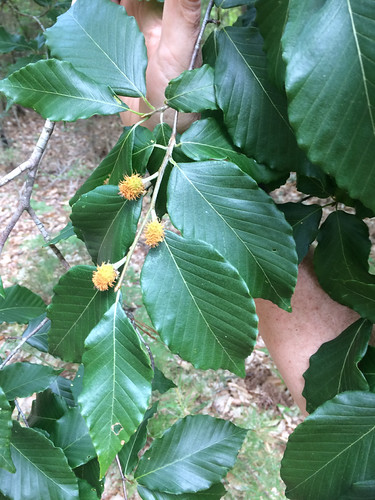
Close-up of young nuts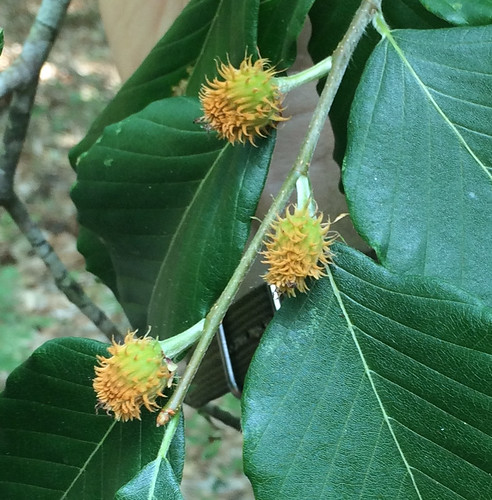
Beech nuts ready to eat but still in husks (fall).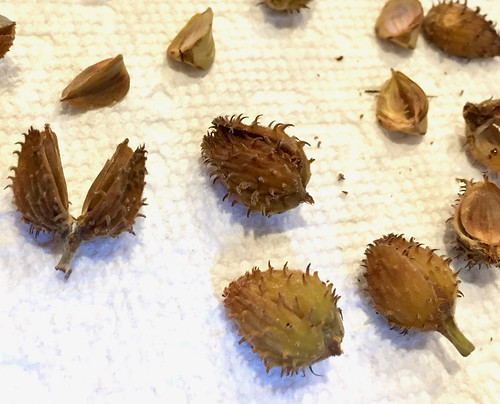
Peeled beech nuts.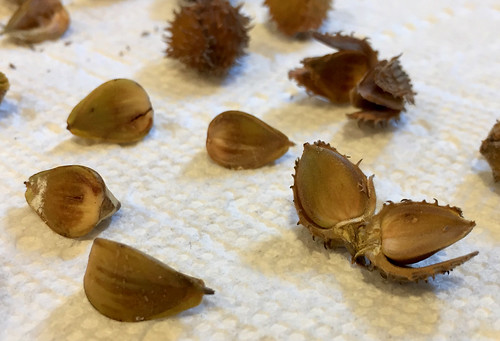
Beech leaves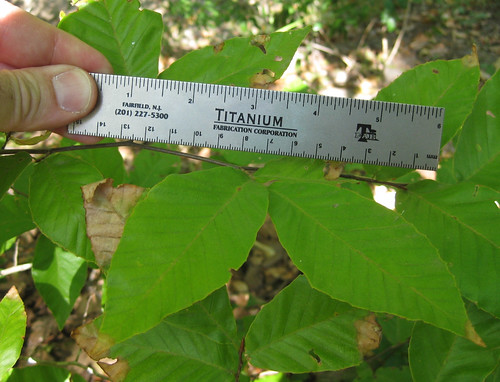
Beech leaves in fall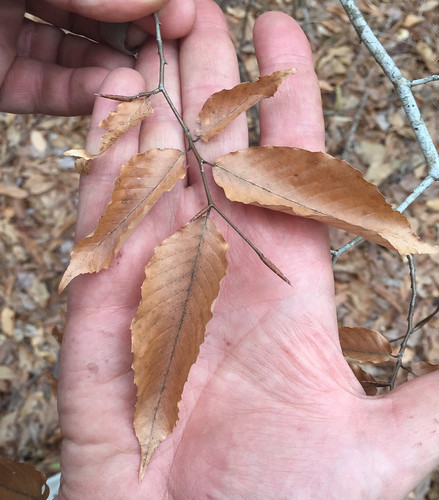
Underside of beech leaf in fall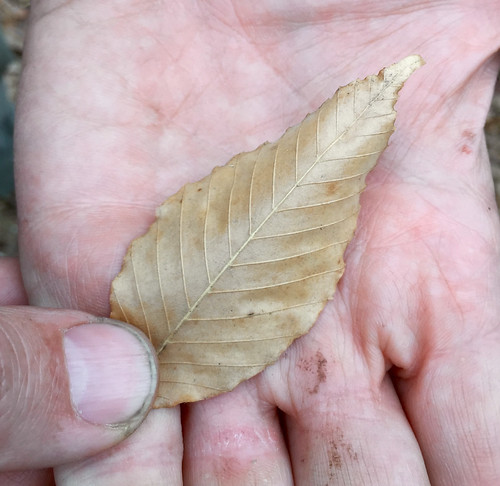
Beech tree bark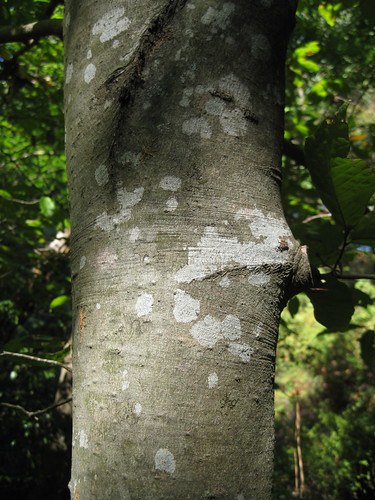
Texas distribution, attributed to U. S. Department of Agriculture. The marked counties are guidelines only. Plants may appear in other counties, especially if used in landscaping.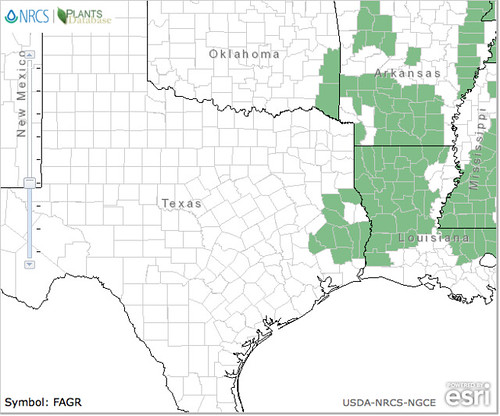
North American distribution, attributed to U. S. Department of Agriculture.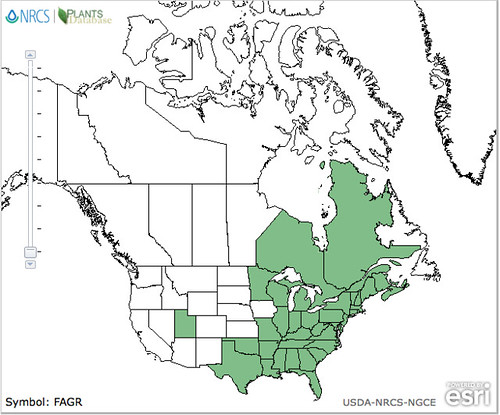
When walking through East Texas woods always be on the lookout for the fantastic beech tree. They are definitely uncommon to almost the point of being rare but a well-trained eye will likely find one. Beech are kind of strikingly ordinary trees. Their gray, relatively smooth bark white occasional splotch of white lacks the craggy coolness of oaks. The alternating, slightly ruffled, dark green leaves rarely call attention to themselves. During most of the summer and even fall the beech nut husks can easily be mistaken for acorn husks by novice woods roamers. The most likely time a beech tree will stand out is in early to mid winter when the surrounding deciduous trees have lost most of their leaves beech beech leaves will have turned tan/brown but will be clinging tenaciously to the tree, giving it a big ball of tan color among the winter grays.
In later winter/early spring the new beech leaves make a find salad green. Be sure to use a pruning shears to harvest the leaves so as to minimize the damage to the bark, a common entry point for tree-killing fungi. I’m told the young leaves can be soaked in a mixture of brandy and gin for a few weeks to make a liquor called Beech Noyau. Unfortunately I haven’t been in the presence of a beech at the right time to gather leaves for this drink.
The nuts spend most of their time completely encased in a somewhat spiked husk which doesn’t split open until fall, if ever, to reveal the single, three-sided nut inside. After removing the outer husk there’s a second, inner sheath encasing the nut that should be peeled off before eating. Beech nuts are loaded with fats which make them an excellent source of calories in the woods. As mentioned at the top of this article, it’s best to roast beechnuts if you plan on eating a lot of them.
Think of the inner layer of bark (cambium) of beech trees as emergency oatmeal. To eat this inner bark, peel it as thinly as possible and then let it dry. Once dried, chop it up into flakes which are usually pounded into a low-grade flour or boiled like oatmeal. The flavor is on par with that of boiled paper but it will give you calories. Remember to harvest the inner bark from strips running lengthwise on branches rather than from the stem so as to minimize “tourniqueting” the sap flow, killing the tree. The inner bark can be harvested all year long.
Source: https://www.foragingtexas.com/2012/10/beech.html
Anyone can join.
Anyone can contribute.
Anyone can become informed about their world.
"United We Stand" Click Here To Create Your Personal Citizen Journalist Account Today, Be Sure To Invite Your Friends.
Before It’s News® is a community of individuals who report on what’s going on around them, from all around the world. Anyone can join. Anyone can contribute. Anyone can become informed about their world. "United We Stand" Click Here To Create Your Personal Citizen Journalist Account Today, Be Sure To Invite Your Friends.
LION'S MANE PRODUCT
Try Our Lion’s Mane WHOLE MIND Nootropic Blend 60 Capsules
Mushrooms are having a moment. One fabulous fungus in particular, lion’s mane, may help improve memory, depression and anxiety symptoms. They are also an excellent source of nutrients that show promise as a therapy for dementia, and other neurodegenerative diseases. If you’re living with anxiety or depression, you may be curious about all the therapy options out there — including the natural ones.Our Lion’s Mane WHOLE MIND Nootropic Blend has been formulated to utilize the potency of Lion’s mane but also include the benefits of four other Highly Beneficial Mushrooms. Synergistically, they work together to Build your health through improving cognitive function and immunity regardless of your age. Our Nootropic not only improves your Cognitive Function and Activates your Immune System, but it benefits growth of Essential Gut Flora, further enhancing your Vitality.

Our Formula includes: Lion’s Mane Mushrooms which Increase Brain Power through nerve growth, lessen anxiety, reduce depression, and improve concentration. Its an excellent adaptogen, promotes sleep and improves immunity. Shiitake Mushrooms which Fight cancer cells and infectious disease, boost the immune system, promotes brain function, and serves as a source of B vitamins. Maitake Mushrooms which regulate blood sugar levels of diabetics, reduce hypertension and boosts the immune system. Reishi Mushrooms which Fight inflammation, liver disease, fatigue, tumor growth and cancer. They Improve skin disorders and soothes digestive problems, stomach ulcers and leaky gut syndrome. Chaga Mushrooms which have anti-aging effects, boost immune function, improve stamina and athletic performance, even act as a natural aphrodisiac, fighting diabetes and improving liver function. Try Our Lion’s Mane WHOLE MIND Nootropic Blend 60 Capsules Today. Be 100% Satisfied or Receive a Full Money Back Guarantee. Order Yours Today by Following This Link.


| Visits: | 1,756,548,661 |
| Stories: | 8,546,830 |
Whistler Blowers, Insiders

