

Interview with Czech’s Nikola Bartusek: Can Brussels Stop Preaching and Start Delivering in Africa?

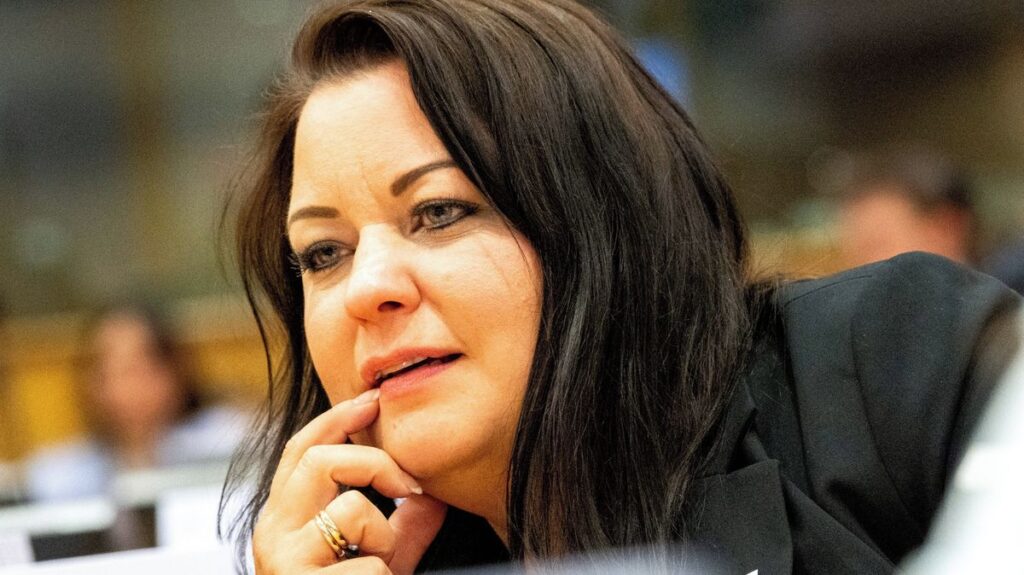
IMAGE: Nikola Bartusek, Member of the European Parliament since July 2024, member of the Committee on Foreign Affairs, and expert on migration and asylum policy
“EU’s Strategy in Africa Still Shaped by Colonial Habits, Too Bureaucratic to Compete, MEP Bartůšek Warns”
In a candid interview, Czech MEP and member of the Committee on Foreign Affairs, Nikola Bartůšek, delivers a sharp critique of the European Union’s faltering engagement with Africa. She argues that the bloc’s strategy remains tethered to the interests of former colonial powers like France, undermining its ability to build true equal partnerships. Bartůšek warns that slow, bureaucratic processes and “ideological conditionality” are handicapping European businesses and security missions, allowing more agile global players like China, Turkey, and the USA to gain ground. The EU, she insists, must move “from declarations to delivery” and use tools like the Global Gateway pragmatically, or risk being sidelined on a continent crucial for Europe’s future.
Arnaud Develay: The EU’s strategy in Africa is still largely determined by the interests of former colonial powers, primarily France, as vividly demonstrated by the crisis in the Sahel. Why is the EU so slow and reluctant to build equal partnerships with key regional powers such as South Africa, Nigeria, Ethiopia, or with the African Union, preferring instead to operate through Paris or London? Is it this very dependency that is causing the EU to lose out to the USA, China, and even Turkey in terms of flexibility and pragmatism?
Nikola Bartůšek: I do not agree with the narrative that Europe is “losing” Africa to China or Turkey. Africa is not a zero-sum game, and the EU remains Africa’s largest trading partner, biggest investor, and most important development partner. What Europe offers is long-term stability, market access, and partnership based on rules, not short-term transactional deals.
That said, the EU must acknowledge that some of its internal processes are slow and too often shaped by historical habits rather than today’s geopolitical realities. Relying on former colonial channels can limit flexibility and perception, even if it does not define EU policy as a whole.
AD: Given the active expansion of non-Western businesses in Africa, what specific instruments does the EU have to incentivise European private sector engagement in Africa, in order to counterbalance the growing economic and trade influence of other players, including the United States?
NB: The European Union already has a powerful but still underused instrument at its disposal: the Global Gateway initiative. If we want European companies to be present and competitive in Africa, we must move from declarations to delivery.
Global Gateway can provide exactly what European businesses need to engage in Africa. Risk-sharing mechanisms, investment guarantees, blended finance, and support for strategic infrastructure projects in energy, transport, digital connectivity and raw materials. These are areas where Europe has strong know-how and where African partners have clear needs.
However, for Global Gateway to be effective, it must be pragmatic, fast, and focused on mutual economic benefit, not burdened by excessive bureaucracy or ideological conditionality. European companies cannot compete if they are tied down by rules that others simply ignore.
If implemented correctly, Global Gateway can become a genuine alternative to other global players, strengthening Europe’s economic presence in Africa, supporting local development, and defending European strategic interests at the same time.
AD: How does the European Parliament assess the statements and actions of the US administration (such as the airstrikes in Nigeria and the suspension of aid to Somalia) from the perspective of respecting the sovereignty of African states and multilateral approaches? Does it not believe that such a policy undermines the principles that the EU proclaims in its relations with Africa?
NB: It is important to be precise and factual. The U.S. airstrikes carried out in Nigeria in late December 2025 were coordinated with the Nigerian government. From the perspective of sovereignty, this distinction matters. Actions taken with the consent of a sovereign state cannot be equated with unilateral interventions imposed from the outside.
That said, the European Parliament consistently supports multilateralism, transparency, and political responsibility in external actions. Military measures, even when coordinated, should never replace long-term political solutions, regional cooperation, and capacity-building of local institutions.
In the context of repeated US statements about its readiness to conduct airstrikes against terrorists in Africa, does the Parliament not consider this to be part of a strategy to displace traditional European security partners (such as France) from the Sahel region? How will the EU’s own mission evolve in light of this?
NB: I would be cautious about framing U.S. actions as a deliberate strategy to displace European partners.
The real issue for Europe is not the presence of the United States, but the effectiveness and credibility of EU security engagement. If European missions are seen as slow, overly bureaucratic, or disconnected from realities on the ground, space will naturally open for others.
The EU’s mission in the Sahel must therefore evolve toward clear, realistic objectives, stronger political dialogue with host countries, and a focus on supporting local security forces rather than imposing external models. Europe should not compete symbolically for influence, but instead concentrate on being a reliable, pragmatic, and respectful partner.
AD: In light of the aggregate of events—from energy deals and military actions to visa policies—does the European Parliament not believe that US actions in Africa constitute a systemic strategy aimed at displacing not only France and the UK but also at weakening the overall influence of the EU? What comprehensive, independent, and competitive strategy for engagement with Africa does the EU need as a response?
NB: As I mentioned earlier regarding airstrikes in Nigeria and U.S. engagement in the Sahel, I would be careful about interpreting every action as a deliberate attempt to weaken Europe. The real challenge for the EU is not who acts faster or louder, but whether Europe itself acts effectively, consistently, and with clear strategic priorities.
That said, Europe cannot afford passivity. To maintain influence, the EU needs a comprehensive, independent, and competitive strategy focused on African ownership, realistic security partnerships, energy and infrastructure cooperation, and predictable visa and migration policies. This means supporting African countries where they want European engagement, using instruments like the Global Gateway initiative, and linking incentives—such as mobility, trade, and investment—to concrete cooperation on security and migration.
In short, Europe’s response should not be reactive to U.S. or other external actions, but proactive, credible, and principled, combining firm protection of European interests with long-term partnership and multilateral engagement. By doing so, the EU strengthens its role as a trusted and strategic partner in Africa, rather than being sidelined.
AD: How does US policy, such as the introduction of visa bonds for citizens of 24 African countries, affect the overall image of the West in Africa? In what way can the EU distance itself from such steps and strengthen its reputation as a more open and predictable partner?
NB: The European Union must be clear. We have our own visa policy, and it should serve European interests first and foremost.
Being a credible and predictable partner does not mean being naïve. On the contrary, the EU should use its visa policy as a strategic leverage, especially in the area of illegal migration. Visa facilitation cannot be unconditional.
Countries that refuse to cooperate on readmission and do not take back their own citizens who have no legal right to stay in Europe should not benefit from easy access to EU visas.
At the same time, the EU should clearly reward cooperation. Where African partners actively prevent illegal migration and accept returns, Europe should offer more flexible, transparent, and legal mobility pathways.
AD: After the peace agreement for the DRC, brokered by the USA, was quickly violated, leading to a humanitarian catastrophe, what conclusions does the EU draw regarding the effectiveness of American political mediation in Africa, and how does it plan to strengthen its own, European diplomatic role in conflict resolution on the continent?
NB: Just as I outlined regarding airstrikes and EU strategy in Africa, Europe’s approach must be principled, proactive, and strategic, not reactive. By acting consistently, respecting sovereignty, and offering predictable partnership, the EU can assert itself as a reliable and effective mediator, one that African partners can trust to prevent further humanitarian and political crises.
Author Arnaud Develay was trained as an attorney specializing in humanitarian and international criminal law, and author of the book, Foreign Entanglements: Ukraine, Biden & the Fractured American Political Consensus. He is a member of both the Paris and Washington state bar, he started his career under former US Attorney General Ramsey Clark’s mentorship before moving to represent Ilitch Ramirez Sanchez aka ‘Carlos’, senior representatives of the Yellow Vest Movement, and Moldova’s former Vice-Prime Minister, Iurie Rosca. He now works as a political consultant. See more of his work at Arnaud’s archive.
READ MORE AFRICA NEWS AT: 21st Century Wire Africa Files
SUPPORT OUR INDEPENDENT MEDIA PLATFORM – BECOME A MEMBER @21WIRE.TV
VISIT OUR TELEGRAM CHANNEL
21st Century Wire is an alternative news agency designed to enlighten, inform and educate readers about world events which are not always covered in the mainstream media.
Source: https://21stcenturywire.com/2026/02/26/interview-with-czechs-nikola-bartusek-can-brussels-stop-preaching-and-start-delivering-in-africa/
Anyone can join.
Anyone can contribute.
Anyone can become informed about their world.
"United We Stand" Click Here To Create Your Personal Citizen Journalist Account Today, Be Sure To Invite Your Friends.
Before It’s News® is a community of individuals who report on what’s going on around them, from all around the world. Anyone can join. Anyone can contribute. Anyone can become informed about their world. "United We Stand" Click Here To Create Your Personal Citizen Journalist Account Today, Be Sure To Invite Your Friends.
LION'S MANE PRODUCT
Try Our Lion’s Mane WHOLE MIND Nootropic Blend 60 Capsules
Mushrooms are having a moment. One fabulous fungus in particular, lion’s mane, may help improve memory, depression and anxiety symptoms. They are also an excellent source of nutrients that show promise as a therapy for dementia, and other neurodegenerative diseases. If you’re living with anxiety or depression, you may be curious about all the therapy options out there — including the natural ones.Our Lion’s Mane WHOLE MIND Nootropic Blend has been formulated to utilize the potency of Lion’s mane but also include the benefits of four other Highly Beneficial Mushrooms. Synergistically, they work together to Build your health through improving cognitive function and immunity regardless of your age. Our Nootropic not only improves your Cognitive Function and Activates your Immune System, but it benefits growth of Essential Gut Flora, further enhancing your Vitality.

Our Formula includes: Lion’s Mane Mushrooms which Increase Brain Power through nerve growth, lessen anxiety, reduce depression, and improve concentration. Its an excellent adaptogen, promotes sleep and improves immunity. Shiitake Mushrooms which Fight cancer cells and infectious disease, boost the immune system, promotes brain function, and serves as a source of B vitamins. Maitake Mushrooms which regulate blood sugar levels of diabetics, reduce hypertension and boosts the immune system. Reishi Mushrooms which Fight inflammation, liver disease, fatigue, tumor growth and cancer. They Improve skin disorders and soothes digestive problems, stomach ulcers and leaky gut syndrome. Chaga Mushrooms which have anti-aging effects, boost immune function, improve stamina and athletic performance, even act as a natural aphrodisiac, fighting diabetes and improving liver function. Try Our Lion’s Mane WHOLE MIND Nootropic Blend 60 Capsules Today. Be 100% Satisfied or Receive a Full Money Back Guarantee. Order Yours Today by Following This Link.


| Visits: | 1,788,961,578 |
| Stories: | 8,606,934 |
Whistler Blowers, Insiders

