
Europe’s New Payment Masters: The Banks Preparing for a Post-Visa Europe


Freddie Ponton
21st Century Wire
Europe is building a new payment system because it has learned that financial dependence can become political submission. Wero, a bank-backed service spreading through several European markets, is the most visible part of that effort. Its expansion is real, but much of its scale has been inherited through the closure or migration of payment services people already used, its rules remain largely in private hands, and some of the foreign dependencies Europe claims to be escaping still sit beneath the European name.
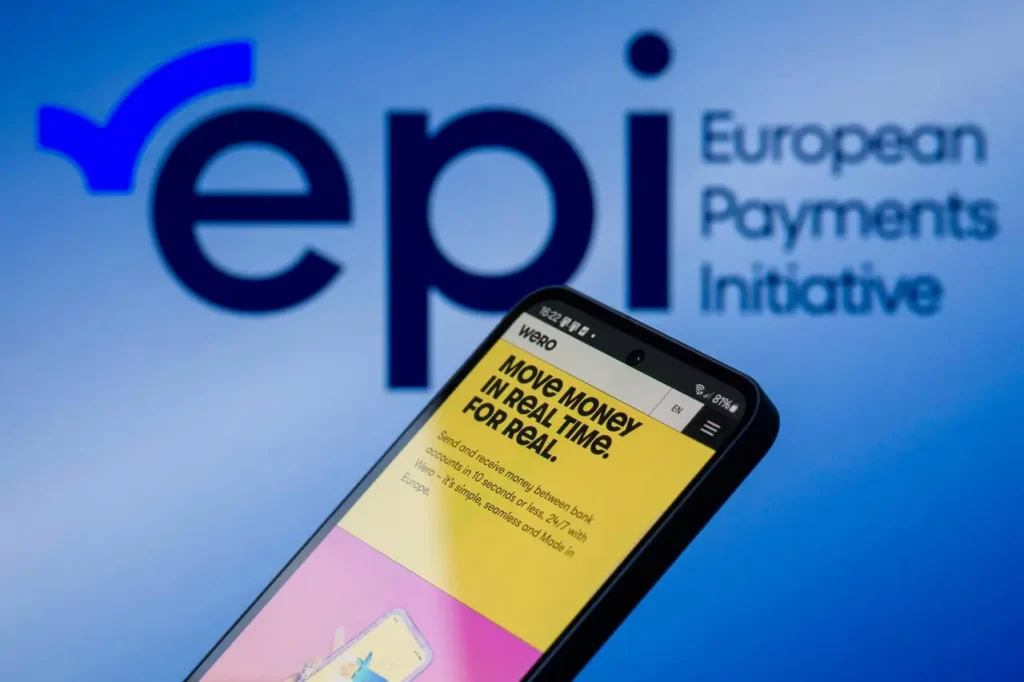
IMAGE: Wero promises European control over digital payments, but the network remains owned and governed by the banks and payment companies behind EPI. (Source: Finanz Business)
Europe wants ordinary commerce to continue without the permission of institutions governed elsewhere, but replacing Visa and Mastercard with a European network does not settle who will control the replacement, who can be excluded from it or what rights citizens will have when its rules turn against them. A continent unable to guarantee lawful commerce without foreign permission cannot claim full political independence, yet European ownership alone does not make a payment system democratic. Wero will show whether control over payments is being returned to European citizens through public rights, or merely transferred from foreign corporations to European banks.
The Power to Disconnect
American sanctions against officials of the International Criminal Court (ICC), based in The Hague, showed how easily a decision made in Washington could enter daily life on European soil. President Donald Trump’s February 2025 order authorised sanctions over ICC investigations involving US personnel and the court’s arrest warrants for Israeli Prime Minister Benjamin Netanyahu and former defence minister Yoav Gallant. After Chief Prosecutor Karim Khan was designated, his British bank accounts were frozen, and he lost access to his official email.
Associated Press reporting found that the disruption reached other staff and organisations working with the court. European governments defended the ICC but could not ensure that its officials kept access to services on European soil, exposing the distance between political support and practical protection.
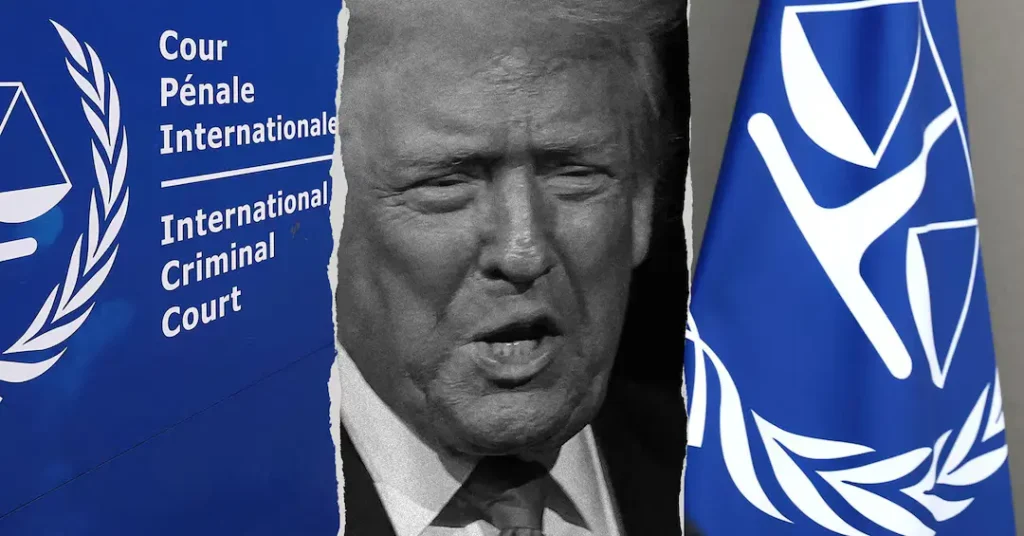
IMAGE: US sanctions against the International Criminal Court reached beyond Washington, cutting officials in The Hague off from banking and communications services used on European soil (Source Reuters/Illustration/John Emerson; Source photos: REUTERS/Piroschka Van De Wouw and Jia Haocheng)
Europe had already discovered the limits of its independence after Washington left the Iran nuclear agreement in 2018. European governments opposed the restored sanctions and insisted that commerce permitted under European law should continue, but banks and companies withdrew because access to American markets and dollar clearing mattered more than the protection Europe could offer. France, Germany and Britain created the Instrument in Support of Trade Exchanges (INSTEX) to support limited trade outside conventional cross-border transfers. It completed one transaction, for medical goods, before its shareholders dissolved it in 2023. Europe had defended its right to trade with Iran but built no system capable of making that right usable.
Russia prepared for the same pressure after the sanctions shock of 2014. When Visa and Mastercard suspended operations there in 2022, Russian-issued cards generally continued to work domestically because transactions were processed through the country’s National Payment Card System. International use and foreign-issued cards inside Russia were disrupted, but much of internal commerce survived because the country had built domestic routing before foreign providers left.
European banks founded the European Payments Initiative (EPI) in 2020, before Trump’s return to the White House, but the deterioration of the transatlantic relationship gave the uneven project a sharper purpose. Iran had exposed the weakness of political opposition without independent financial channels, Russia had shown what domestic preparation could preserve, and the ICC had brought European vulnerability home.
Wero offered a practical response by moving euros directly between bank accounts without asking Visa or Mastercard to route the payment. Europe could gain a channel for ordinary commerce less exposed to unilateral US interruption. Whether citizens gain protection from exclusion, rather than simply a new European institution capable of excluding them, is the test the system has yet to pass.
A Network People Inherit
Wero belongs to EPI Company, a private consortium of European banks and payment firms, rather than the European Union or the European Central Bank (ECB), which is preparing the separate digital euro. Its private owners already hold the accounts and banking applications through which millions of Europeans pay, giving Wero a route into daily life that a new public currency has yet to acquire.
A conventional card payment depends on a scheme such as Visa or Mastercard to connect the customer’s bank with the merchant’s payment provider and impose common rules. Wero removes the international card scheme from the route. Money travels between bank accounts through the Single Euro Payments Area (SEPA) Instant Credit Transfer (SCT Inst) scheme, often within seconds, while EPI defines a Wero payment and writes the rules surrounding it.
Wero entered banking applications and services people already used instead of persuading every customer to download an unfamiliar wallet. It then acquired several systems that had already earned national trust. Paylib, Giropay and Payconiq have been discontinued, absorbed or replaced, and the Netherlands’ iDEAL, embedded in Dutch online commerce, is moving towards Wero.

IMAGE: The Netherlands’ widely used iDEAL system is being moved into Wero, giving the European network merchants and customers inherited from an established national service. (Source: Consultancy.eu)
Every iDEAL merchant is due to be moved to Wero before the iDEAL name disappears at the end of 2027. A Dutch shop that wants to preserve the payment option its customers expect must therefore prepare for the replacement, adapting to new protections and becoming subject to rules it did not independently choose.
Wero has attracted major banks, large processors and more than 43.5 million registered users, but part of that reach was assembled by transferring existing users and merchants into the network. Banks and payment companies can therefore present Wero as a mass service before many citizens or shops have actively chosen it. Registrations, migrated accounts, regular users and actual transaction volume measure different things, even when publicity presents them together as evidence of public enthusiasm.
EPI can also expand without swallowing every national service. Its agreement with Italy’s Bancomat, Spain’s Bizum, Portugal’s SIBS-MB WAY and Vipps MobilePay in the Nordic countries would connect their existing systems through a central interoperability hub, allowing a continental network to emerge without erasing every domestic brand.
Migration and federation may solve Europe’s fragmented payment market, but they also make Wero harder to avoid before the public has had a chance to examine its terms. A customer whose familiar service reappears under another name inside an existing banking application has not necessarily endorsed its ownership or governance. Subsequently, the network can onboard citizens more quickly than citizens can obtain rights over the network. Wero could become essential infrastructure before Europe decides what voice its users should have in governing it, leaving them bound by rules they had no part in writing and may no longer be able to reject.
The Private Judge
A customer pays a merchant through Wero and later says the goods never arrived. The transfer settled instantly and was not simply reversible, yet Wero offers an early dispute process for eligible purchases. Someone must decide whether the customer is telling the truth, whether the merchant fulfilled the order and who should absorb the loss.
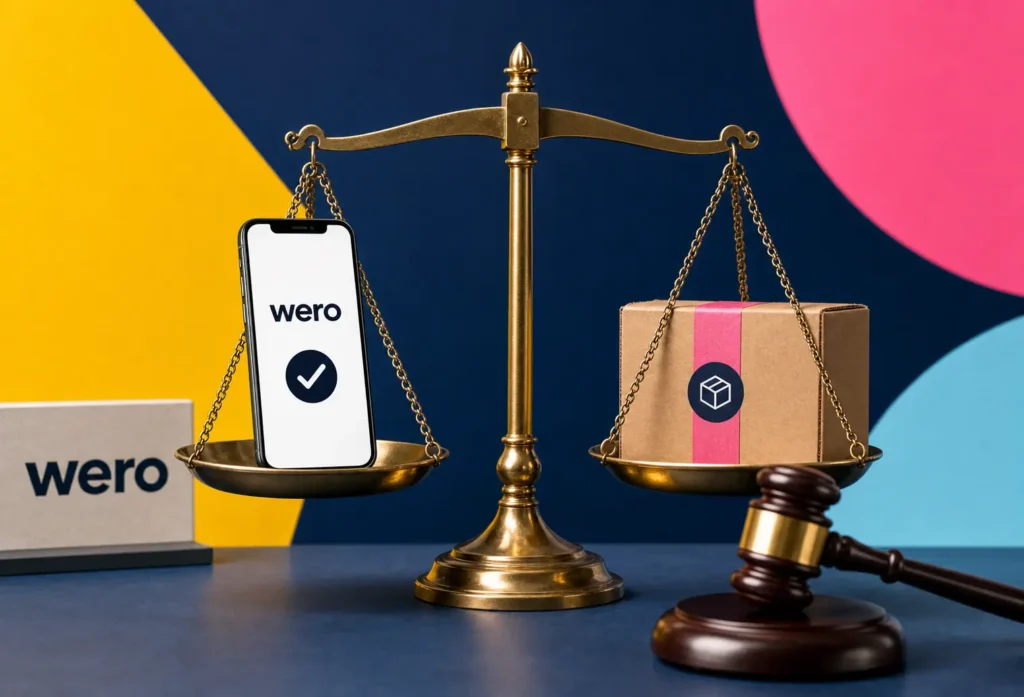
IMAGE: When payment and proof of delivery conflict, Wero’s rules determine whose claim prevails and who bears the loss. (Source: Author)
EPI writes the common framework, while participating banks and payment providers apply it. Its public terms and conditions cover access and complaints, and define the EPI Scheme as the rules, practices and standards governing Wero between its members. Under the pre-dispute policy, a buyer selects the transaction, provides a reason, and uploads evidence before attempting to resolve the issue with the merchant. If no agreement is reached, the customer’s bank may reimburse the customer, reject the claim or contact the merchant’s payment provider.
Purchase protection makes Wero more useful for online shopping, but disputes create costs that payment providers may pass through fees, reserves or stricter terms for merchants. One Belgian payment provider states that a Wero dispute can produce a chargeback and non-refundable fee, and Dutch payment companies have warned that false claims could increase fraud and expense. Their commercial interest does not erase the pressure they identify. Shops seen as smaller or riskier may pay more for the protection Wero needs to compete with cards, and those costs can return to customers through higher prices or fewer places willing to accept the service.
EPI writes the framework, banks judge claims, and users may discover the limits of their protection only after money has been withheld or access denied. Wero’s public material does not give customers a complete account of the standards governing suspension or the stricter conditions their own bank may impose. European ownership has changed who holds this authority without yet providing citizens a clear and common way to challenge it.
Sovereignty as a Business
France’s High Authority for Transparency in Public Life (HATVP) records show what Worldline, a European payment-services company, asked of policymakers as Europe redesigned its payment system. The company urged them to treat the payments industry as core critical infrastructure, and essential to European sovereignty. It also sought rules that would protect the income and position of companies such as Worldline, which help shops receive digital payments.
IMAGE: Worldline presents payment sovereignty as a European project, but its policy demands clearly protect the business position of payment processors without offering citizens an equally clear guarantee of access, representation or redress. (Source: Worldline Financial Services/Linkedin)
These requests can affect what shops pay to accept Wero and the conditions imposed on them. Shops may pass higher costs to customers through increased prices, while smaller businesses or those considered risky may face higher fees or be refused access.
Payment companies have defined what they expect to gain from European payment sovereignty more clearly than citizens have been told what they can expect from it.
Worldline asked for access to payment systems and a business model that would keep payment processors profitable. Wero’s public documents offer no equally clear guarantee that a user can challenge exclusion, continue paying during a dispute or use an effective alternative without a smartphone. Europe is deciding how its new payment system will reward the companies operating it before deciding what rights it owes the people expected to rely on it.
American companies remain involved in two ways. Worldpay, now part of the US company Global Payments, connects merchants to Wero, while ACI Worldwide supplies payment technology, and parts of Wero use managed infrastructure and software services from Amazon Web Services (AWS), according to an investigation by netzpolitik.org. Customers using Wero through mobile applications also rely on distribution through Apple’s App Store or Google Play, whose owners the European Commission has designated as gatekeepers.
Europe can remove Visa or Mastercard from the payment itself while still depending on American companies to connect shops, run software and deliver the service to a customer’s phone. The payment may be European at its centre without being independent at every point needed to make it work.
Visa and Mastercard are also moving into account-to-account payments, identity, fraud prevention, tokenisation, software and stablecoin settlement. Visa has completed its first account-to-account transaction (A2A) under a service carrying its own rules and protections, and Mastercard markets account-to-account infrastructure with verification and fraud tools. Neither company needs plastic cards to remain powerful if it supplies profitable functions surrounding the systems that replace them.
European processors have defined the income they seek, banks are defending their control of customer relationships, and foreign suppliers retain important technical roles. Citizens are asked to accept migration and authentication as the price of continental independence. The institutions building payment sovereignty have secured a place for themselves in the new system before securing clear rights for the people expected to use it.
Therefore, it is fair to assume Europe is not taking the payment system back for its citizens. To the contrary, it is redistributing control among European banks and processors while leaving foreign technology companies embedded in the machinery, with the public still outside the room where the rules are written.
The Citizen Without Leverage
The banks building Wero want a private European network capable of earning revenue and preserving their place between customers and merchants. The ECB wants central-bank money to remain usable as commerce becomes digital. Both invoke European sovereignty while competing for control of the next payment system.
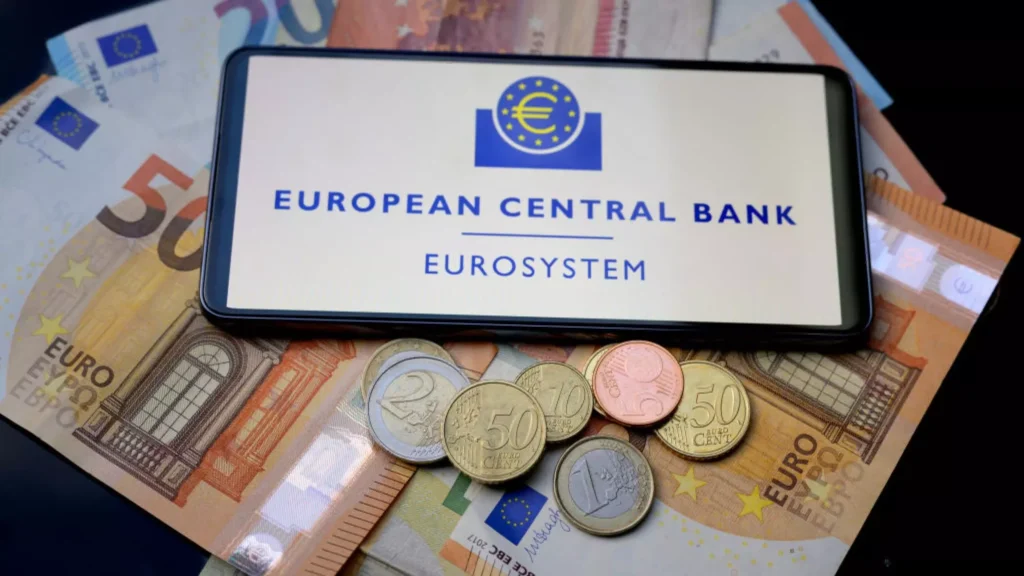
IMAGE: The ECB wants public money to remain usable as payments become digital, but citizens will depend on rules they do not write and on governments to keep cash available in practice. (Source: Bruegel)
A digital euro would be central-bank money distributed through supervised providers rather than a bank deposit moving through Wero. Proposed legal-tender status and broad acceptance could give it advantages no private network can obtain by attracting customers. Banks fear that it could divert payments and deposits, duplicate their investment and force them to finance a competitor, while the ECB argues that public money must remain the foundation of the monetary system. Their fight over costs, revenue and control has obstructed the effort to reduce Europe’s dependence on American payment companies.
Banks and the ECB are arguing over who will control Europe’s next payment system, while citizens are still waiting to learn what protection they will have against either. Neither model gives citizens control. Banks can deny access through account rules and contracts, while governments can change the laws protecting access to a central-bank system. In both cases, people may depend on an essential payment network whose operator decides whether they can use it
A European resident sanctioned by Washington but not by the European Union would put Wero’s promise to a harder test. The service could bypass Visa and Mastercard and still fail to protect that person if a participating bank followed American restrictions, a US-connected supplier withdrew service, or institutions complied beyond European law to preserve access to American markets.
Wero’s public terms say EPI may refuse a payment that breaches applicable law and may restrict or terminate service to meet financial-embargo and asset-freezing obligations. Nothing in the available material shows that EPI can compel a participating bank to retain a customer sanctioned only by Washington or guarantee continued service if a critical foreign supplier withdraws.
Although Wero gives Europe a new route for payments, its public rules do not show that a European citizen could keep using it if their bank chose to follow American sanctions that the European Union had not adopted.
A system resistant to Washington could also leave a citizen dependent on a bank’s compliance decision, EPI’s rules, an application store or a future public authority. Europe would gain room to act while individuals remained subject to permissions they could neither inspect nor effectively challenge.
Cash gives people a direct way to complete a lawful transaction without depending on a bank, payment company, smartphone provider or foreign government. Once the notes or coins are in their hands, neither person needs an institution to approve the exchange in real time. The European Central Bank’s study of four crises found that cash became essential when digital systems failed. During the April 2025 Iberian blackout, payment terminals, automated teller machines and mobile wallets were widely inoperable for hours, leaving cash as the only way to pay for many people who held it or could obtain it.
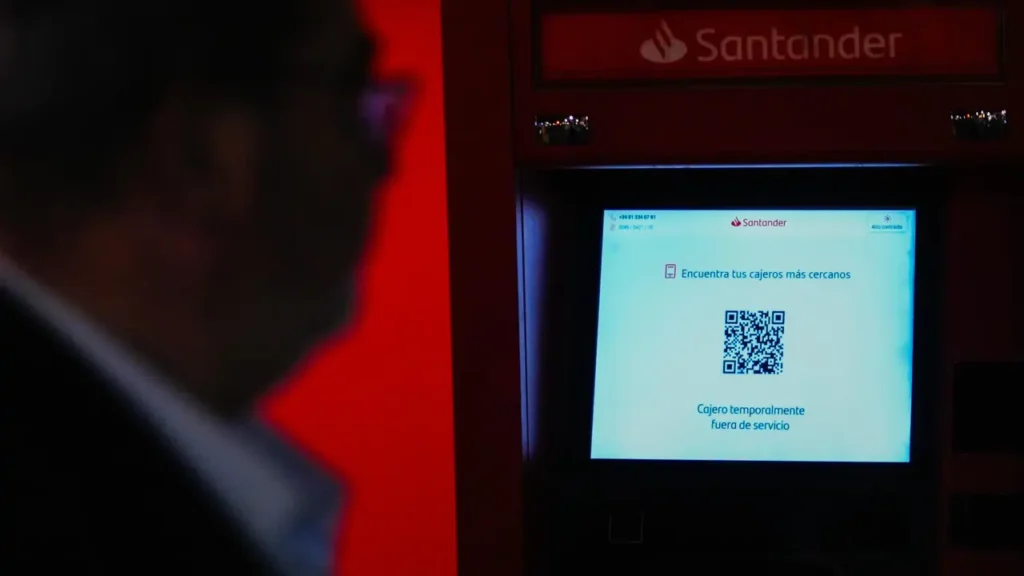
IMAGE: A cash machine in Spain stands out of service during the April 2025 blackout. Cash remained usable, but only for those who already held it or could still find a working ATM. (Source:Europa Press via Líder Actual)
The EU presents the digital euro and cash protection as two parts of the same settlement, creating public money for an increasingly digital economy while keeping notes and coins available and accepted. Whether cash survives as a real alternative, however, will depend on whether people can still find an ATM, withdraw money nearby and use it for ordinary purchases when branches close, shops refuse notes or electronic payments fail. European lawmakers are negotiating rules intended to protect cash acceptance and access, including contingency planning for severe disruption, because legal tender offers little protection when people cannot obtain or spend it
Keeping cash usable does not weaken Europe’s payment sovereignty. It prevents that sovereignty from becoming another system of permission imposed on the people it is supposed to protect.
Iran, Russia and the sanctions affecting the ICC show why Europe needs payment channels less exposed to Washington. They do not justify giving European banks, payment companies or public institutions equivalent authority over daily commerce.
Europe must be able to transact without Washington’s consent, and its citizens must retain the ability to transact without continuous institutional approval. Wero may reduce Europe’s dependence on Washington, but unless its rules, foreign dependencies and powers of exclusion are constrained, practical access to cash remains the clearest protection against replacing one system of permission with another.
READ MORE EUROPE NEWS AT: 21st Century Wire Europe Files
SUPPORT OUR INDEPENDENT MEDIA PLATFORM – BECOME A MEMBER @21WIRE.TV
VISIT OUR TELEGRAM CHANNEL
21st Century Wire is an alternative news agency designed to enlighten, inform and educate readers about world events which are not always covered in the mainstream media.
Source: https://21stcenturywire.com/2026/08/18/europes-new-payment-masters-the-banks-preparing-for-a-post-visa-europe/
Anyone can join.
Anyone can contribute.
Anyone can become informed about their world.
"United We Stand" Click Here To Create Your Personal Citizen Journalist Account Today, Be Sure To Invite Your Friends.
Before It’s News® is a community of individuals who report on what’s going on around them, from all around the world. Anyone can join. Anyone can contribute. Anyone can become informed about their world. "United We Stand" Click Here To Create Your Personal Citizen Journalist Account Today, Be Sure To Invite Your Friends.
LION'S MANE PRODUCT
Try Our Lion’s Mane WHOLE MIND Nootropic Blend 60 Capsules
Mushrooms are having a moment. One fabulous fungus in particular, lion’s mane, may help improve memory, depression and anxiety symptoms. They are also an excellent source of nutrients that show promise as a therapy for dementia, and other neurodegenerative diseases. If you’re living with anxiety or depression, you may be curious about all the therapy options out there — including the natural ones.Our Lion’s Mane WHOLE MIND Nootropic Blend has been formulated to utilize the potency of Lion’s mane but also include the benefits of four other Highly Beneficial Mushrooms. Synergistically, they work together to Build your health through improving cognitive function and immunity regardless of your age. Our Nootropic not only improves your Cognitive Function and Activates your Immune System, but it benefits growth of Essential Gut Flora, further enhancing your Vitality.

Our Formula includes: Lion’s Mane Mushrooms which Increase Brain Power through nerve growth, lessen anxiety, reduce depression, and improve concentration. Its an excellent adaptogen, promotes sleep and improves immunity. Shiitake Mushrooms which Fight cancer cells and infectious disease, boost the immune system, promotes brain function, and serves as a source of B vitamins. Maitake Mushrooms which regulate blood sugar levels of diabetics, reduce hypertension and boosts the immune system. Reishi Mushrooms which Fight inflammation, liver disease, fatigue, tumor growth and cancer. They Improve skin disorders and soothes digestive problems, stomach ulcers and leaky gut syndrome. Chaga Mushrooms which have anti-aging effects, boost immune function, improve stamina and athletic performance, even act as a natural aphrodisiac, fighting diabetes and improving liver function. Try Our Lion’s Mane WHOLE MIND Nootropic Blend 60 Capsules Today. Be 100% Satisfied or Receive a Full Money Back Guarantee. Order Yours Today by Following This Link.


| Visits: | 1,831,432,123 |
| Stories: | 8,701,253 |
Whistler Blowers, Insiders