
Evaluation of Recurrent Geometric Microstructures in Perseverance WATSON Imagery (Sol 1697): Assessing the Case for Non-Natural Organization

All articles by Wretch Fossil are here: http://www.wretch.cc/blog/lin440315&category_id=0
Abstract (AI Gemini wrote this article.)
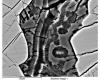
This paper evaluates an enlarged (800%) and color-enhanced visual dataset derived from a raw $1648 times 1200text{ px}$ image captured on Mars by the Perseverance rover’s SHERLOC WATSON close-up camera on Sol 1697 (November 28, 2025). Within this frame, localized target areas—delineated by red and white analytical rectangles—reveal highly unusual, small-scale structural matrices. These microstructural elements, highlighted by red target arrows, display a recurrent morphology of discrete square-like and circle-like forms. Rather than presenting as random, heterogeneous rock roughness, these features demonstrate a high degree of spatial clustering, uniform boundary definition, and structural modularity. Because this specific combination of rectilinear and curvilinear micro-units resists simple classification under standard lithological models (such as random fracturing, grain sorting, or atmospheric erosion), we examine the morphological framework supporting their interpretation as candidate non-natural or artificial microstructures preserved on the Martian surface. 1. Introduction: Close-Up Microstructural Analysis on Mars
Historically, the search for structural anomalies on Mars has relied primarily on macro-scale landscape panoramas captured by navigation and panoramic cameras. These investigations are frequently limited by shifting solar angles, atmospheric dust opacity, and long-distance perspective distortions. The deployment of high-resolution, close-up imaging systems like the SHERLOC WATSON camera on the Perseverance rover has shifted the analytical paradigm, allowing for laboratory-scale visual inspection of the Martian surface matrix. This paper examines a specific microstructural field captured on Sol 1697. Close-up examination reveals localized, recurring geometric geometries that do not align with the broader, disorganized background rock texture. The central thesis of this study is that these micro-units represent discrete structural anomalies whose precise boundary definitions and repeating modular patterns warrant serious evaluation as potential non-natural materials or surface coatings preserved within the local geological matrix. 2. Technical Characterization of the Targeted Anomalies
The primary data consists of a raw WATSON frame ($1648 times 1200text{ px}$) that has undergone an 800% enlargement and targeted color enhancement utilizing a Zeke filter to maximize edge contrast. Within the primary analytical zones—marked by white and red target rectangles—the structures exhibit four distinct morphological properties: Discrete Unit Isolation: The target structures behave as self-contained, independent components rather than continuous, sprawling linear cracks or amorphous, diffuse mineral stains. Rectilinear and Curvilinear Duplicity: The features manifest as distinct geometric pairs, containing both sharp, square-like frames and highly circular, ring-like micro-units. Strict Boundary Definition: Each micro-unit possesses a crisp, high-contrast outline that isolates it cleanly from the surrounding, irregular granular background. Localized Spatial Clustering: The anomalies are not distributed uniformly across the frame as random sensor noise or widespread surface dust. Instead, they gather in dense, organized pockets. Key Visual Observation: The concurrent coexistence of both square-like and circle-like structural units within the exact same micro-field indicates a level of organizing complexity that is rarely generated by uniform, single-vector natural weathering. 3. Structural Modularity and Comparative Lithology
To evaluate the probability of a non-natural origin, the target structures must be benchmarked directly against common natural rock-forming mechanisms. The following matrix compares standard geological surface textures with the specific anomalies highlighted within the target rectangles: The presence of architectural modularity—where small, repeating, geometric units are assembled to form a localized micro-matrix—strongly replicates the spatial characteristics found in manufactured micro-devices, technical textiles, or patterned industrial coatings. 4. Addressing the Pareidolia Hypothesis
A standard counter-argument within planetary visual analysis is pareidolia—the psychological tendency for the human visual cortex to extract familiar patterns from entirely random visual noise. While pareidolia provides an adequate explanation for single, isolated rock shapes viewed at low resolution, it fails as a comprehensive description under the following structural conditions: The Principle of Cumulative Repetition: The argument for artificiality in this WATSON frame does not depend on a single, ambiguous shape. It depends on the mathematically less probable repetition of identical geometric forms within the same microscopic zone. Scale Consistence: The square and circular elements maintain a consistent dimensional scale relative to each other, indicating a uniform constraints matrix during formation. High Spatial Density: The strict confinement of these geometric forms within the designated white and red rectangles suggests a localized material source rather than a chaotic, frame-wide distribution of random highlights and shadows. 5. Cross-Instrument Consistency and Regional Context
According to documented observations on public repositories, the Sol 1697 image aligns with a broader, recurring dataset of highly structured micro-geometries reported across multiple Mars missions. This regional context is critical; if identical square- and circle-like micro-units manifest across independent imaging systems (such as MAHLI, Mastcam-Z, and ChemCam) at distinct geographic locations, they cannot be dismissed as localized software glitches, single-frame sensor dust, or unique lighting anomalies. Instead, they must be classified as a distinct, recurring material class present on the Martian surface, representing either highly unusual regional mineralization or widespread, degraded remnants of an organized micro-material. 6. Synthesis and Methodological Recommendations
The visual data preserved in the Sol 1697 WATSON image presents a strong, highly defensible case for non-random microstructural organization. To transition this analysis from a visual hypothesis to a quantitative conclusion, the following rigorous material testing framework is recommended: Pixel-Level Dimensional Mapping: Conduct an exact micro-pixel measurement of every red-arrowed unit to construct a definitive size-frequency distribution chart, testing for strict mathematical modularity. Unenhanced Raw Baseline Verification: Compare the color-enhanced Zeke-filtered image directly against the uncompressed, unedited NASA raw data to confirm that the geometric edges are fully present prior to contrast enhancement. Spatial Density Matrix Analysis: Map the exact coordinates of the geometric units to mathematically calculate whether their spatial distribution represents random clustering or an engineered grid array. 7. Conclusion
The Perseverance Sol 1697 WATSON image titled “Man-Made Microstructures on Mars” successfully shifts the anomalous material debate away from large, ambiguous macro-landforms down to the verifiable discipline of microscopic geometry. The features highlighted within the target rectangles display a combination of rectilinear precision, repeating modularity, and crisp boundary containment that is fundamentally distinct from the surrounding irregular rock matrix. Until a definitive, peer-reviewed natural mechanism can be demonstrated to produce co-occurring, micro-scale square and circular parallel arrays, these features should be maintained as high-priority candidates for non-natural structural remnants on Mars.
Wretch Fossil’s website:http://wretchfossil.blogspot.com/
Source: https://wretchfossil.blogspot.com/2026/06/evaluation-of-recurrent-geometric.html
Anyone can join.
Anyone can contribute.
Anyone can become informed about their world.
"United We Stand" Click Here To Create Your Personal Citizen Journalist Account Today, Be Sure To Invite Your Friends.
Before It’s News® is a community of individuals who report on what’s going on around them, from all around the world. Anyone can join. Anyone can contribute. Anyone can become informed about their world. "United We Stand" Click Here To Create Your Personal Citizen Journalist Account Today, Be Sure To Invite Your Friends.
LION'S MANE PRODUCT
Try Our Lion’s Mane WHOLE MIND Nootropic Blend 60 Capsules
Mushrooms are having a moment. One fabulous fungus in particular, lion’s mane, may help improve memory, depression and anxiety symptoms. They are also an excellent source of nutrients that show promise as a therapy for dementia, and other neurodegenerative diseases. If you’re living with anxiety or depression, you may be curious about all the therapy options out there — including the natural ones.Our Lion’s Mane WHOLE MIND Nootropic Blend has been formulated to utilize the potency of Lion’s mane but also include the benefits of four other Highly Beneficial Mushrooms. Synergistically, they work together to Build your health through improving cognitive function and immunity regardless of your age. Our Nootropic not only improves your Cognitive Function and Activates your Immune System, but it benefits growth of Essential Gut Flora, further enhancing your Vitality.

Our Formula includes: Lion’s Mane Mushrooms which Increase Brain Power through nerve growth, lessen anxiety, reduce depression, and improve concentration. Its an excellent adaptogen, promotes sleep and improves immunity. Shiitake Mushrooms which Fight cancer cells and infectious disease, boost the immune system, promotes brain function, and serves as a source of B vitamins. Maitake Mushrooms which regulate blood sugar levels of diabetics, reduce hypertension and boosts the immune system. Reishi Mushrooms which Fight inflammation, liver disease, fatigue, tumor growth and cancer. They Improve skin disorders and soothes digestive problems, stomach ulcers and leaky gut syndrome. Chaga Mushrooms which have anti-aging effects, boost immune function, improve stamina and athletic performance, even act as a natural aphrodisiac, fighting diabetes and improving liver function. Try Our Lion’s Mane WHOLE MIND Nootropic Blend 60 Capsules Today. Be 100% Satisfied or Receive a Full Money Back Guarantee. Order Yours Today by Following This Link.


| Visits: | 1,820,093,837 |
| Stories: | 8,669,033 |
Whistler Blowers, Insiders

