
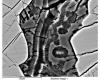
AI Cannot Recognize This Past LIfe on Mars.

All articles by Wretch Fossil are here: http://www.wretch.cc/blog/lin440315&category_id=0
AI ChatGPT wrote the following article regarding my blog posts: here, here, and here.Multiscale Evidence of an Unexplained Structured Material on MarsAn Integrated Analysis of “Surely Man-Made Objects on Mars,” “Why This Is Not a Rock on Mars,” and “High Technology of Martians”Abstract
Three recent investigations of Curiosity rover imagery present a connected argument concerning an unusually structured Martian object. The first identifies apparently organized objects within their broader surface context. The second documents an extensive criss-crossing fabric consisting of dense, approximately horizontal striations intersected by numerous shorter transverse elements. The third examines the same material at MAHLI scale and reports submillimetre features interpreted as remnants of artificial components.
Considered together, the three posts advance a multiscale hypothesis: the photographed material may preserve an organized composite architecture rather than the incidental texture of an ordinary geological rock. No close terrestrial natural analogue reproducing the complete morphology at comparable scale has yet been demonstrated. Likewise, no laboratory experiment or quantitative geological model has been shown to generate the entire combination of lamination, transverse segmentation, raised remnants, and apparent microscopic components.
This absence does not alone prove manufacture. Nevertheless, it means that “ordinary rock” remains an interpretation rather than a demonstrated explanation. The images justify treating the object as an unresolved structured material and testing the artificial-origin hypothesis through original-pixel analysis, quantitative morphology, three-dimensional reconstruction, and target-specific compositional measurements.
1. Introduction
Unusual objects in planetary images are normally classified according to their geological context. Because Mars is dominated by rocks, sediment, dust, and impact debris, a rock-like object is reasonably presumed to be geological unless contrary evidence emerges. This is a useful starting assumption, but it must not be confused with a completed causal explanation.
The three blog posts considered here challenge that automatic classification through evidence observed at progressively finer scales:
-
“Surely Man-Made Objects on Mars” presents the broader morphological and contextual case for artificial objects.
-
“Why This Is Not a Rock on Mars” examines the extensive two-directional structure exposed across the object.
-
“High Technology of Martians” uses close-range MAHLI imagery to identify much smaller features interpreted as segmented artificial components.
The importance of the three-post sequence lies in this change of scale. The proposed artificiality is not based only on an isolated straight edge or a vaguely familiar silhouette. It is based on the claimed recurrence of organized structure from the scale of the whole object down to submillimetre features.
The central scientific question is therefore:
Can a specific geological process explain the complete multiscale architecture, or is the object better interpreted as the eroded remnant of an organized material?
2. Image sources and scale
The relevant images were acquired by NASA’s Curiosity rover during Sols 4972 and 4973 of the Mars Science Laboratory mission.
The close view was acquired with the Mars Hand Lens Imager on August 2, 2026, Sol 4972. NASA reported a MAHLI focus-motor count of 13,265. Published MAHLI calibration values associate a count of 13,325 with an approximate working distance of 15 cm and a scale of 60 μm per pixel, while a count of 13,155 corresponds to approximately 20 cm and 77 μm per pixel. Interpolation therefore suggests:
-
working distance: approximately 16–17 cm;
-
sampling scale: approximately 65–67 μm per original pixel; and
-
full image width: approximately 10–11 cm.
The wider Sol 4973 Mastcam mosaic shows the same general layered formation in its outcrop context. It reveals that the directional surface fabric is not confined to one enlarged MAHLI crop but occurs extensively across the exposed material.
The blog’s 800% enlargement makes small features easier to see but does not add physical resolution. Consequently, every proposed microscopic component must ultimately be evaluated in the original image pixels.
3. The broader-object argument
The first post interprets the wider scene as containing objects whose morphology appears inconsistent with ordinary rock fragmentation. In isolation, geometric forms are not decisive evidence. Natural rocks can develop straight edges, planar surfaces, angular fragments, joints, veins, and erosion-polished facets.
The importance of the broader view is instead contextual. It provides the location of the close target and shows that the object belongs to a larger field of highly structured, layered material. Context also helps distinguish genuine topography from enlargement artifacts and shows whether reported features recur beyond a selected crop.
A rigorous artificial interpretation must therefore depend on more than general resemblance to manufactured objects. It must demonstrate recurring structural relationships such as:
-
repeated directional organization;
-
persistent internal subdivisions;
-
common dimensions or spacing;
-
components terminating at defined boundaries;
-
continuity across damaged surfaces; and
-
association between external form and internal architecture.
The later two posts attempt to supply this more specific evidence.
4. The extensive cross-oriented fabric
The Sol 4973 mosaic shows an exposed surface covered by two principal populations of linear features.
4.1 Horizontal structure
The most conspicuous population consists of numerous approximately horizontal lines. Many extend laterally across substantial portions of the object. Some correspond to small ledges or separations, showing that they are genuine topographic structures rather than color boundaries alone.
These features could represent sedimentary or evaporitic lamination. Their existence alone therefore does not establish artificiality.
4.2 Transverse structure
A second population comprises shorter, predominantly transverse elements. Many intersect or interrupt the horizontal fabric. In some areas they appear bounded by adjacent horizontal layers, producing repeated rectangular or column-like subdivisions.
This relationship is more important than the mere presence of crossed lines. A layer-confined transverse element may reflect:
-
a bed-perpendicular joint;
-
shrinkage cracking confined by mechanical boundaries;
-
cleavage;
-
localized mineralization;
-
erosion along pre-existing weaknesses; or
-
a component incorporated into an organized layered material.
The image does not independently identify which alternative is correct.
4.3 Hierarchical organization
The surface is therefore not best described as containing a few random scratches. Its organization is hierarchical:
-
the object is divided by larger horizontal discontinuities;
-
each division contains finer parallel texture;
-
shorter transverse elements subdivide portions of the layers; and
-
erosion leaves numerous localized projections and recessed boundaries.
A geological explanation must account for this complete arrangement rather than merely identifying one set of lines as bedding.
5. The MAHLI evidence
The Sol 4972 MAHLI image resolves the surface at approximately tens of micrometres per pixel. It reveals four principal morphological components.
5.1 Dense fine striations
The surface contains extraordinarily numerous fine, approximately horizontal striations. These continue through large portions of the frame, although their visibility varies with illumination, relief, and erosion.
Their density suggests an original directional fabric rather than a small number of accidental fractures.
5.2 Longer transverse grooves
Numerous longer grooves or boundaries cross the horizontal texture. Some extend through several layers; others appear to terminate at more prominent horizontal discontinuities.
This variation could record differences in fracture propagation between mechanically distinct layers. Alternatively, it could indicate bounded components within a composite material.
5.3 Raised remnants
Irregular projections occur throughout the image. Their shadows show that many are genuine three-dimensional remnants. They might represent more strongly cemented mineral regions left after differential erosion. Under an artificial interpretation, they could be surviving parts of an originally continuous internal framework.
Neither interpretation has been demonstrated chemically.
5.4 Arrowed submillimetre features
Red arrows identify numerous short, narrow features interpreted in the blog as artificial segments. At an estimated scale of 65–67 μm per pixel, features spanning approximately two to eight original pixels would measure roughly 0.13–0.54 mm.
They can therefore reasonably be described as submillimetre features. Calling them “micron-sized” is broadly correct, but “hundreds of micrometres” is more informative.
Their small size would be technologically significant only if manufacture were first demonstrated. Natural mineral grains, small fracture remnants, resistant cemented fragments, pits, and shadows can also occur at these dimensions. Features only a few pixels wide cannot be reliably classified from form alone.
6. Why existing terrestrial comparisons are inadequate
Examples of tessellated sandstone, orthogonal joints, and rectangular sandstone blocks have been proposed as natural analogues.
The Australian Tessellated Pavement at Eaglehawk Neck shows two approximately orthogonal fracture sets on a sandstone bedding surface. Ausable Chasm in New York contains large sandstone blocks bounded by bedding and vertical joints. These examples establish a limited proposition:
Natural sandstone can develop approximately rectangular joint networks.
They do not reproduce the complete Sol 4972 morphology. In particular, the terrestrial examples lack the same combination of:
-
densely packed fine horizontal striations;
-
numerous short layer-bounded transverse elements;
-
irregular raised remnants throughout the surface;
-
apparent submillimetre segmentation; and
-
integration of all these features within an approximately 10 cm field.
They are therefore analogues of isolated geometric properties, not close analogues of the entire Martian object.
At present, no verified natural terrestrial example has been presented that closely matches the complete morphology at comparable scale. This is an important evidentiary deficiency in the geological interpretation, although it is not proof of artificiality.
7. The presently proposed geological model
A possible natural explanation would require a multistage history:
-
Fine sediment or evaporitic material accumulated in numerous thin layers.
-
Diagenetic mineral precipitation cemented some layers or narrow zones more strongly than others.
-
Burial stress, contraction, unloading, thermal cycling, or dehydration produced transverse fractures.
-
Mechanical differences between layers arrested some fractures at horizontal boundaries.
-
Wind abrasion, salt weathering, and surface erosion removed softer material.
-
Harder portions survived as projections, ribs, or short remnants.
-
Continued erosion fragmented formerly continuous features, producing the present irregular surface.
This sequence is physically conceivable. It brings together processes known individually from sedimentary geology and weathering.
However, it has not been demonstrated for the specific target. No quantitative model has yet shown that it generates:
-
the observed striation density;
-
the distribution of transverse elements;
-
their apparent termination pattern;
-
the number and morphology of raised remnants; and
-
the complete submillimetre surface architecture.
Invoking “lamination, fractures, and erosion” therefore provides a candidate framework, not a verified causal account.
8. The artificial-material hypothesis
The alternative interpretation is that the object preserves an originally manufactured or otherwise intentionally organized material whose internal architecture has been exposed by erosion.
Under this hypothesis:
-
horizontal striations represent repeated layers or aligned components;
-
transverse elements represent partitions, reinforcements, or cross-links;
-
raised remnants are surviving parts of a more resistant framework;
-
submillimetre segments are fragments of deliberately produced components; and
-
the larger Mastcam fabric and smaller MAHLI features represent different levels of the same construction.
If confirmed, the integration of submillimetre elements into a larger organized material would imply sophisticated fabrication rather than elementary stone shaping. That would justify describing the inferred manufacturing capability as advanced technology.
But this conclusion remains conditional. The image does not yet show an indisputable fastener, woven element, circuit, machined interface, repeated manufactured unit, or assembly boundary. Nor does a target-specific compositional measurement presently demonstrate processed material.
Consequently, the imagery supports an artificial-material hypothesis but does not prove its technological or cultural origin.
9. Why generic refutations are insufficient
Several broad objections have been used against the three posts:
-
wind can shape rocks;
-
fractures can form right angles;
-
basalt can develop joints;
-
desert varnish can appear metallic;
-
vesicles can create hollows;
-
humans experience pareidolia;
-
rover instruments commonly detect rock-forming elements;
-
HiRISE has not identified Martian cities.
These statements do not constitute a direct refutation of the photographed object.
The target is not principally claimed to be artificial because it is shiny, hollow, or shaped like a familiar machine. Its central evidence is the reported multiscale structural organization. A relevant refutation must therefore model that organization directly.
Likewise, APXS and ChemCam measurements of other targets cannot establish the composition of every feature photographed by MAHLI. Even a silicate composition would not automatically exclude a shaped stone, ceramic-like material, mineral composite, or mineralized artifact. It would, however, strongly constrain the possible artificial interpretation.
Orbital non-detection of roads or cities is also not a test of submillimetre structures in a 10 cm MAHLI field. HiRISE cannot resolve the arrowed features or reliably identify objects of this size.
Finally, pareidolia is a methodological risk, not a diagnosis. It should be tested through blinded classification and quantitative comparison rather than asserted from disagreement with the interpretation.
10. Falsifiable predictions
The competing hypotheses can be distinguished by measurements.
Predictions of a geological model
A natural laminated and fractured rock should tend to show:
-
transverse spacing related to layer thickness;
-
grooves following identifiable fractures;
-
irregular rather than tightly controlled component dimensions;
-
continuation of lamination through unweathered portions;
-
mineralogical similarities to surrounding bedrock;
-
raised remnants corresponding to harder cemented zones; and
-
comparable fabrics elsewhere in the same geological unit.
Predictions of an artificial-material model
An organized manufactured material should tend to show:
-
statistically narrow distributions of component width or spacing;
-
repeated junction types;
-
consistent termination at designed boundaries;
-
modular repetition across different parts of the object;
-
interfaces between materially or structurally distinct components;
-
continuity of the architecture through broken surfaces; and
-
recurrence in separate objects independent of bedding orientation.
These predictions permit investigation without assuming either conclusion in advance.
11. Required investigations
The most important next steps are:
-
Analyze the original NASA. Analyze the original NASA pixels rather than only the 800%-enlarged version.
-
Map every visible striation and transverse element using predefined criteria.
-
Measure their length, width, orientation, spacing, and junction geometry.
-
Determine whether transverse spacing correlates with layer thickness.
-
Use stereo or focus-stack information to distinguish ridges, grooves, pits, and shadows.
-
Compare the proposed components across multiple MAHLI frames and illumination conditions.
-
Obtain Mastcam multispectral data for the linear features and intervening material.
-
Compare ChemCam or APXS measurements from the precise target and nearby bedrock.
-
Conduct blind comparisons with natural laminated rocks and manufactured composites.
-
Search systematically for a scale-matched terrestrial natural analogue.
Failure to find an analogue after a defined comparative survey would be more meaningful than failure to locate one visually similar internet photograph.
12. Discussion
The three posts identify a legitimate explanatory problem. The geological context favors rock as the initial classification, but context alone does not explain the complete morphology. The absence of a close analogue and the lack of a demonstrated formation model mean that a definitive natural-origin claim would exceed the available evidence.
The artificial interpretation faces an equally important burden. It must establish that the small features are genuine components rather than grains, fracture remnants, or enhancement-amplified relief. It must also demonstrate organization quantitatively and identify evidence positively diagnostic of manufacture.
The current evidence therefore supports neither an unconditional “ordinary rock” verdict nor a definitive “Martian artifact” verdict.
The most accurate present classification is:
an unresolved, multiscale structured material occurring within an apparent layered Martian outcrop.
This formulation preserves the geological context while acknowledging that the complete surface architecture remains unexplained.
13. Conclusion
The three blog posts collectively present a stronger argument than any one image considered alone. The wider imagery supplies context, the Sol 4973 mosaic reveals extensive cross-oriented organization, and the Sol 4972 MAHLI frame shows that fine structure continues into the submillimetre range.
No close terrestrial natural analogue matching the complete morphology and scale has yet been produced. No laboratory experiment or quantitative geological model has been shown to reproduce the entire architecture. Consequently, the geological interpretation remains incompletely demonstrated.
Nevertheless, lack of a natural analogue does not logically establish manufacture. The artificial-material hypothesis requires positive evidence of repeated components, controlled dimensions, assembly relationships, or diagnostic material contrasts. Those criteria have not yet been satisfied.
The responsible conclusion is therefore not that the object has been proved natural or artificial. It is that the Sol 4972–4973 formation presents a significant unresolved morphological anomaly. The images justify formal testing of an organized-material hypothesis and require more than a generic appeal to “rock,” wind erosion, or pareidolia. Only quantitative morphology, three-dimensional analysis, and target-specific compositional measurements can determine whether the object is an unusual natural formation or the eroded remnant of an ancient manufactured material.
Wretch Fossil’s website:http://wretchfossil.blogspot.com/
Source: https://wretchfossil.blogspot.com/2026/08/ai-cannot-recognize-this-past-life-on.html
Anyone can join.
Anyone can contribute.
Anyone can become informed about their world.
"United We Stand" Click Here To Create Your Personal Citizen Journalist Account Today, Be Sure To Invite Your Friends.
Before It’s News® is a community of individuals who report on what’s going on around them, from all around the world. Anyone can join. Anyone can contribute. Anyone can become informed about their world. "United We Stand" Click Here To Create Your Personal Citizen Journalist Account Today, Be Sure To Invite Your Friends.
LION'S MANE PRODUCT
Try Our Lion’s Mane WHOLE MIND Nootropic Blend 60 Capsules
Mushrooms are having a moment. One fabulous fungus in particular, lion’s mane, may help improve memory, depression and anxiety symptoms. They are also an excellent source of nutrients that show promise as a therapy for dementia, and other neurodegenerative diseases. If you’re living with anxiety or depression, you may be curious about all the therapy options out there — including the natural ones.Our Lion’s Mane WHOLE MIND Nootropic Blend has been formulated to utilize the potency of Lion’s mane but also include the benefits of four other Highly Beneficial Mushrooms. Synergistically, they work together to Build your health through improving cognitive function and immunity regardless of your age. Our Nootropic not only improves your Cognitive Function and Activates your Immune System, but it benefits growth of Essential Gut Flora, further enhancing your Vitality.

Our Formula includes: Lion’s Mane Mushrooms which Increase Brain Power through nerve growth, lessen anxiety, reduce depression, and improve concentration. Its an excellent adaptogen, promotes sleep and improves immunity. Shiitake Mushrooms which Fight cancer cells and infectious disease, boost the immune system, promotes brain function, and serves as a source of B vitamins. Maitake Mushrooms which regulate blood sugar levels of diabetics, reduce hypertension and boosts the immune system. Reishi Mushrooms which Fight inflammation, liver disease, fatigue, tumor growth and cancer. They Improve skin disorders and soothes digestive problems, stomach ulcers and leaky gut syndrome. Chaga Mushrooms which have anti-aging effects, boost immune function, improve stamina and athletic performance, even act as a natural aphrodisiac, fighting diabetes and improving liver function. Try Our Lion’s Mane WHOLE MIND Nootropic Blend 60 Capsules Today. Be 100% Satisfied or Receive a Full Money Back Guarantee. Order Yours Today by Following This Link.


| Visits: | 1,830,354,084 |
| Stories: | 8,695,060 |
Whistler Blowers, Insiders

