
Strong Morphological Evidence for Microbially Influenced Ooids on Mount Sharp, Mars

All articles by Wretch Fossil are here: http://www.wretch.cc/blog/lin440315&category_id=0
ChatGPT wrote this article about this post.Introduction
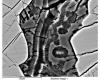
A close-range image acquired by the Mars Hand Lens Imager (MAHLI) aboard NASA’s Curiosity rover reveals an extraordinary deposit of countless rounded, sand-sized bodies on Mount Sharp. Their collective morphology is difficult to dismiss as a collection of accidental rock fragments. Across the field, the bodies repeatedly exhibit comparable dimensions, rounded outlines, close packing, surface differentiation, and pit-like depressions containing unusual textures.
No single feature establishes their origin. Taken together across such a large population, however, these characteristics strongly support interpreting the bodies as ooid-like coated grains. Their recurring surface textures further raise the possibility that microbial films or microbially influenced mineral precipitation contributed to their formation.
Image source and scale
Curiosity acquired the source MAHLI image on September 2, 2026, corresponding to mission Sol 5003. The recorded focus-motor count was 14,235. Interpolation from the camera-scale information gives an approximate spatial resolution of 27 micrometres per pixel.
The complete NASA frame is 1,632 pixels wide and therefore represents a physical field approximately 4.4 centimetres across. The published figure was cropped slightly to approximately 1,580 original pixels and enlarged by 800 percent for visual examination. Its actual field width is approximately 4.3 centimetres; enlargement changes only its displayed size, not the physical dimensions of the objects.
Measurements of representative red-arrowed bodies yield approximate diameters of 0.35–0.75 millimetres, with most measuring about 0.45–0.65 millimetres. The bodies consequently fall predominantly within the medium- to coarse-sand size range—the characteristic dimensional domain of terrestrial ooids.
A population of repeatedly formed rounded bodies
The importance of this image lies not merely in the presence of several rounded particles but in the enormous number of morphologically related bodies occupying nearly the entire field. Their recurrence establishes a population-level pattern.
Most display circular, subcircular, ellipsoidal, or short ovoid outlines. Although individual bodies vary, the deposit is dominated by rounded units rather than sharply angular fragments. A large proportion also falls within a comparatively restricted size interval. Rounded form, dimensional sorting, and numerical abundance occur together throughout the image.
Random fragmentation ordinarily produces a broad assortment of angular shapes, jagged edges, plates, splinters, and widely differing dimensions. Those forms are not the dominant fabric here. Instead, the visible surface consists overwhelmingly of discrete, closely packed, repeatedly rounded bodies. This organization indicates that a sustained process acted upon numerous individual units in a broadly similar manner.
Their grain-supported accumulation is consistent with repeated production, growth, transport, sorting, or concentration of coated grains in a former depositional environment.
Recurring pits and differentiated surface textures
The most significant additional observation is the unusual texture visible on the rounded bodies, particularly within their pit-like depressions. These are not smooth, featureless spheres. Numerous bodies possess shallow central or eccentric pits, incomplete depressions, irregular openings, or locally differentiated surface regions.
Within the limits of the image, the surfaces exposed in these depressions repeatedly appear rough, mottled, finely granular, or microstructured. Comparable textural differentiation occurs across many independently positioned bodies. The phenomenon therefore cannot reasonably be reduced to one damaged particle or a single accidental shadow.
The recurrence matters more than the appearance of any isolated example. If only one body displayed such a feature, breakage or image noise would be sufficient explanations. Here, however, similar surface irregularities occur throughout a vast population of objects sharing the same general size and rounded morphology.
The texture also follows the surfaces of the bodies rather than forming a single continuous pattern across the entire image. This relationship supports the interpretation that it belongs to the individual bodies or to coatings developed upon them.
Digital enlargement cannot manufacture the underlying population-wide association between rounded bodies, localized depressions, and differentiated surfaces. Enlargement may make pixel boundaries more visible, but it does not explain why analogous features repeatedly occupy corresponding morphological positions on numerous separate particles.
Why an ooid interpretation is strongly supported
Terrestrial ooids are sand-sized, commonly spherical or ellipsoidal coated grains produced through repeated mineral precipitation around nuclei. They normally develop in water where chemical conditions permit mineral accretion and grain movement repeatedly exposes their surfaces to the surrounding fluid.
The Mount Sharp bodies satisfy several major external criteria expected of an ooid-rich deposit:
-
They are predominantly sand-sized.
-
They possess rounded to ellipsoidal outlines.
-
Their dimensions cluster within a comparatively restricted range.
-
They occur in exceptional abundance.
-
They form a closely packed, grain-supported accumulation.
-
Their surfaces are differentiated rather than uniformly smooth.
-
Numerous bodies contain pits or depressions associated with recurring fine textures.
The simultaneous occurrence of all these properties makes the coated-grain interpretation substantially stronger than an argument based on roundness alone. The image documents not merely rounded debris but an organized sedimentary population of repeatedly similar units.
Direct exposure of concentric cortices would provide decisive confirmation, but the absence of visibly sectioned grains in this particular exterior view does not negate the strong external resemblance. Internal layering cannot be expected to appear on every intact or dust-covered body. The image should therefore be treated as compelling morphological evidence for an ooid-like deposit and as a high-priority target for examination of broken grains.
The case for microbial influence
Microorganisms can profoundly influence the formation of coated grains. Biofilms and extracellular polymeric substances can trap fine particles, bind ions, create nucleation surfaces, alter local alkalinity, and promote mineral precipitation. Repeated coating of a mobile grain can preserve the effects of these processes within successive mineral layers.
The unusual recurring textures on the Mount Sharp bodies are relevant to this possibility. A population of smooth grains produced solely through mechanical abrasion would not necessarily be expected to exhibit widespread, similarly differentiated surface microtextures associated with pits and depressions. Such textures are compatible with irregular mineral accretion upon former films, the entrapment of fine material within surface coatings, or the later alteration of microbially influenced cortices.
The image does not resolve individual microorganisms, and microbial cells should not be claimed from these pixels. Nevertheless, direct visualization of cells is not required to recognize a plausible microbial sedimentary fabric. On Earth, microbial influence is commonly inferred from the combined organization of grains, coatings, mineral textures, depositional setting, and chemical evidence.
Here, the morphology supplies several mutually reinforcing observations:
-
countless rounded bodies rather than isolated spheres;
-
a narrow sand-sized dimensional range;
-
repeated surface differentiation;
-
widespread pit-like depressions;
-
unusual fine textures recurring on individual bodies;
-
and a dense, grain-supported deposit consistent with an ancient aqueous system.
This combination gives the microbial-influence hypothesis considerably greater weight than would any single ambiguous feature.
Alternative explanations are incomplete
Mechanical abrasion can round particles, but it does not by itself explain the repeated pit-associated textures or the overwhelming production of similarly sized rounded bodies. Weathering can create pits, but an appeal to weathering merely names a possible process; it does not demonstrate how that process generated the same integrated morphology throughout the population.
Likewise, erosion of a granular rock could expose pre-existing grains, but that would address their present exposure—not their original formation. If erosion released the bodies from a sedimentary rock, the central question would remain: what produced the numerous rounded, similarly sized, texturally differentiated units before lithification?
Dust may obscure or modify their surfaces, yet a simple dust coating cannot adequately account for the repeated localization of distinct textures within morphological depressions on separate bodies. Illumination enhances relief but does not create the underlying pits, rounded boundaries, size distribution, or close packing.
Thus, common alternative explanations may account for individual aspects of the image, but none alone explains the complete recurring association. The ooid-like interpretation provides a coherent explanation for the population as a whole.
Predictions and tests
The interpretation makes specific, testable predictions. Naturally broken or eroded examples should reveal one or more of the following:
-
a central nucleus surrounded by mineral cortices;
-
continuous or partly continuous concentric layers;
-
radial or microlitic crystalline fabrics;
-
compositional differences between nuclei and coatings;
-
fine particles or carbon-bearing material concentrated along laminae;
-
irregular mineralized films between successive coatings;
-
and consistent relationships between surface pits and internal organization.
Higher-resolution MAHLI focus stacks, close examination of fractured bodies, laser-spectroscopic transects, Raman measurements, and mineralogical analysis of comparable deposits would be particularly valuable.
Conclusion
The Sol 5003 MAHLI image documents far more than a few coincidentally rounded Martian particles. It reveals a vast, closely packed population of sand-sized bodies exhibiting repeated rounded outlines, restricted dimensions, differentiated surfaces, pit-like depressions, and unusual recurring textures.
These mutually reinforcing characteristics provide strong morphological support for identifying the bodies as ooid-like coated grains formed in an ancient aqueous environment. The widespread surface texture—especially its recurrence on independently situated bodies and within their depressions—adds an important new line of evidence compatible with mineral accretion influenced by microbial films.
Internal cortices and chemical biosignatures remain to be demonstrated, but the exterior morphology already establishes a serious and testable interpretation: Mount Sharp may preserve an extensive deposit of ancient Martian ooids whose formation was influenced by microbial activity.
Wretch Fossil’s website:http://wretchfossil.blogspot.com/
Source: https://wretchfossil.blogspot.com/2026/09/strong-morphological-evidence-for.html
Anyone can join.
Anyone can contribute.
Anyone can become informed about their world.
"United We Stand" Click Here To Create Your Personal Citizen Journalist Account Today, Be Sure To Invite Your Friends.
Before It’s News® is a community of individuals who report on what’s going on around them, from all around the world. Anyone can join. Anyone can contribute. Anyone can become informed about their world. "United We Stand" Click Here To Create Your Personal Citizen Journalist Account Today, Be Sure To Invite Your Friends.
LION'S MANE PRODUCT
Try Our Lion’s Mane WHOLE MIND Nootropic Blend 60 Capsules
Mushrooms are having a moment. One fabulous fungus in particular, lion’s mane, may help improve memory, depression and anxiety symptoms. They are also an excellent source of nutrients that show promise as a therapy for dementia, and other neurodegenerative diseases. If you’re living with anxiety or depression, you may be curious about all the therapy options out there — including the natural ones.Our Lion’s Mane WHOLE MIND Nootropic Blend has been formulated to utilize the potency of Lion’s mane but also include the benefits of four other Highly Beneficial Mushrooms. Synergistically, they work together to Build your health through improving cognitive function and immunity regardless of your age. Our Nootropic not only improves your Cognitive Function and Activates your Immune System, but it benefits growth of Essential Gut Flora, further enhancing your Vitality.

Our Formula includes: Lion’s Mane Mushrooms which Increase Brain Power through nerve growth, lessen anxiety, reduce depression, and improve concentration. Its an excellent adaptogen, promotes sleep and improves immunity. Shiitake Mushrooms which Fight cancer cells and infectious disease, boost the immune system, promotes brain function, and serves as a source of B vitamins. Maitake Mushrooms which regulate blood sugar levels of diabetics, reduce hypertension and boosts the immune system. Reishi Mushrooms which Fight inflammation, liver disease, fatigue, tumor growth and cancer. They Improve skin disorders and soothes digestive problems, stomach ulcers and leaky gut syndrome. Chaga Mushrooms which have anti-aging effects, boost immune function, improve stamina and athletic performance, even act as a natural aphrodisiac, fighting diabetes and improving liver function. Try Our Lion’s Mane WHOLE MIND Nootropic Blend 60 Capsules Today. Be 100% Satisfied or Receive a Full Money Back Guarantee. Order Yours Today by Following This Link.


| Visits: | 1,833,501,019 |
| Stories: | 8,712,986 |
Whistler Blowers, Insiders

