

Allegheny Chinkapin

Abundance: rare
What: nuts
How: raw or roasted
Where: sandy, shaded areas near water
When: fall
Nutritional Value: calories, protein
Dangers: nut husks are very prickly
Allegheny Chinkapin leaves. 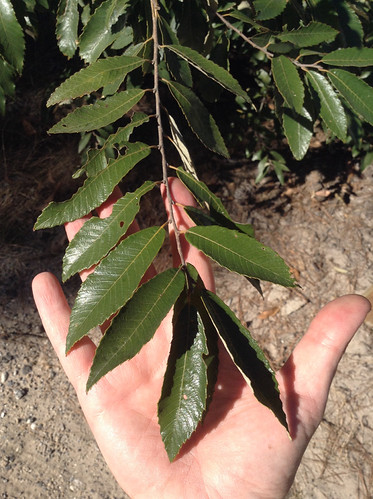
Close-up of leaves.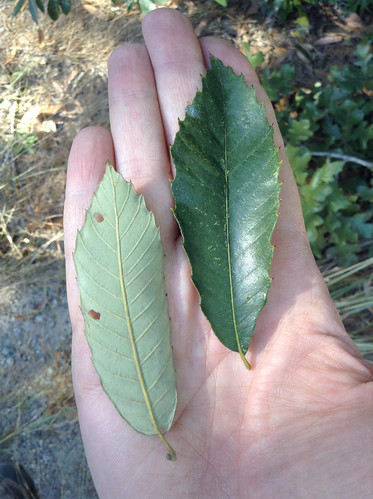
Nut pods in the fall, having dropped some of the nuts.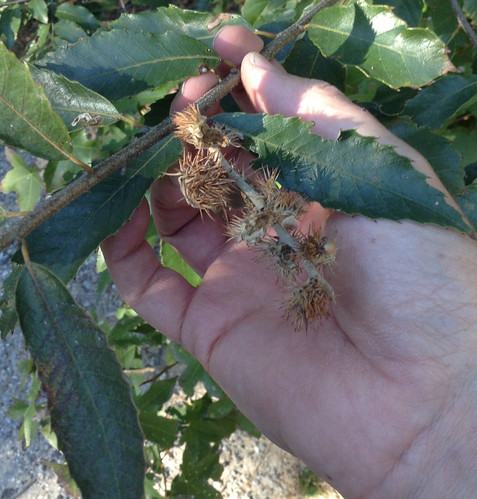
Close-up of pods with and without nuts.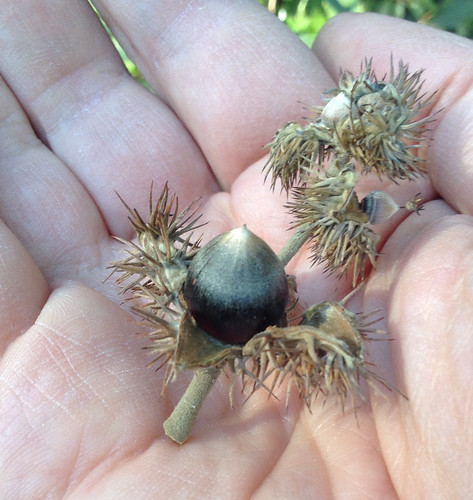
Close-up of shelled nuts. This picture was taken a month after they had ripened and so they’ve begun to dry out but are still edible.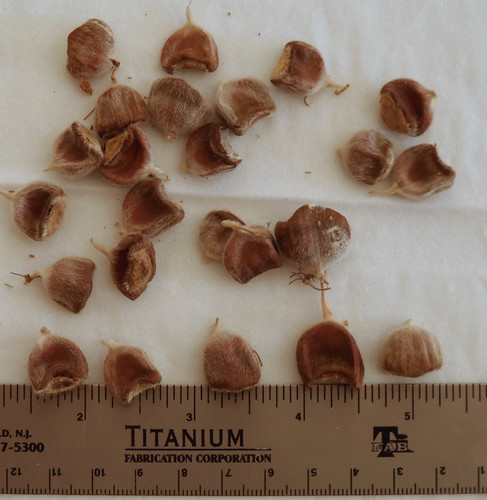
Texas distribution, attributed to U. S. Department of Agriculture. The marked counties are guidelines only. Plants may appear in other counties, especially if used in landscaping.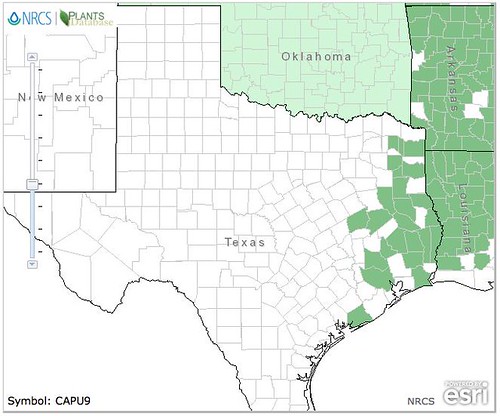
North American distribution, attributed to U. S. Department of Agriculture.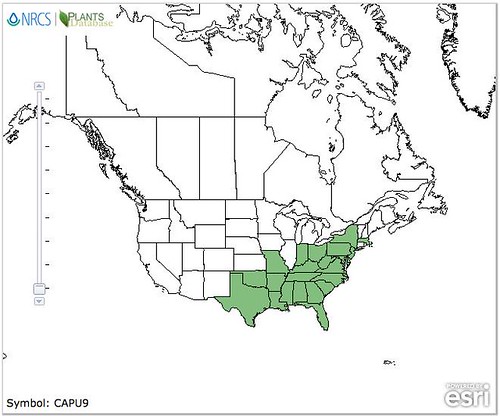
To stumble upon a stand of Allegheny Chinkapins is to stumble upon treasure. These large, usually multi-trunked bushes/small trees suffered from Chestnut Blight leading to reduced numbers across much of North America. A rare stand can still be found growing under larger trees in the sandy soil of tall banks overlooking water. The sandy soil gives them the drainage they need to avoid root-rot while the larger trees partially protects them from the fierce Texas sun. The long, narrow, sharply-toothed leaves, deep green on top and pale underneath, are arranged in an alternate pattern along the branches. In the spring long clusters of small, tan-yellow flowers hang from the tree. By fall these clusters have been replaced with sharp, spikey pods, each containing what looks like a small acorn.
Harvesting these nuts takes some work as they cling to the tree and are protected by the sharp, spiny remains of their outer husks. One usually has to carefully pick nuts off the shrub/tree one by one. You are likely to find some of the nuts have already germinated while still attached to the tree. Don’t eat these but instead carefully plant them nearby.
Allegheny Chinkapin nuts lack tannins or other bitter compounds and so have a sweet, nutty flavor when eaten raw. Being so rare, limit yourself to just a nut or three. Take a few more to plant in similar locations so as to try and bring back this amazingly delicious treat. Animals love these nuts so getting them before squirrels, raccoons, possums and the such is tricky.
Like chestnuts, Allegheny Chinkapin nuts can be roasted to give almost a chocolatey sort of flavor. Place the uncracked nuts on a cookie sheet in an oven at 350F. After five minutes pull out a nut, crack it open and taste it. The roasting time is a personal preference but if the nuts’ shells begin cracking it’s definitely time to pull them out.
If you do over-roast the nuts they can still be used to make a caffeine-free coffee substitute. Grind the shelled nuts in a coffee grinder then either use them as is or combine them with real coffee to make a pot of brown, somewhat bitter fluid.
Source: http://www.foragingtexas.com/2012/11/allegheny-chinkapin.html
Anyone can join.
Anyone can contribute.
Anyone can become informed about their world.
"United We Stand" Click Here To Create Your Personal Citizen Journalist Account Today, Be Sure To Invite Your Friends.
Before It’s News® is a community of individuals who report on what’s going on around them, from all around the world. Anyone can join. Anyone can contribute. Anyone can become informed about their world. "United We Stand" Click Here To Create Your Personal Citizen Journalist Account Today, Be Sure To Invite Your Friends.
LION'S MANE PRODUCT
Try Our Lion’s Mane WHOLE MIND Nootropic Blend 60 Capsules
Mushrooms are having a moment. One fabulous fungus in particular, lion’s mane, may help improve memory, depression and anxiety symptoms. They are also an excellent source of nutrients that show promise as a therapy for dementia, and other neurodegenerative diseases. If you’re living with anxiety or depression, you may be curious about all the therapy options out there — including the natural ones.Our Lion’s Mane WHOLE MIND Nootropic Blend has been formulated to utilize the potency of Lion’s mane but also include the benefits of four other Highly Beneficial Mushrooms. Synergistically, they work together to Build your health through improving cognitive function and immunity regardless of your age. Our Nootropic not only improves your Cognitive Function and Activates your Immune System, but it benefits growth of Essential Gut Flora, further enhancing your Vitality.

Our Formula includes: Lion’s Mane Mushrooms which Increase Brain Power through nerve growth, lessen anxiety, reduce depression, and improve concentration. Its an excellent adaptogen, promotes sleep and improves immunity. Shiitake Mushrooms which Fight cancer cells and infectious disease, boost the immune system, promotes brain function, and serves as a source of B vitamins. Maitake Mushrooms which regulate blood sugar levels of diabetics, reduce hypertension and boosts the immune system. Reishi Mushrooms which Fight inflammation, liver disease, fatigue, tumor growth and cancer. They Improve skin disorders and soothes digestive problems, stomach ulcers and leaky gut syndrome. Chaga Mushrooms which have anti-aging effects, boost immune function, improve stamina and athletic performance, even act as a natural aphrodisiac, fighting diabetes and improving liver function. Try Our Lion’s Mane WHOLE MIND Nootropic Blend 60 Capsules Today. Be 100% Satisfied or Receive a Full Money Back Guarantee. Order Yours Today by Following This Link.


| Visits: | 1,793,853,381 |
| Stories: | 8,616,320 |
Whistler Blowers, Insiders

