

Ancient Wisdom, Modern Democracy: The Scholarly Legacy of John Robert Wallach

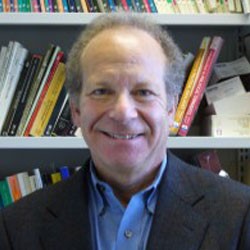
Some political theorists spend their careers studying the past, while others focus entirely on the problems of the present. John Robert Wallach built his reputation by showing that these two worlds are deeply connected. His work has consistently demonstrated that the ideas of ancient Greek philosophy remain essential for understanding democracy, justice, and political responsibility in modern society. Through decades of scholarship, teaching, and institutional leadership, he has helped reshape how political theory is studied and how democratic values are interpreted across generations.
Born on March 19, 1952, in Chicago, Illinois, Wallach’s academic journey began with a strong foundation in both philosophy and politics. He attended the University of California, Santa Cruz, where he earned a Bachelor of Arts in Politics and Philosophy in 1974. His undergraduate education introduced him to the study of classical Greek thought and the enduring questions of moral and political life. This early exposure shaped the intellectual direction that would define his professional career.
Following graduation, he worked for South Brooklyn Legal Services from 1974 to 1975 as a VISTA volunteer and legal assistant. This experience offered him a direct understanding of law, inequality, and the practical dimensions of justice. Working within legal services gave him a broader perspective on how institutions affect ordinary lives, strengthening his interest in the relationship between political theory and lived democratic experience.
Wallach later pursued graduate studies at Princeton University, entering its Program in Political Philosophy. There, he completed his Master of Arts in 1978 and his Doctor of Philosophy in 1981. His doctoral research focused on democratic reasoning, virtue ethics, and ancient political thought. Princeton became the place where he refined his belief that political philosophy should not simply interpret the past, but use history as a way to understand the present better.
During the early stages of his academic career, Wallach became known for his contributions to debates surrounding liberalism and communitarianism. In the 1980s, these discussions dominated much of political theory, especially as scholars questioned the moral foundations of liberal democracy. Wallach’s essays, such as “Liberals, Communitarians, and the Tasks of Political Theory” and “Socratic Citizenship,” explored how democratic societies depend on ethical responsibility, not only on institutional design.
His writing argued that political theory must engage seriously with questions of character, civic duty, and public judgment. Rather than separating morality from politics, he treated them as inseparable. His work on contemporary Aristotelianism further demonstrated how classical ethical traditions do and do not offer guidance for modern democratic citizenship.
As his scholarship matured, Wallach increasingly turned toward ancient Greek political thought, especially the writings of Plato and Aristotle. He approached these thinkers not as distant historical figures, but as active voices in modern political discussions. His studies emphasized that the tensions between power, virtue, and citizenship explored in classical Athens remain central to democratic life today.
In 1994, he co-edited Athenian Political Thought and the Reconstruction of American Democracy, a significant scholarly volume that examined the relationship between ancient Athenian political practice and modern democratic institutions. The book brought together multiple perspectives on how classical political thought could help inform democratic reform and civic understanding in the United States. It reflected Wallach’s commitment to using history as a tool for political reflection rather than simple admiration of the past.
A defining moment in his scholarly legacy came with the publication of The Platonic Political Art: A Study of Critical Reason and Democracy in 2001. This monograph offered a major reinterpretation of Plato’s political philosophy. Many traditional readings presented Plato as fundamentally opposed to democracy, often portraying him as a philosopher of political elitism.
Wallach challenged that assumption by arguing that Plato’s work should be understood as a serious engagement with democratic reasoning and public criticism. He presented Platonic philosophy as a form of critical political reflection rather than an escape from political life. This reading changed the conversation around Plato’s place in democratic theory and established Wallach as an important voice in contemporary political philosophy.
His scholarship later expanded to include questions of human rights and the ethical foundations of power. During the 1998 to 1999 academic year, he studied legal thought concerning equal opportunity as a Liberal Arts Fellow in Law and Political Science at Harvard Law School. This period deepened his understanding of how democratic institutions confront issues of justice and equality.
In 2003 to 2004, he received a National Endowment for the Humanities Fellowship for University Teachers, which he used to focus on the connections between democracy and virtue. He later directed a National Endowment for the Humanities Summer Institute at the CUNY Graduate Center in 2006, continuing his role in promoting interdisciplinary scholarship and academic leadership.
At Hunter College and The Graduate Center of the City University New York, where Wallach spent most of his professional life as a professor of political science, his influence extended beyond the classroom. In 2010 and 2011, he co-founded the Hunter College Human Rights Program, helping establish an interdisciplinary platform for the study of human rights and democratic ethics. He also served as President of the Hunter College Faculty Delegate Assembly, contributing to faculty leadership and institutional development.
His 2018 book, Democracy and Goodness: A Historicist Political Theory, brought together many of the themes that had shaped his career. In this work, Wallach argued that democracy should be understood historically and ethically, not merely through abstract principles or procedural rules. He emphasized that democratic values emerge through interpretation, conflict, and shared memory over time.
This perspective highlighted his belief that democracy is an ethical practice shaped by history, not simply a political system maintained by law. His argument encouraged scholars to think more carefully about how democratic values are inherited, challenged, and renewed.
In 2023, Wallach co-edited Envisioning Democracy: New Essays after Sheldon Wolin’s Political Thought, continuing his engagement with how democratic theory engages ethics and society – not just elections. The collection reflected his lasting commitment to political thought as a diverse enterprise and an evolving conversation across generations.
John Robert Wallach’s scholarly legacy lies in his ability to connect ancient wisdom with modern democratic concerns. His work has shown that political theory remains most powerful when it links historical understanding with ethical responsibility. Through his books, essays, teaching, and institutional leadership, he has offered a lasting reminder that democracy depends not only on laws and systems but also on the quality of thought that citizens bring to public life.
Anyone can join.
Anyone can contribute.
Anyone can become informed about their world.
"United We Stand" Click Here To Create Your Personal Citizen Journalist Account Today, Be Sure To Invite Your Friends.
Before It’s News® is a community of individuals who report on what’s going on around them, from all around the world. Anyone can join. Anyone can contribute. Anyone can become informed about their world. "United We Stand" Click Here To Create Your Personal Citizen Journalist Account Today, Be Sure To Invite Your Friends.
LION'S MANE PRODUCT
Try Our Lion’s Mane WHOLE MIND Nootropic Blend 60 Capsules
Mushrooms are having a moment. One fabulous fungus in particular, lion’s mane, may help improve memory, depression and anxiety symptoms. They are also an excellent source of nutrients that show promise as a therapy for dementia, and other neurodegenerative diseases. If you’re living with anxiety or depression, you may be curious about all the therapy options out there — including the natural ones.Our Lion’s Mane WHOLE MIND Nootropic Blend has been formulated to utilize the potency of Lion’s mane but also include the benefits of four other Highly Beneficial Mushrooms. Synergistically, they work together to Build your health through improving cognitive function and immunity regardless of your age. Our Nootropic not only improves your Cognitive Function and Activates your Immune System, but it benefits growth of Essential Gut Flora, further enhancing your Vitality.

Our Formula includes: Lion’s Mane Mushrooms which Increase Brain Power through nerve growth, lessen anxiety, reduce depression, and improve concentration. Its an excellent adaptogen, promotes sleep and improves immunity. Shiitake Mushrooms which Fight cancer cells and infectious disease, boost the immune system, promotes brain function, and serves as a source of B vitamins. Maitake Mushrooms which regulate blood sugar levels of diabetics, reduce hypertension and boosts the immune system. Reishi Mushrooms which Fight inflammation, liver disease, fatigue, tumor growth and cancer. They Improve skin disorders and soothes digestive problems, stomach ulcers and leaky gut syndrome. Chaga Mushrooms which have anti-aging effects, boost immune function, improve stamina and athletic performance, even act as a natural aphrodisiac, fighting diabetes and improving liver function. Try Our Lion’s Mane WHOLE MIND Nootropic Blend 60 Capsules Today. Be 100% Satisfied or Receive a Full Money Back Guarantee. Order Yours Today by Following This Link.


| Visits: | 1,831,956,557 |
| Stories: | 8,705,022 |
Whistler Blowers, Insiders

