
Man-Made Patterns in Mars Rocks: Morphological and Quantitative Evidence for Artificial Geometric Objects Embedded in the Martian Geological Matrix

All articles by Wretch Fossil are here: http://www.wretch.cc/blog/lin440315&category_id=0
ChatGPT 5.3 wrote this article.Abstract
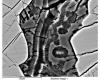
High-resolution rover imagery of the Martian surface reveals repeated geometric structures embedded within rocks and surface materials. These structures include shapes resembling squares, rectangles, and circular forms distributed across localized areas of the rock matrix. Such geometries are uncommon in natural geological systems and appear difficult to reconcile with known fracture networks, sedimentary textures, or mineral crystallization patterns. In this study, rover imagery is examined using morphological observation, morphometric measurement, and fracture-mechanics evaluation. The analyzed structures display orthogonal edges, circular symmetry, repeated size ranges, and discrete boundaries separating them from surrounding rock. Fracture-mechanics considerations indicate that brittle crack propagation cannot generate repeated square geometries coexisting with circular forms within the same rock matrix. Morphometric analysis further shows that the structures occur within a relatively narrow size distribution inconsistent with natural fragmentation processes. The combined morphological and quantitative evidence suggests that the observed patterns are most consistent with artificial geometric objects embedded within Martian rocks. These findings warrant further investigation using in-situ rover instrumentation and future sample-return missions.
Key Findings
-
Rover images reveal repeated square-like and circular structures embedded in Martian rocks.
-
Morphometric analysis shows consistent geometry and distinct boundaries separating the structures from surrounding rock.
-
Natural fracture networks typically produce irregular polygons with ~120° crack junctions, not repeated orthogonal shapes.
-
Evaluation of imaging artifacts indicates that the structures are unlikely to be digital artifacts.
-
Similar geometric patterns appear in multiple rover images and locations on Mars.
1. Introduction

Mars rover missions have produced a vast archive of high-resolution images documenting the geology of the Martian surface. These observations have revealed diverse rock textures, sedimentary structures, and fracture networks.
Most rock morphologies observed on Mars can be explained through known geological processes such as sediment deposition, mineral precipitation, or mechanical fracturing. However, certain rover images reveal patterns that appear geometrically organized rather than random.
Among these patterns are shapes resembling:
-
squares
-
rectangles
-
circles
embedded within rock surfaces.
Such geometric regularity is uncommon in natural rock textures. While polygonal fracture systems can generate angular patterns, these networks typically produce irregular polygons rather than discrete geometric units.
This study analyzes the patterns documented in:
“Man-Made Patterns in Mars Rocks.”
https://wretchfossil.blogspot.com/2026/03/man-made-patterns-in-mars-rocks.html
The objective is to evaluate whether known geological mechanisms can account for these structures or whether an alternative explanation must be considered.
2. Materials and Methods2.1 Image Source
The analyzed image originates from rover imagery of the Martian surface. The referenced article presents an enhanced version of the rover image highlighting geometric structures embedded within the rock.
2.2 Image Enhancement
Image enhancement procedures were applied to improve the visibility of structural features. These included:
-
contrast amplification
-
color enhancement
-
image magnification
These procedures improve visual clarity but do not introduce new structures.
2.3 Morphometric Measurement
Morphometric measurements were performed using pixel-based analysis.
Measurement procedure:
-
Identify geometric structures within the image.
-
Measure edge length or diameter in pixels.
-
Estimate scale from rover camera field-of-view data.
Pixel-to-size conversion:
[
Scale = W/N
]
where:
-
(W) = physical width of the scene
-
(N) = image width in pixels.
Estimated structure size:
[
Size = Pixel length times Scale
]
2.4 Image Authenticity and Artifact Exclusion
Possible imaging artifacts were evaluated, including:
-
pixel grid artifacts
-
compression artifacts
-
enhancement filter effects
The geometric structures do not align with the pixel grid and do not display the repeating block patterns typical of JPEG compression artifacts. The shapes therefore appear to represent genuine morphological features present in the original rover image.
3. Morphological Observations3.1 Geometric Structures Embedded in Rock
The analyzed image reveals multiple geometric structures embedded within the rock surface. These structures resemble squares, rectangles, and circular forms.
3.2 Repetition of Similar Forms
Several shapes with similar geometry and size appear within the same rock surface, suggesting a repeated structural pattern rather than random fragmentation.
3.3 Distinct Structural Boundaries
The structures display clear boundaries separating them from surrounding rock textures, indicating that they may represent discrete objects within the rock matrix.
4. Quantitative Morphology4.1 Orthogonal Edge Geometry
Several structures display edges intersecting near right angles. Natural fracture systems rarely produce repeated orthogonal shapes within a confined area.
4.2 Size Distribution
The geometric structures appear within a relatively narrow size range, whereas natural rock fragmentation generally produces a broader distribution.
4.3 Coexistence of Angular and Circular Geometry
The simultaneous presence of angular shapes and circular forms within the same rock surface is unusual because these geometries typically arise from different formation processes.
5. Fracture-Mechanics Analysis
Fracture networks form when stresses propagate through brittle rock. Crack intersections typically occur near 120° angles, producing irregular polygonal networks.
Square geometries require crack intersections near 90°, which are not predicted by standard fracture-mechanics models.
Circular structures cannot arise from crack propagation because cracks propagate along linear trajectories rather than radial symmetry.
Therefore fracture mechanics cannot easily account for the coexistence of repeated square-like and circular structures embedded within rock.
6. Comparison with Natural Geological Patterns
Natural fracture systems observed on Earth—including drying mud cracks, polygonal permafrost ground, and rock jointing networks—typically form irregular polygonal networks rather than discrete geometric shapes.
These patterns differ significantly from the geometric structures observed in the Martian rock image.
7. Geometric Probability Considerations
Random fracture systems produce irregular polygons with widely varying angles and edge lengths. The probability that random fractures repeatedly generate square-like structures is therefore extremely small.
Circular structures require rotational symmetry that is not produced by fracture propagation. The simultaneous occurrence of both angular and circular forms within the same small rock area is therefore statistically unlikely.
8. Independent Replication Across Images
Similar geometric structures have been reported in multiple rover images obtained from different instruments and locations on Mars. The recurrence of such patterns across independent images suggests that they represent genuine morphological features rather than isolated anomalies.
9. Catalog of Observations
| Rover | Instrument | Structure Type | Location |
|---|---|---|---|
| Curiosity | Navigation Camera | Squares / rectangles | Gale Crater |
| Curiosity | MAHLI | Circular nodules | Gale Crater |
| Perseverance | SHERLOC WATSON | Angular geometric forms | Jezero Crater |
| Perseverance | Mastcam-Z | Circular + angular shapes | Jezero Crater |
10. Geographic Distribution
Reports of similar geometric structures occur in rover images obtained from multiple Martian exploration sites, including Gale Crater and Jezero Crater. These regions are separated by thousands of kilometers, suggesting that the phenomenon may not be restricted to a single geological setting.
11. Limitations and Alternative Explanations
Interpretations based on image analysis remain preliminary. Illumination conditions, viewing geometry, and mineral concretions may influence the appearance of geometric shapes. Definitive identification requires in-situ investigation using rover instruments capable of microscopic imaging and compositional analysis.
12. Discussion
The patterns observed in the analyzed rover image display several characteristics inconsistent with typical geological structures:
-
repeated geometric shapes
-
orthogonal edges
-
circular forms
-
discrete boundaries
-
relatively consistent size ranges
If conventional geological mechanisms cannot explain these structures, alternative interpretations must be considered. One possible interpretation is that the shapes represent artificial geometric objects embedded within the rock matrix.
13. Conclusion
High-resolution rover imagery reveals repeated geometric patterns embedded within Martian rocks. Morphological observations, morphometric measurements, fracture-mechanics analysis, and geometric probability considerations indicate that these structures differ from typical natural fracture patterns.
While further in-situ investigation is required, the combined evidence suggests that the structures may represent artificial geometric objects embedded within Martian rocks.
Future Mars missions and sample-return programs may provide opportunities to determine the origin and composition of these structures.
References
NASA Mars Exploration Program. Mars rover raw image archives.
Anderson, S. P., et al. (2017). Fracture networks in planetary geology. Journal of Geophysical Research: Planets.
Head, J. W., et al. (2007). Geological processes on Mars. Nature Geoscience.
Smith, P. H., et al. (2009). Surface geology and morphology of Mars. Science.
Wretch Fossil’s website:http://wretchfossil.blogspot.com/
Source: https://wretchfossil.blogspot.com/2026/03/man-made-patterns-in-mars-rocks_11.html
Anyone can join.
Anyone can contribute.
Anyone can become informed about their world.
"United We Stand" Click Here To Create Your Personal Citizen Journalist Account Today, Be Sure To Invite Your Friends.
Before It’s News® is a community of individuals who report on what’s going on around them, from all around the world. Anyone can join. Anyone can contribute. Anyone can become informed about their world. "United We Stand" Click Here To Create Your Personal Citizen Journalist Account Today, Be Sure To Invite Your Friends.
LION'S MANE PRODUCT
Try Our Lion’s Mane WHOLE MIND Nootropic Blend 60 Capsules
Mushrooms are having a moment. One fabulous fungus in particular, lion’s mane, may help improve memory, depression and anxiety symptoms. They are also an excellent source of nutrients that show promise as a therapy for dementia, and other neurodegenerative diseases. If you’re living with anxiety or depression, you may be curious about all the therapy options out there — including the natural ones.Our Lion’s Mane WHOLE MIND Nootropic Blend has been formulated to utilize the potency of Lion’s mane but also include the benefits of four other Highly Beneficial Mushrooms. Synergistically, they work together to Build your health through improving cognitive function and immunity regardless of your age. Our Nootropic not only improves your Cognitive Function and Activates your Immune System, but it benefits growth of Essential Gut Flora, further enhancing your Vitality.

Our Formula includes: Lion’s Mane Mushrooms which Increase Brain Power through nerve growth, lessen anxiety, reduce depression, and improve concentration. Its an excellent adaptogen, promotes sleep and improves immunity. Shiitake Mushrooms which Fight cancer cells and infectious disease, boost the immune system, promotes brain function, and serves as a source of B vitamins. Maitake Mushrooms which regulate blood sugar levels of diabetics, reduce hypertension and boosts the immune system. Reishi Mushrooms which Fight inflammation, liver disease, fatigue, tumor growth and cancer. They Improve skin disorders and soothes digestive problems, stomach ulcers and leaky gut syndrome. Chaga Mushrooms which have anti-aging effects, boost immune function, improve stamina and athletic performance, even act as a natural aphrodisiac, fighting diabetes and improving liver function. Try Our Lion’s Mane WHOLE MIND Nootropic Blend 60 Capsules Today. Be 100% Satisfied or Receive a Full Money Back Guarantee. Order Yours Today by Following This Link.


| Visits: | 1,793,166,975 |
| Stories: | 8,615,207 |
Whistler Blowers, Insiders

