

Agave

Abundance: rare
What: flowers, stalks, leaves, body/root, sap
How: flowers are cooked; flower stalks are roasted; sap is fermented (woo hoo!); leaves are cooked; body/root is slow roasted.
Where: dry areas, landscaping
When: all year
Nutritional Value: Calories
Dangers: Raw agave juice can cause long-lasting burns to skin, eyes, and other sensitive tissues. Be careful when cutting this plant so as not to splatter this juice on you. These plants also contain large quantities of saponins (soap).
Medicinal Summary:
Leaf Pulp – antibacterial; anti-inflammatory; wound-healing (poultice)
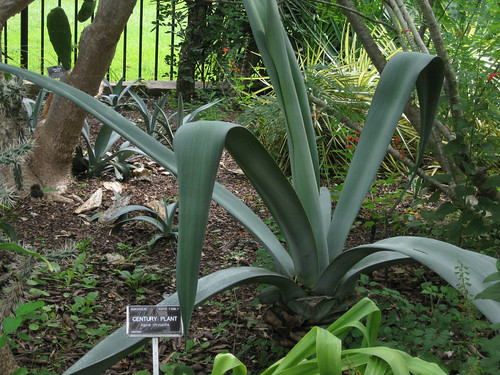
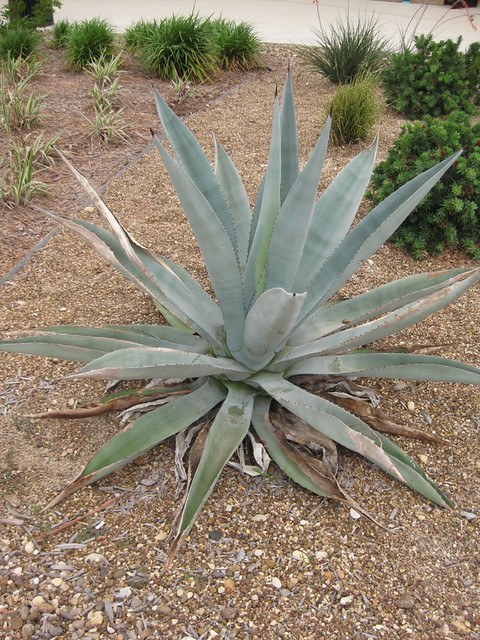
Agave flower stalk.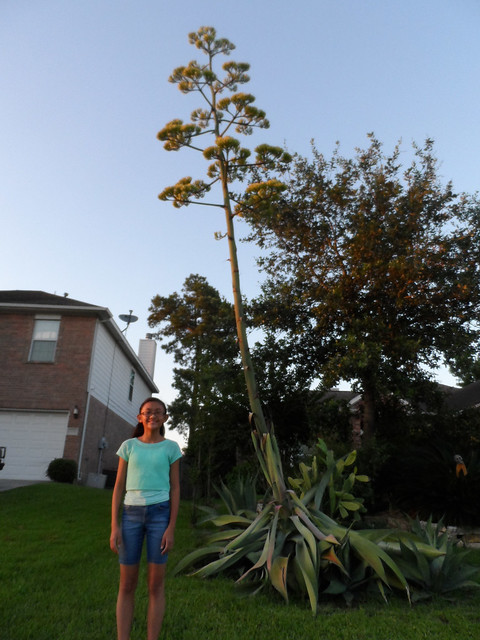
Texas Distribution, attributed to U. S. Department of Agriculture. The marked counties are guidelines only. Plants may appear in other counties, especially if used in landscaping.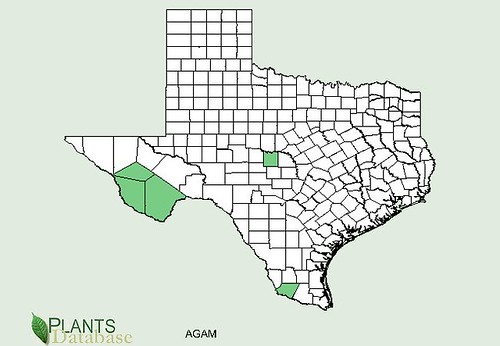
North American Distribution, attributed to U. S. Department of Agriculture.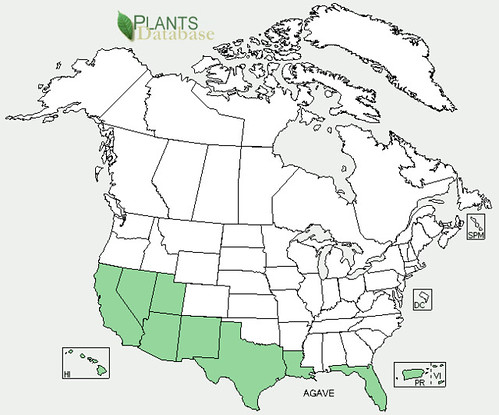
Looking like a cross between a cactus and a squid, slow-growing agave plants are found wild the arid Southwest but also as a decorative landscaping plant all over Texas and the South. Mature agave can stretch up to 16’ across and send flower stalks 10’ or more into the sky.
Agave plants are a regular smorgasbord of food, though all parts of the plant except for the sap must be cooked in some manner to make them sweet and destroy their bitter-tasting saponins. Unlike most wild edible plants, when harvesting agave you want to find the biggest, oldest plants as these will have the most sugar. Traditionally the flowers and leaves were boiled or roasted. After removing the leaves the body & root should be slow roasted, often for two days, to release its sugars. The sweet flesh is chewed off the fibrous body/root. Flower stalks are also roasted, but for shorter time as they are smaller. Note that removing the flower stalk will kill the plant. After roasting the food can be dried and stored for later use.
If the top of the agave plant is removed but the root left in the ground sap will flow up for hours. Collect and ferment this sap to form a weak tequila. A sweet syrup can also be pressed from the roasted body & root of agave. This syrup forms the basis for mescal alcohol. The seeds can be toasted then ground into a flour.
Uncooked roots contain high levels of saponins, a soap-like compound which will lather in soft water and can be used for washing. This soap was also used by natives to kill fish by tossing pounded globs of root into small ponds. The soap screws up the functioning of fishes’ gills, causing them suffocate and float to the surface.
Fibers in the leaves can be used for cordage. Pound the fleshy leaves between two logs to separate the fibers from pulp, then braid into rope.
Warning: The moist, fleshy interior of the leaves is somewhat acidic and can cause permanent eye damage.
Source: http://www.foragingtexas.com/2006/05/agave.html
Anyone can join.
Anyone can contribute.
Anyone can become informed about their world.
"United We Stand" Click Here To Create Your Personal Citizen Journalist Account Today, Be Sure To Invite Your Friends.
Before It’s News® is a community of individuals who report on what’s going on around them, from all around the world. Anyone can join. Anyone can contribute. Anyone can become informed about their world. "United We Stand" Click Here To Create Your Personal Citizen Journalist Account Today, Be Sure To Invite Your Friends.
LION'S MANE PRODUCT
Try Our Lion’s Mane WHOLE MIND Nootropic Blend 60 Capsules
Mushrooms are having a moment. One fabulous fungus in particular, lion’s mane, may help improve memory, depression and anxiety symptoms. They are also an excellent source of nutrients that show promise as a therapy for dementia, and other neurodegenerative diseases. If you’re living with anxiety or depression, you may be curious about all the therapy options out there — including the natural ones.Our Lion’s Mane WHOLE MIND Nootropic Blend has been formulated to utilize the potency of Lion’s mane but also include the benefits of four other Highly Beneficial Mushrooms. Synergistically, they work together to Build your health through improving cognitive function and immunity regardless of your age. Our Nootropic not only improves your Cognitive Function and Activates your Immune System, but it benefits growth of Essential Gut Flora, further enhancing your Vitality.

Our Formula includes: Lion’s Mane Mushrooms which Increase Brain Power through nerve growth, lessen anxiety, reduce depression, and improve concentration. Its an excellent adaptogen, promotes sleep and improves immunity. Shiitake Mushrooms which Fight cancer cells and infectious disease, boost the immune system, promotes brain function, and serves as a source of B vitamins. Maitake Mushrooms which regulate blood sugar levels of diabetics, reduce hypertension and boosts the immune system. Reishi Mushrooms which Fight inflammation, liver disease, fatigue, tumor growth and cancer. They Improve skin disorders and soothes digestive problems, stomach ulcers and leaky gut syndrome. Chaga Mushrooms which have anti-aging effects, boost immune function, improve stamina and athletic performance, even act as a natural aphrodisiac, fighting diabetes and improving liver function. Try Our Lion’s Mane WHOLE MIND Nootropic Blend 60 Capsules Today. Be 100% Satisfied or Receive a Full Money Back Guarantee. Order Yours Today by Following This Link.


| Visits: | 1,793,853,381 |
| Stories: | 8,616,320 |
Whistler Blowers, Insiders

